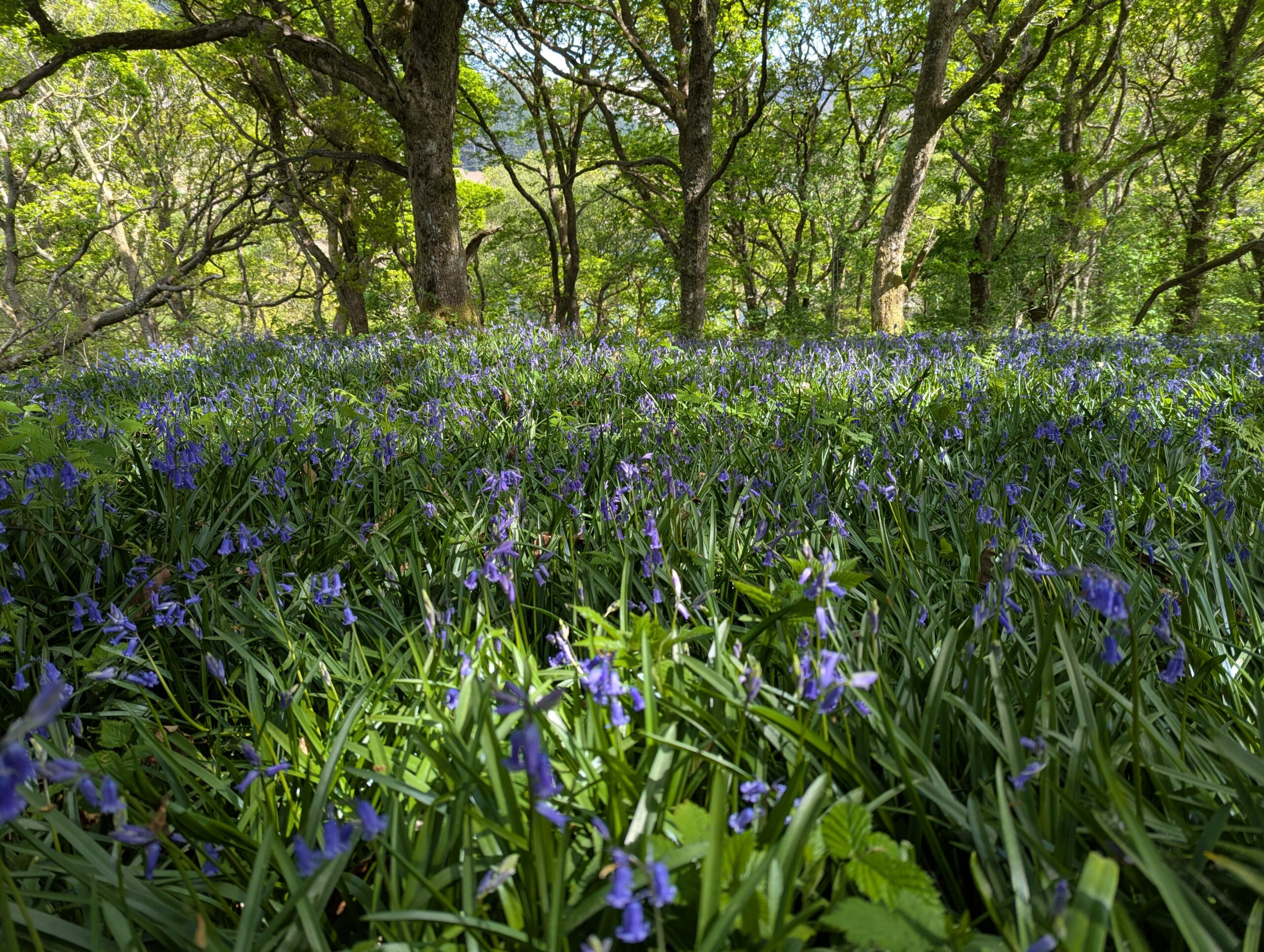
The Secret World of the Celtic Rainforest
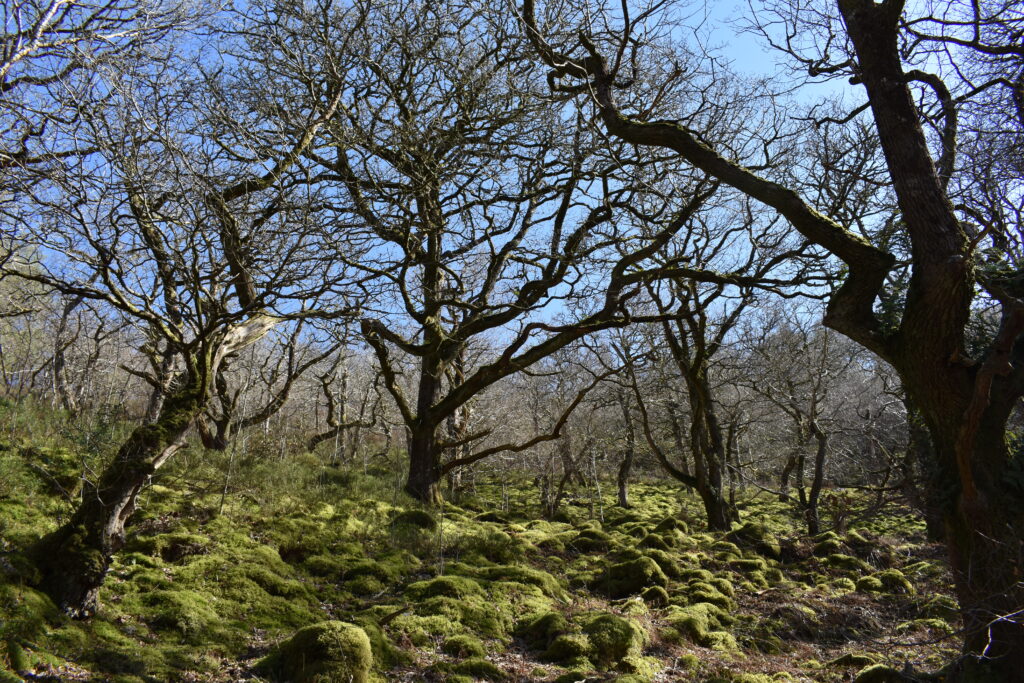
The Celtic or temperate rain forests of Cwm Elan are wondrous to explore this time of year as it is over winter that the bryophytes are much more visible, since the herbaceous ground flora has mostly died back.
Bryophytes are the mosses, liverworts and hornworts and Britain and Ireland have about two thirds of all European species due to the wet, humid conditions of our islands. Some of our rarer species are globally rare, making it our responsibility to conserve them.
Mosses and liverworts, mostly green in colour, are non-flowering and known as ‘lower plants’ – they lack the vascular or transport systems of flowering plants and ferns. Instead, they obtain and transport water and nutrients by osmosis and diffusion and can’t grow to any great height because they lack the structural support that vascular tissue gives to the higher plants. They differ also in their reproduction, which is by means of spores or by tubers.
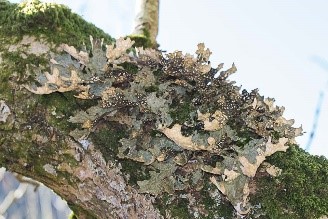
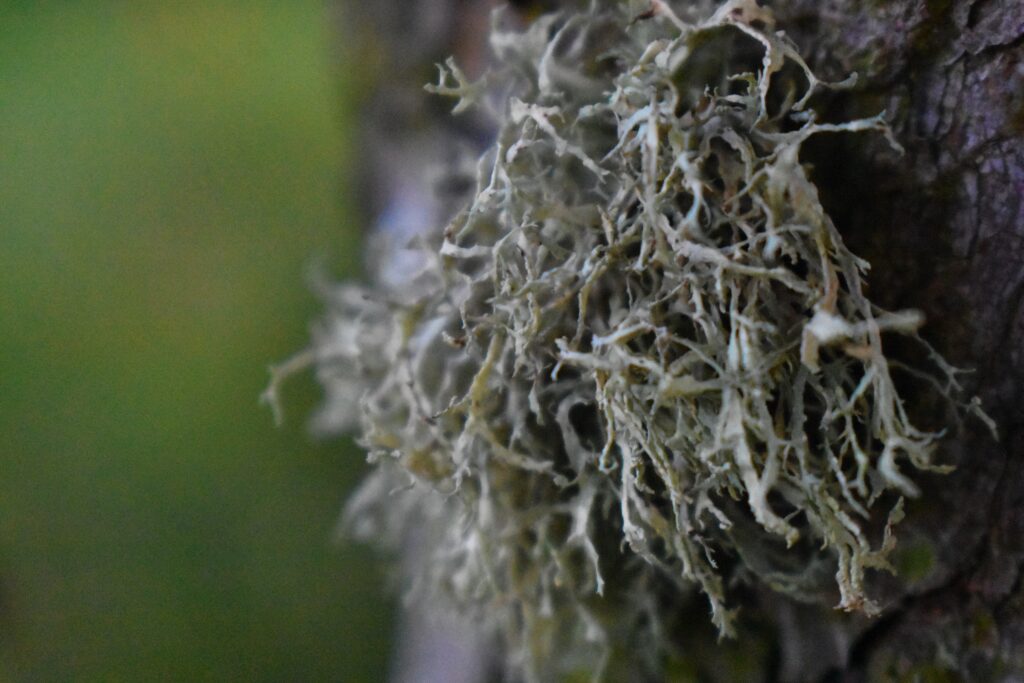
There are around 1065 species of bryophyte in Britain and Ireland, 765 mosses, 300 liverworts and just 4 hornworts. Given that Cwm Elan has a good coverage of rainforest it is unsurprising that we have our rarities: the liverworts, Plagiochila britannica British Featherwort and Cololejeunea rossettiana Rossetti’s Pouncewort and the mosses Dialytrichia mucronata Pointed Lattice – moss and Fissidens rufulus Beck Pocket-moss (and there are many more). The woodlands of Cwm Elan are so important for bryophytes and for its rare lichens that they are designated as a Special Area of Conservation (SAC).
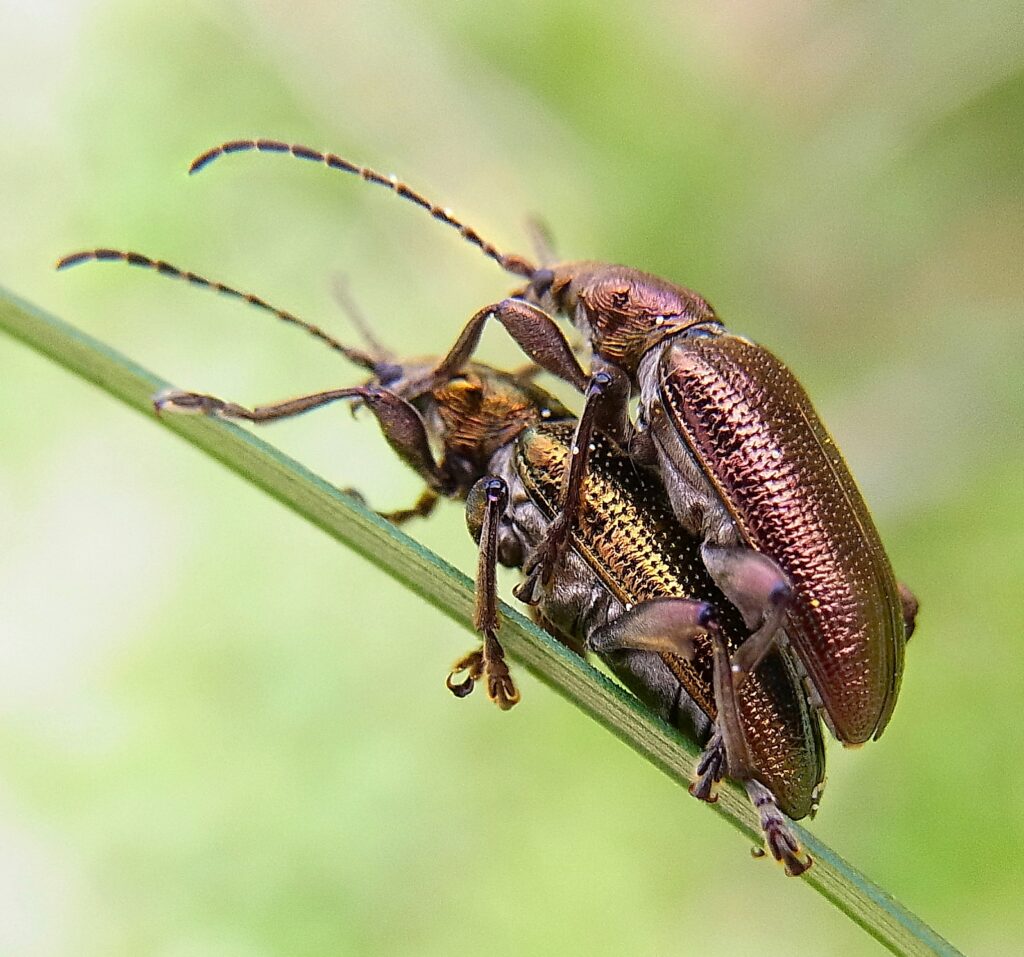
Rare and uncommon bryophytes act as ‘indicator species’; their presence indicating a healthy and thriving woodland ecosystem. They provide habitats for other organisms – the leaf beetle Plateumaris sericea is one example of a moss – dwelling insect which thrives in the dense, cushion-like structures where it receives shelter, a hiding place and a stable environment for its eggs and larvae. Bryophagous organisms are those that feed on bryophytes, like some leaf hoppers.
Image credit: By Siga – Own work, CC BY-SA 3.0
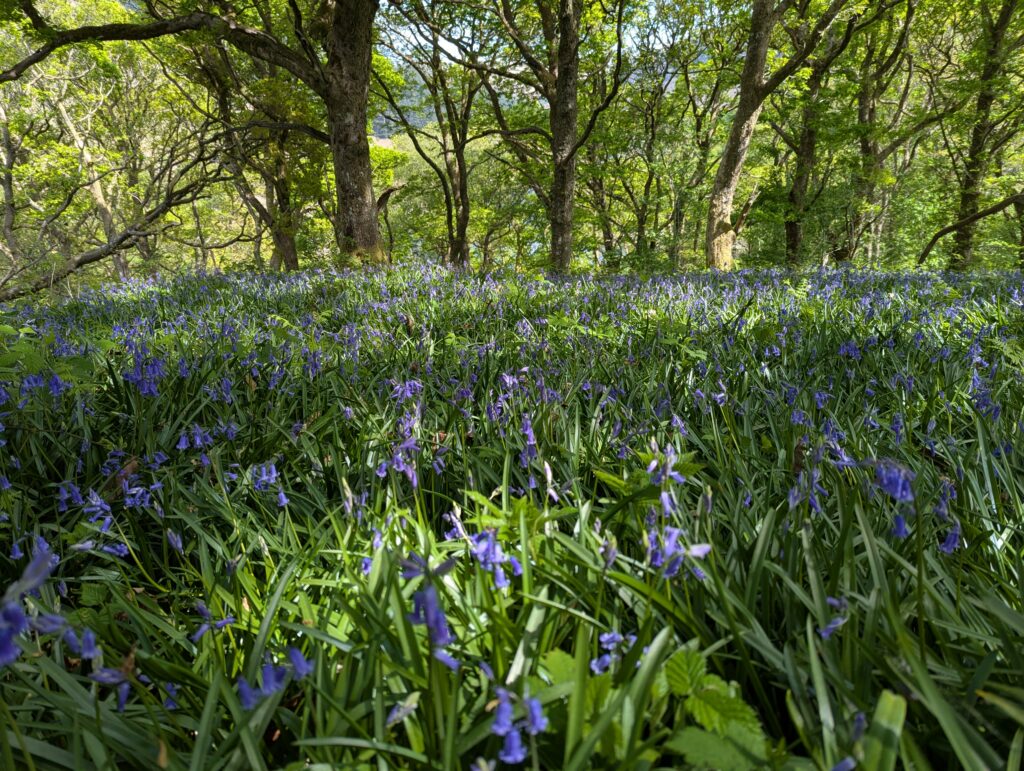
Throughout the six years of the HLF funded Elan Links, we carried out management of our sessile oak woodlands which make up these rainforests, cutting back undergrowth to let in more light, removing alien species like rhododendron and introducing cattle grazing to the woods – all aimed at helping the rare bryophytes and lichens. The LIFE Celtic Rainforest RSPB Project worked in parallel and is still running now.
An article in our newsletter earlier this year discussed Sphagnum mosses which not only grow in the rainforests here but importantly make up our valuable, carbon – absorbing peat bogs.
Visit the British Bryological Society, for this winter’s programme.