Welcome to this month’s update to find out what’s in the night sky for February.
In the Elan Valley International Dark Sky Park, astronomical darkness lasts for 10 hours and 59 minutes at the beginning of the month from 18:58 and 9 hours and 25 minutes from 19:44 at the end.
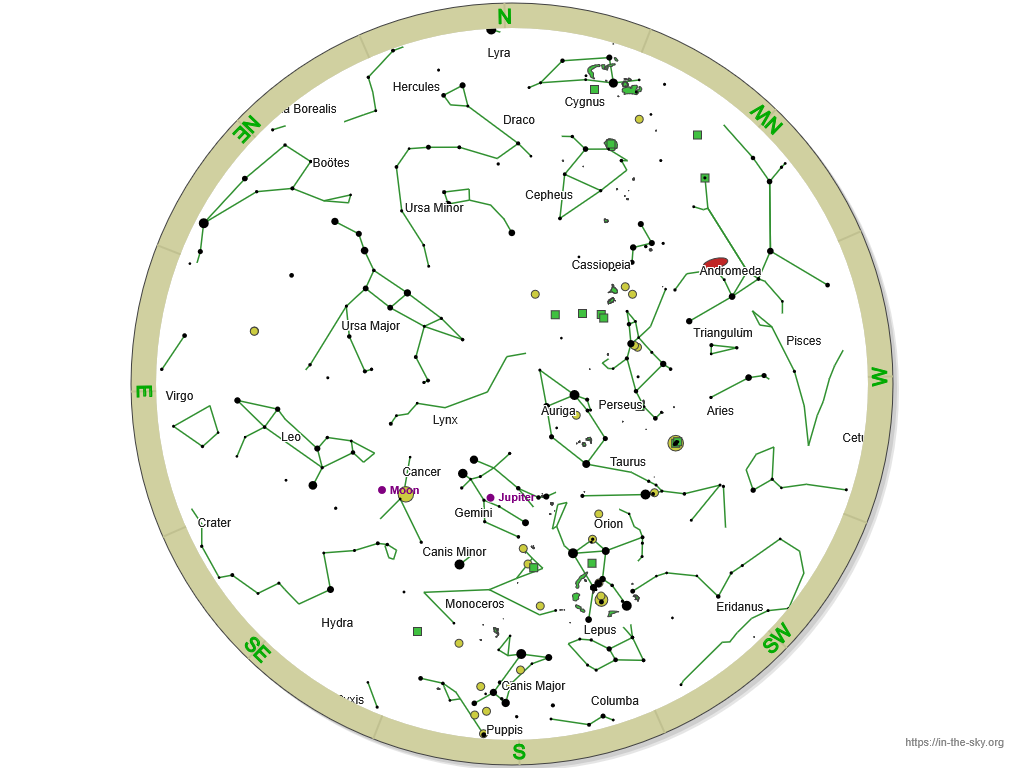
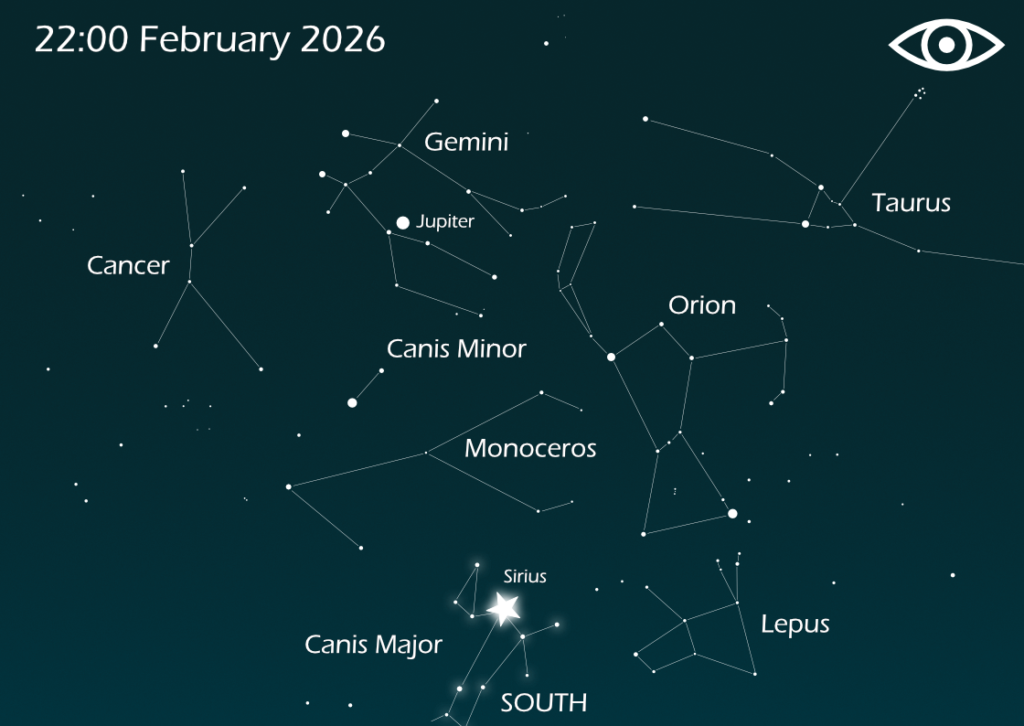
An all-sky view of the constellations from 10pm on 1st February from in-the-sky.org
Low on the southern horizon, lies the constellation of Canis Major, with the constellations of Monoceros and Gemini positioned directly above. The mighty constellation of Orion still dominates the night sky, positioned above the south-south western horizon, with Taurus and Auriga directly above. In the west, the constellation of Andromeda begins to set, whilst the spring constellations of Cancer and Leo are well positioned in the south-eastern sky. Virgo and Boötes at this time of the year are just rising, with the bright star Arcturus situated low on the eastern horizon.
The Full Moon occurs on 1st February and the New Moon on 17th February.
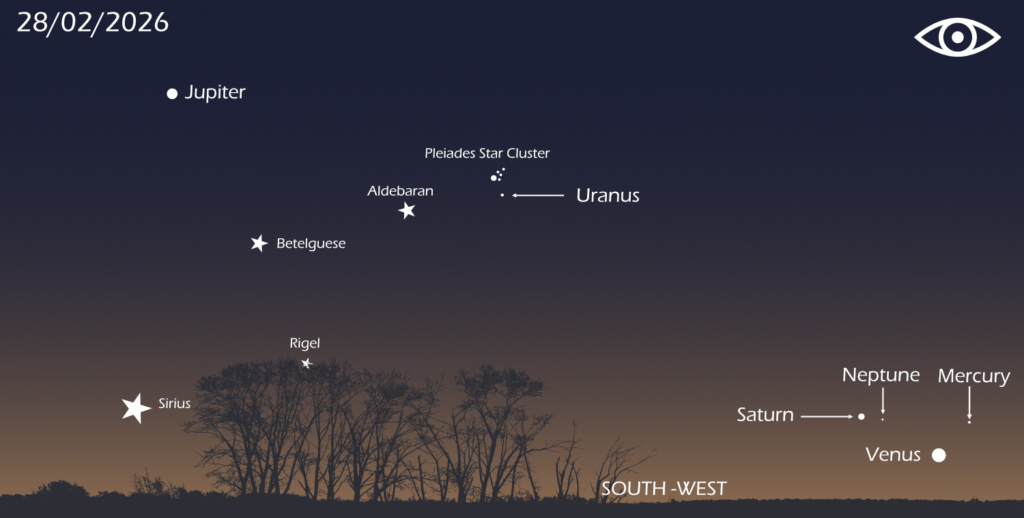
Planet Month!
During February, you will get the opportunity to see six solar system planets at the same time! Four of the six planets will be visible to the unaided eye and the other two will require binoculars and small telescopes.
From the 2nd week of February, you will be able to see Mercury, Saturn, Jupiter, Uranus and Neptune from sunset but in the last few days of February, Venus joins the parade when it emerges into the western horizon during the last week of February. The best time to see this celestial parade is on the 28th February after sunset. Those with low horizons can view this spectacle up to 6.45pm.
As night falls, use your binoculars and telescopes to find Uranus and Neptune.
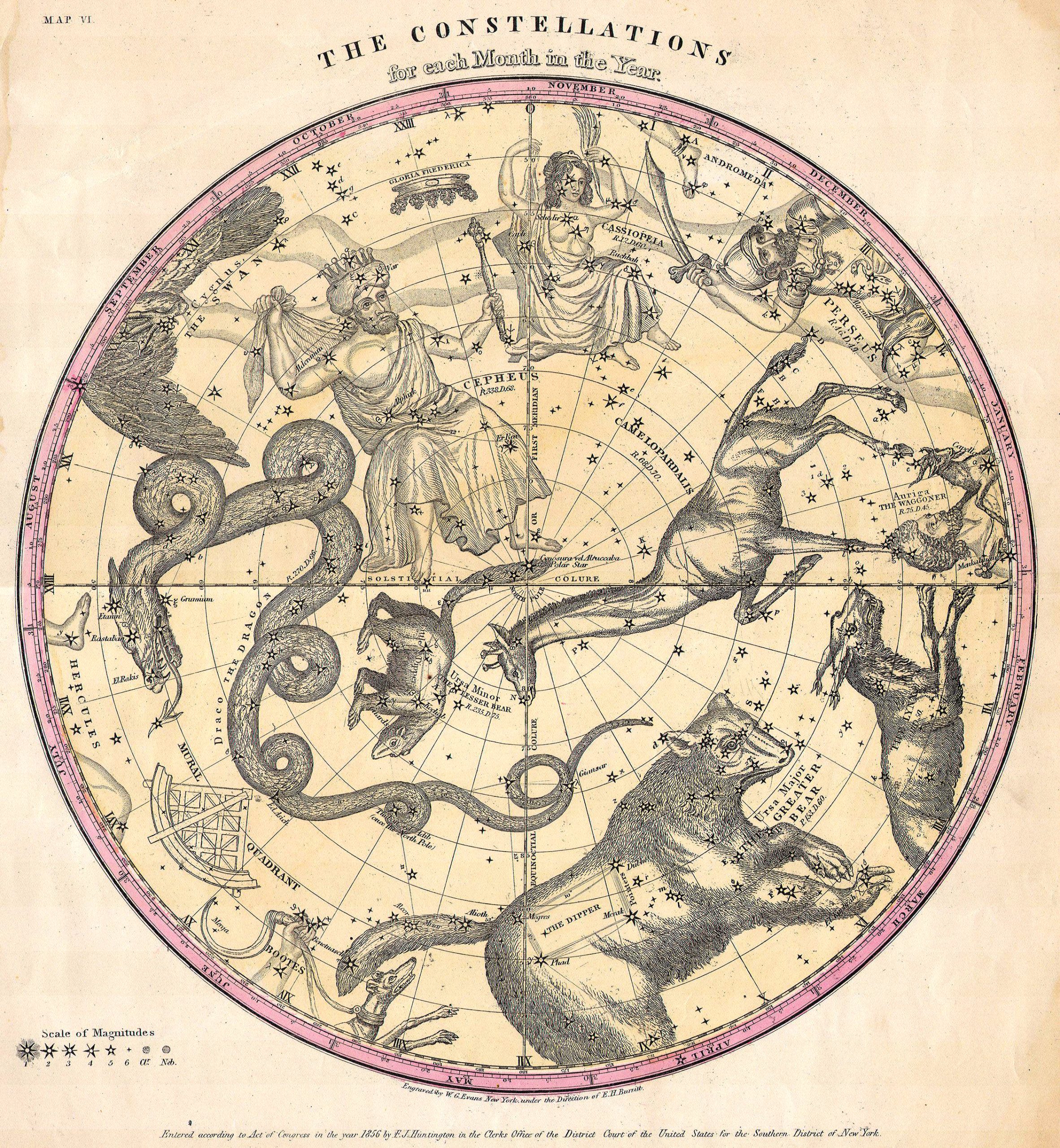
Constellation of the Month
Each month, we will feature a constellation and the mythology behind it.
There are 88 IAU recognised constellations in the night sky and around 36 that are observable in the northern hemisphere. Some of the names of the 88 IAU recognised constellations are several thousands of years old.
With the advent of science and rational thinking, and more of a focus on the observable world, stars are no longer used for the farming calendar, for navigation or conveying social or religious values.
Get outside and see if you can spot these constellations. The best time to see each constellation we feature is around 90 minutes after sunset.
Constellation of the month – Canis Major
From 10pm, the constellation of Canis Major is situated low on the southern horizon and lies south-west of the constellation of Orion during February. It can be identified by finding the brightest star in the night sky, Sirius.
Around 5-10 stars can be spotted in an average dark sky which makes up the constellation’s shape.
This constellation is thought to contain at least 10 stars that host planetary systems. Unfortunately, these stars are so far away that even if we travelled at the speed of the fastest man-made object in space, the Solar Parker Probe, it would take around 650,000 years to reach one of them.
This constellation represents man’s best friend: the dog. Here, Canis Major, latin for ‘greater dog’, is depeicted standing on his hind legs, caught in action whilst chasing the hare, Lepus. He is also accompanied by Canis Minor, the ‘lesser dog’, the simple constellation which lies above Monoceros.

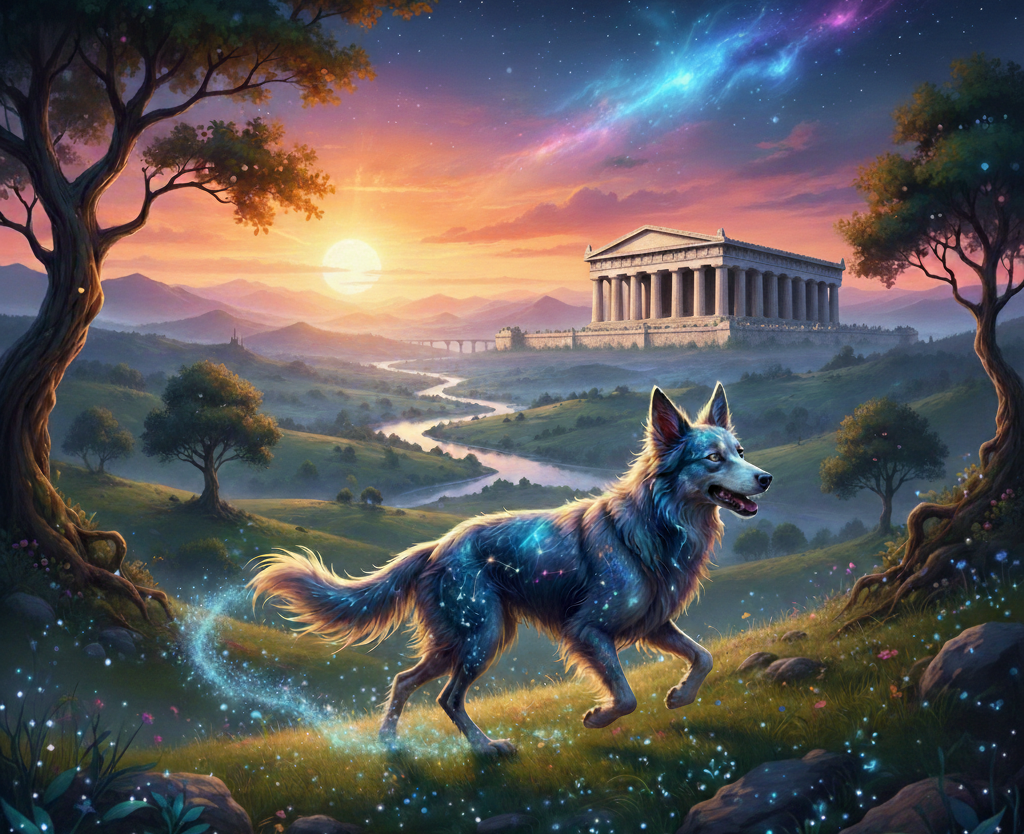
In Greek mythology, this dog was Laelaps, who had many masters in his time. He was a superior hunting dog who could catch anything. He was given the task to catch an animal that terrorised the countryside, but it was a magical creature that could never be caught, becoming trapped in an eternal paradox. Zeus resolved this by turning Laelaps into stone and placing him the heavens.
The star Sirius is named after the Greek word, ‘scorching’. In that part of the world, Sirius rises just before the dawn August and the Ancient Greeks associated it with the hottest time of the year, believing it contributed to the heat alongside the Sun. This was the origin of the expression ‘dog days of summer’.
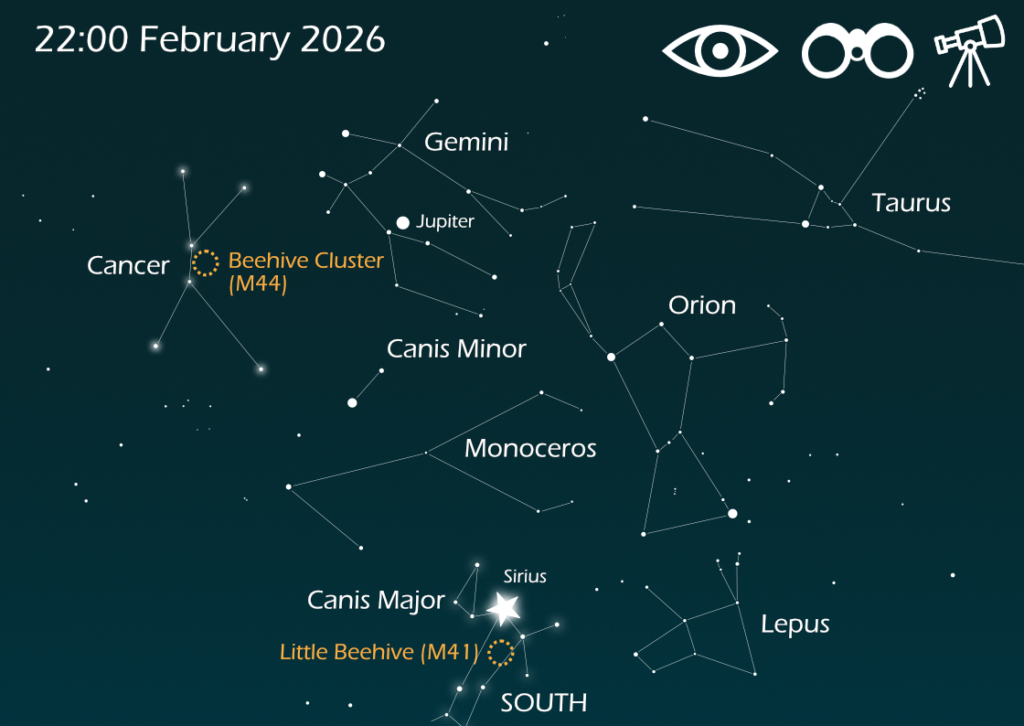
Two Beehives in One Night
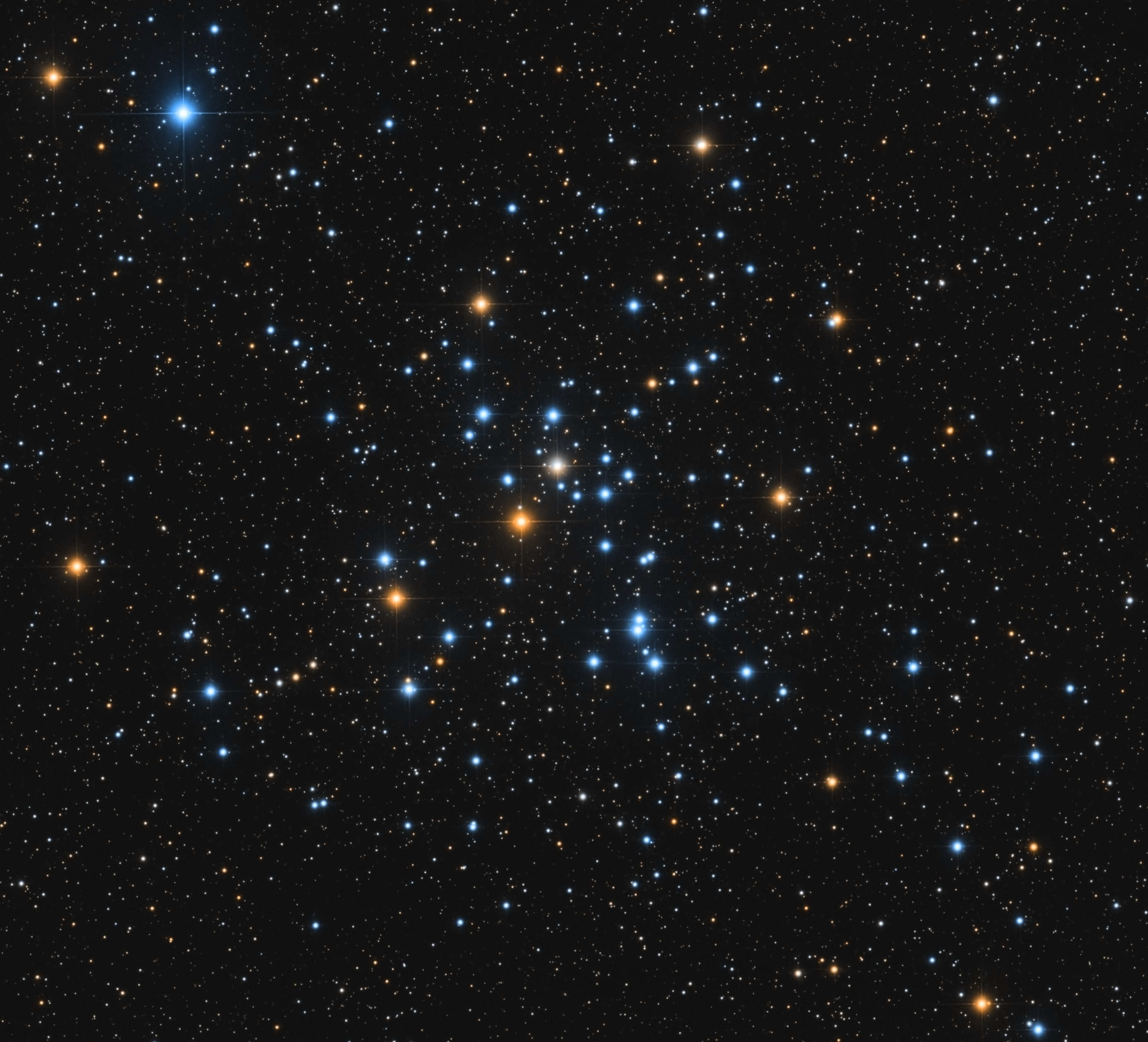
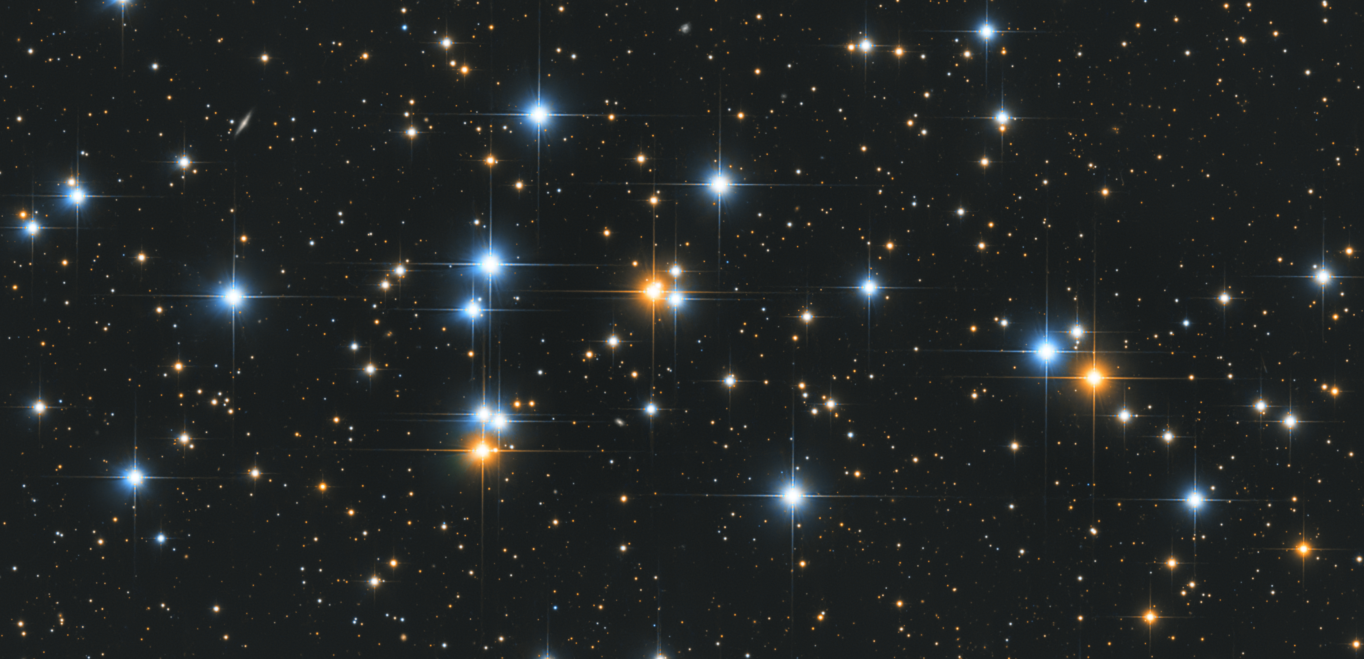
Did you know there are two pretty open star clusters that are named after bee hives, due to the appearance of a swarm of celestial insects?
The (Big) Beehive Cluster in Cancer
Coordinates: RA 8h 40m 24s | Dec +19° 59′ 0″
The Beehive cluster in Cancer can be seen with the unaided eye – in a dark sky you will see a faint, fuzzy patch, just slightly to the right of the constellation. Through binoculars, this cluster will look pleasing to the eye and through a small telescope, the stars will appear bright, but more scattered.
Comprising around 1000 stars of the same age, they are born from the same gas cloud and are relatively young and bright. They are so far away from us, it would take around 900,000 years to travel there using our fastest man-made object in space.
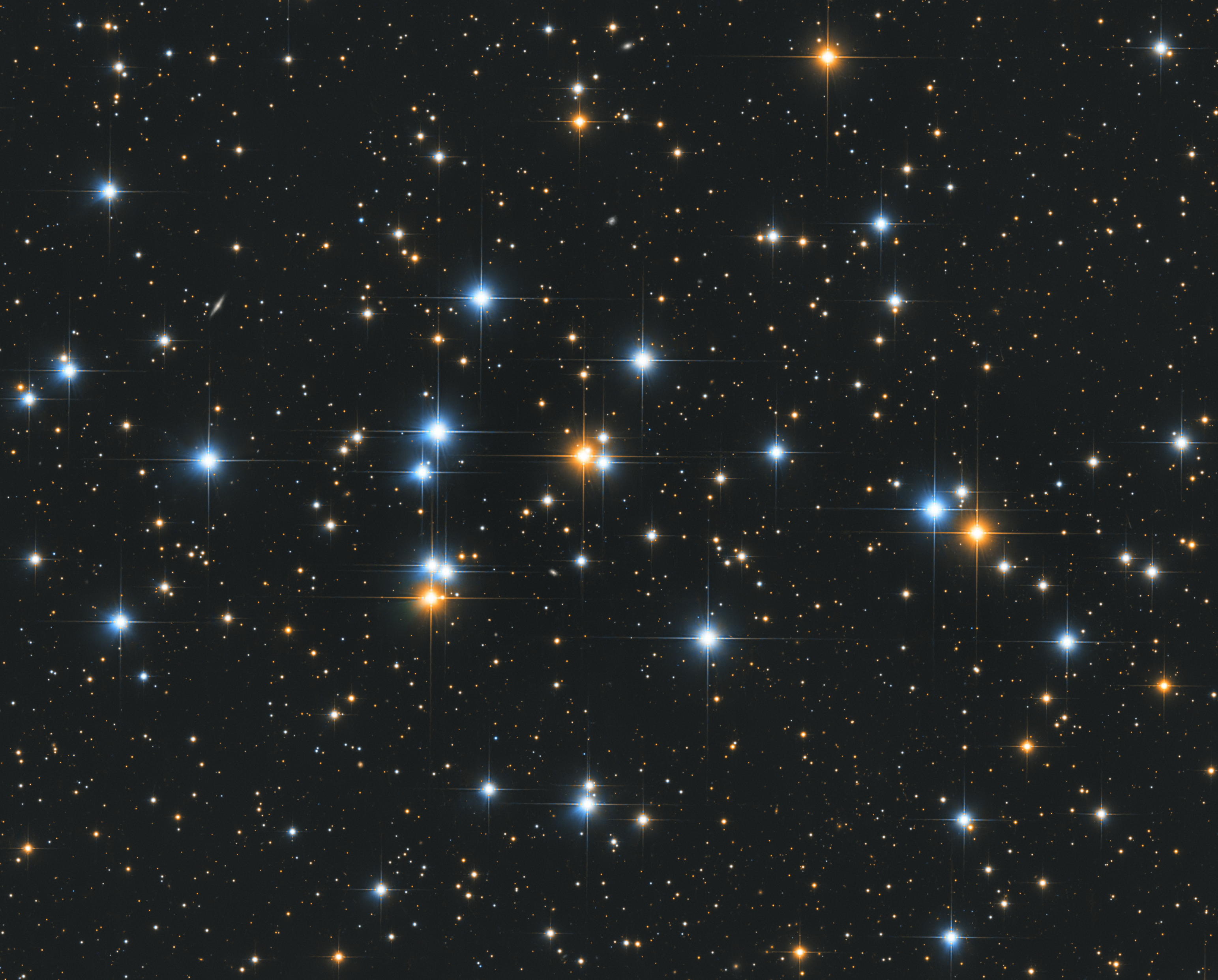
The (Little) Beehive Cluster in Canis Major
Coordinates: RA 06h 46m 00s | Dec -20° 45′ 15″
This loose cluster contains 100 stars and contains quite a few red giants, luminous stars that have exhausted their hydrogen cores, growing bloated and old. Through a small telescope this cluster looks pretty, with a scattering of loose stars with a red gem in the centre.
This cluster lies at a mind-boggling distance of 2,300 light years away, taking us 3.5 million years to reach its destination travelling the speed of our fastest man-made space object.