Welcome to this month’s update to find out what’s in the night sky for November.
In the Elan Valley International Dark Sky Park, astronomical darkness lasts for 10 hours 30 minutes from 18:40 at the start of the month and 11 hours 46 minutes from 18:09 at the end. This provides the best viewing conditions to see and capture images of distant galaxies, star clusters and nebulae.
The New Moon falls on 9th November and the Full Moon on 24th November.
The Full, “Beaver’ Moon will be a Supermoon, due to its phase coinciding with perigee. The Moon orbits the Earth elliptically, meaning that there are times when it is closer or further away from us. This perigee means the Moon will appear up to 6.5% larger and 13.5% brighter than when it is at apogee – the furthest point away from us.
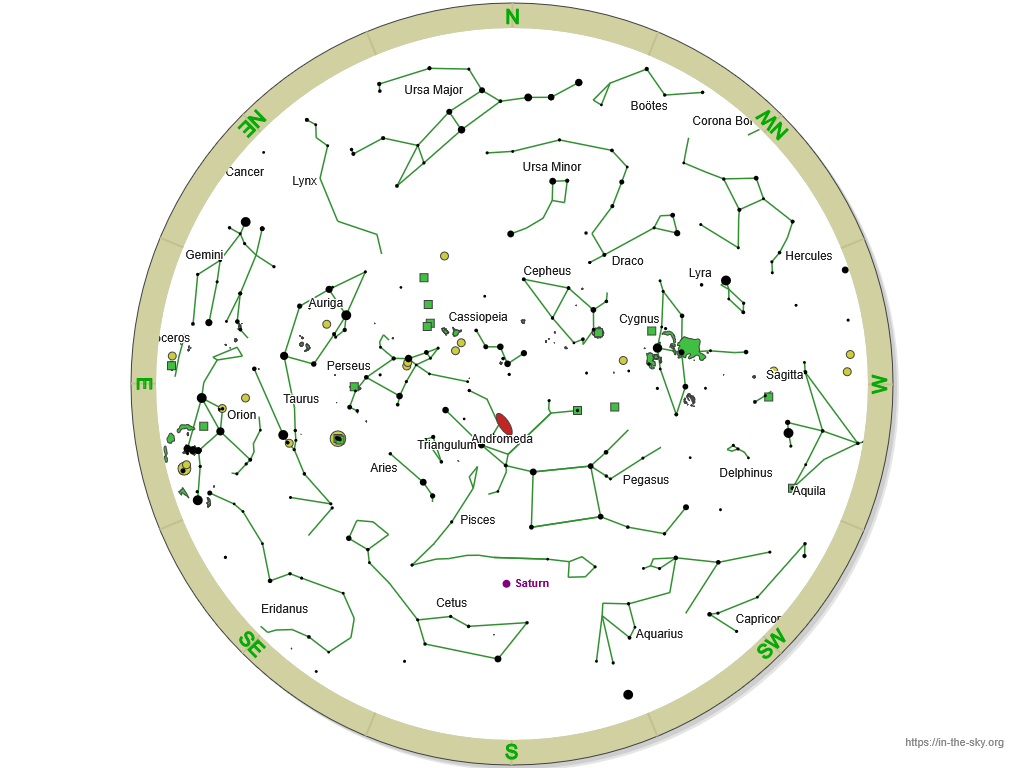
An all-sky view of the constellations from 10pm on 1st November from in-the-sky.org – this is a printable map – click or tap the image to download the pdf
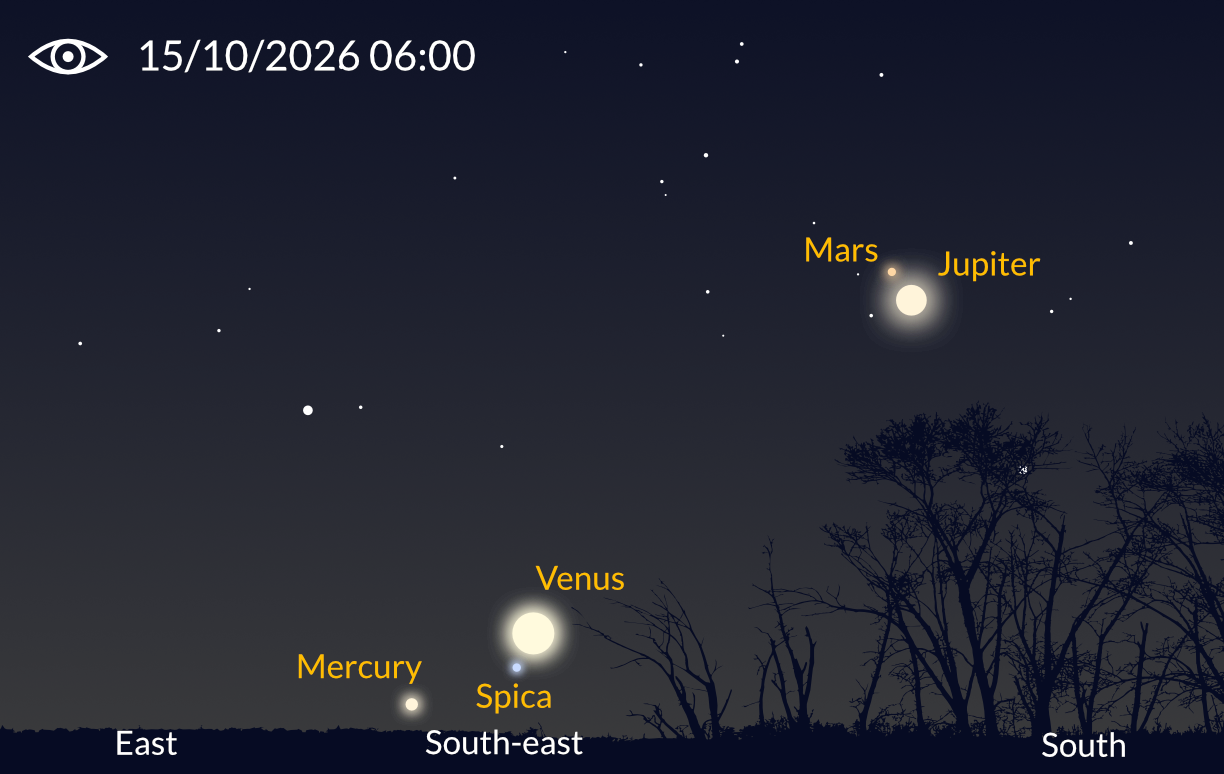
The Planets in November
On 15th November, you will get the opportunity to study four planets at the same time. At 6am, look towards the south-eastern horizon and you will see Mercury rising, with Venus positioned at the two o’clock position. Well positioned above the southern horizon lie Jupiter and Mars separated by 1.2 degrees of distance. Just below Venus lies the star Spica in the constellation of Virgo. The still, early morning atmosphere will provide ideal sky quality to take a look at these planets through a telescope, especially Jupiter and Mars. This will increase the chances of seeing great detail on the surfaces of these planets.
Leonid Meteor Shower
The Leonid Meteor shower will be active from 6th – 30th November 2026. The peak will occur during the evening of 17th November and the early morning of the 18th November. Originating from the constellation of Leo, there will be around 10-15 ‘shooting stars’ per hour that can be observed. The Moon will set at 11:40pm, providing a dark sky to see these meteors at their best.
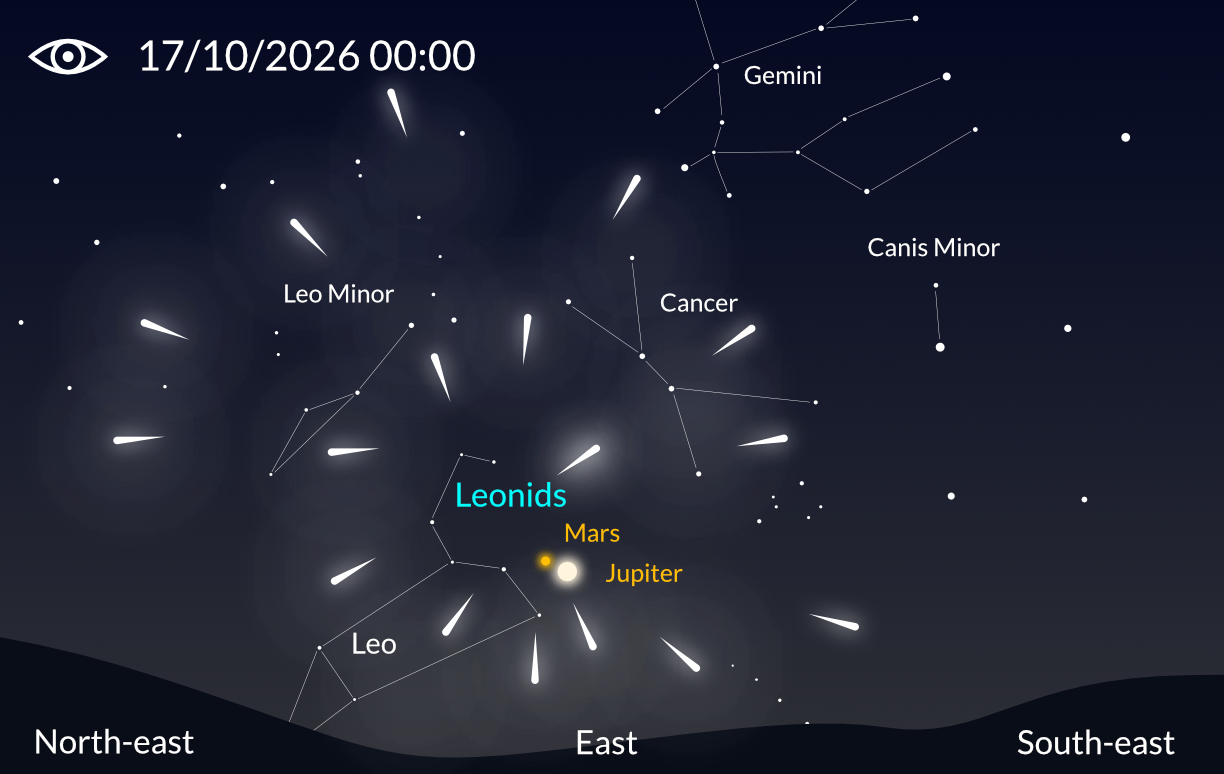
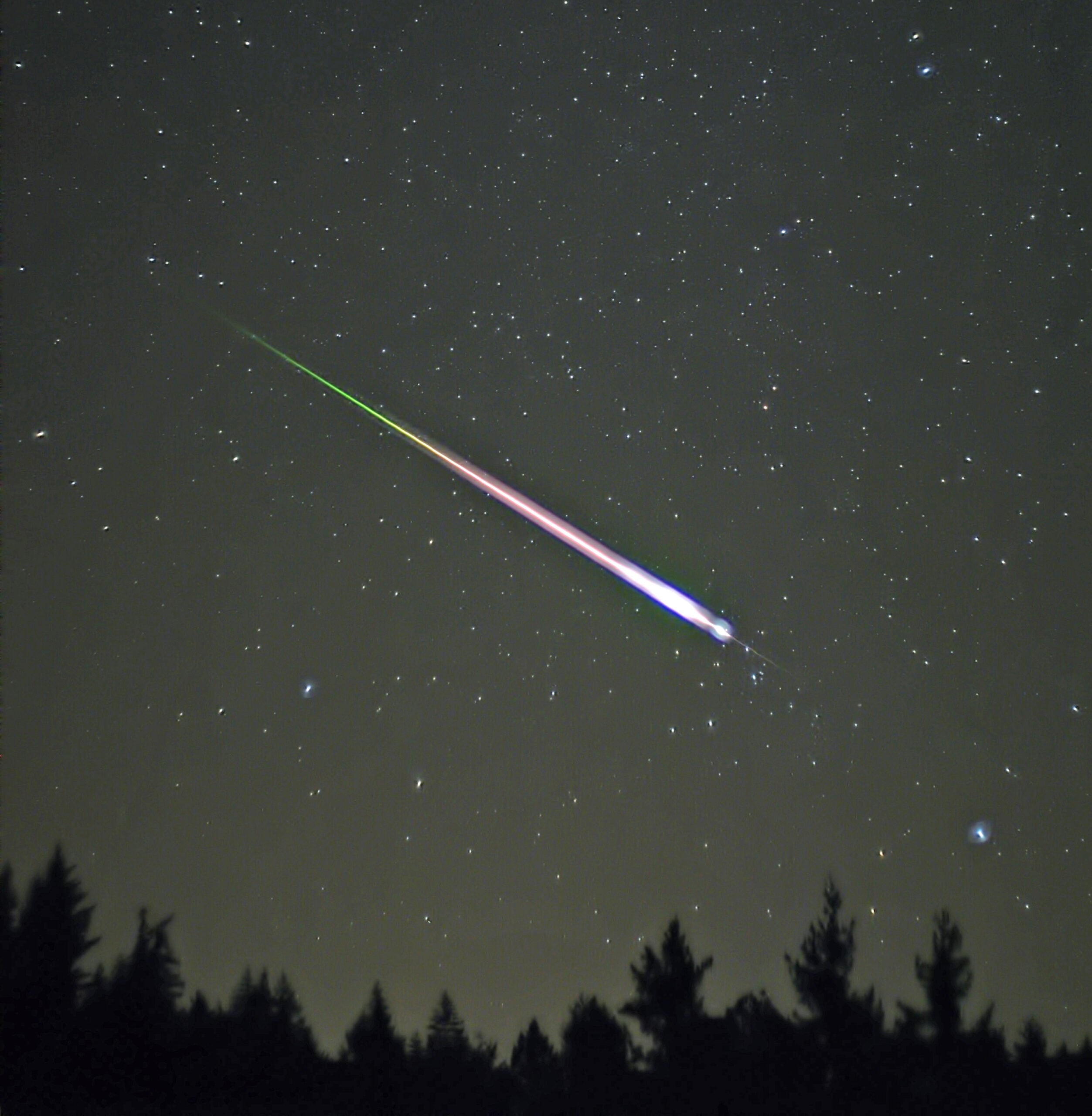
They are thought to be the fastest meteors known, travelling up to 160,000 miles per hour and leaving fine trains. To put this into perspective, that is nearly ten times faster than a manned spaceflight re-entering our atmosphere! If you are lucky, you may even spot a fireball. These meteors are the debris left behind by Comet 55P/Tempel-Tuttle, a short-period comet with a 33-year orbit.
We mention this every year, but this meteor shower is associated with a huge outburst every 33 years, where you may see many thousands of meteors. We only have around a seven-year wait for this!
Image credit: Navicore CC BY 3.0
Deep Sky Delights
Discover this month’s top deep-sky targets for telescopes, binoculars, and the naked eye.
Plus, check out our new feature, where we will select the best deep sky treasure to capture with your smart telescope.
Kemble’s Cascade
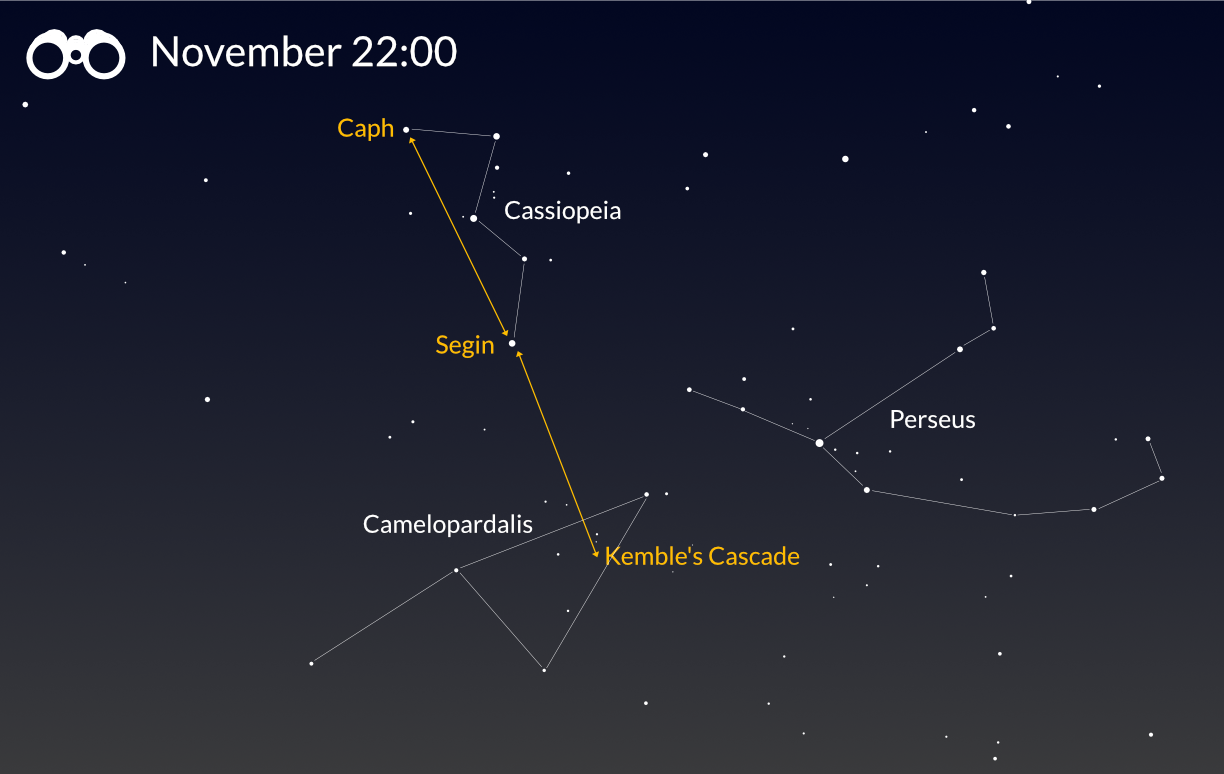
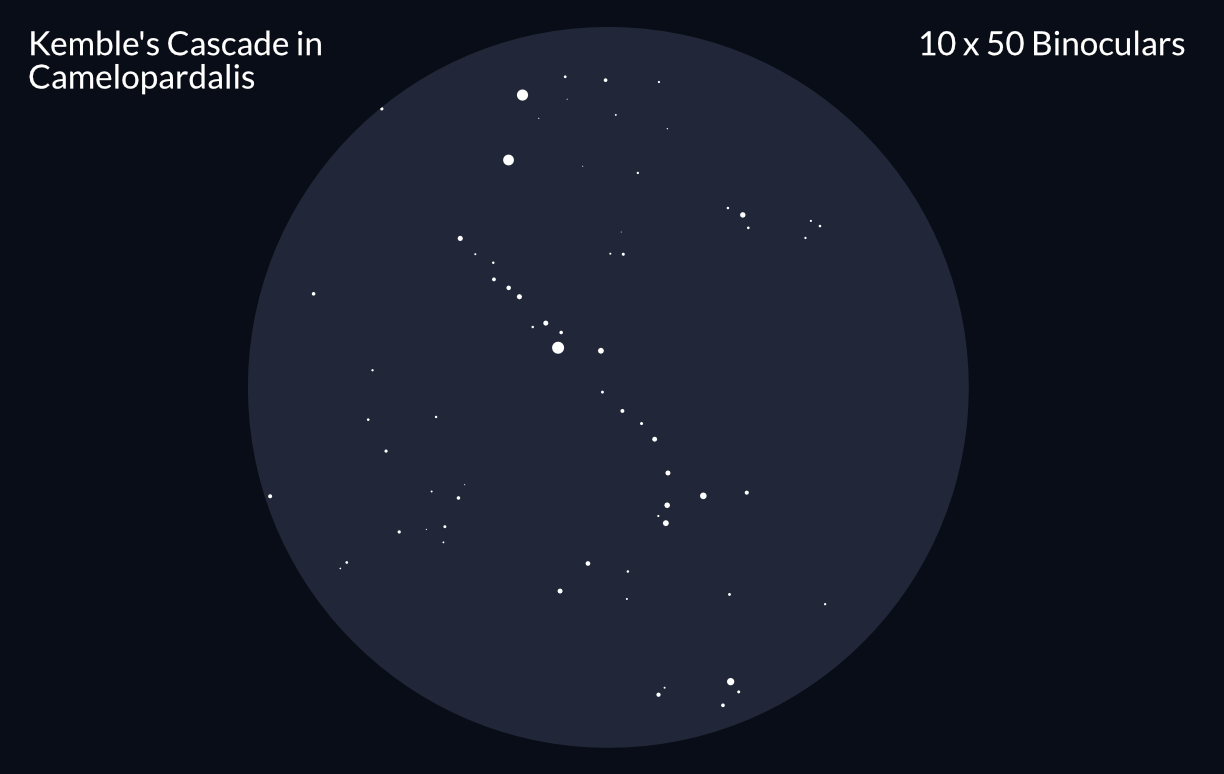
Within the faint and unassuming constellation of Camelopardalis, there lies a beautiful object that is in reach of binoculars. Known as Kemble’s Cascade, this asterism stretches across the distances of five full moons and contains around 30 stars arranged in a continuous stream. It was discovered by Father Lucian Kemble, a Canadian amateur astronomer in the late 1970s.
To find it, look for Cassiopeia’s two stars that form either end of the constellation and use that distance to measure out from it the star Segin and left of Perseus. Raise your binoculars to your eyes and scan that area. A distinct line of stars will pop into view.
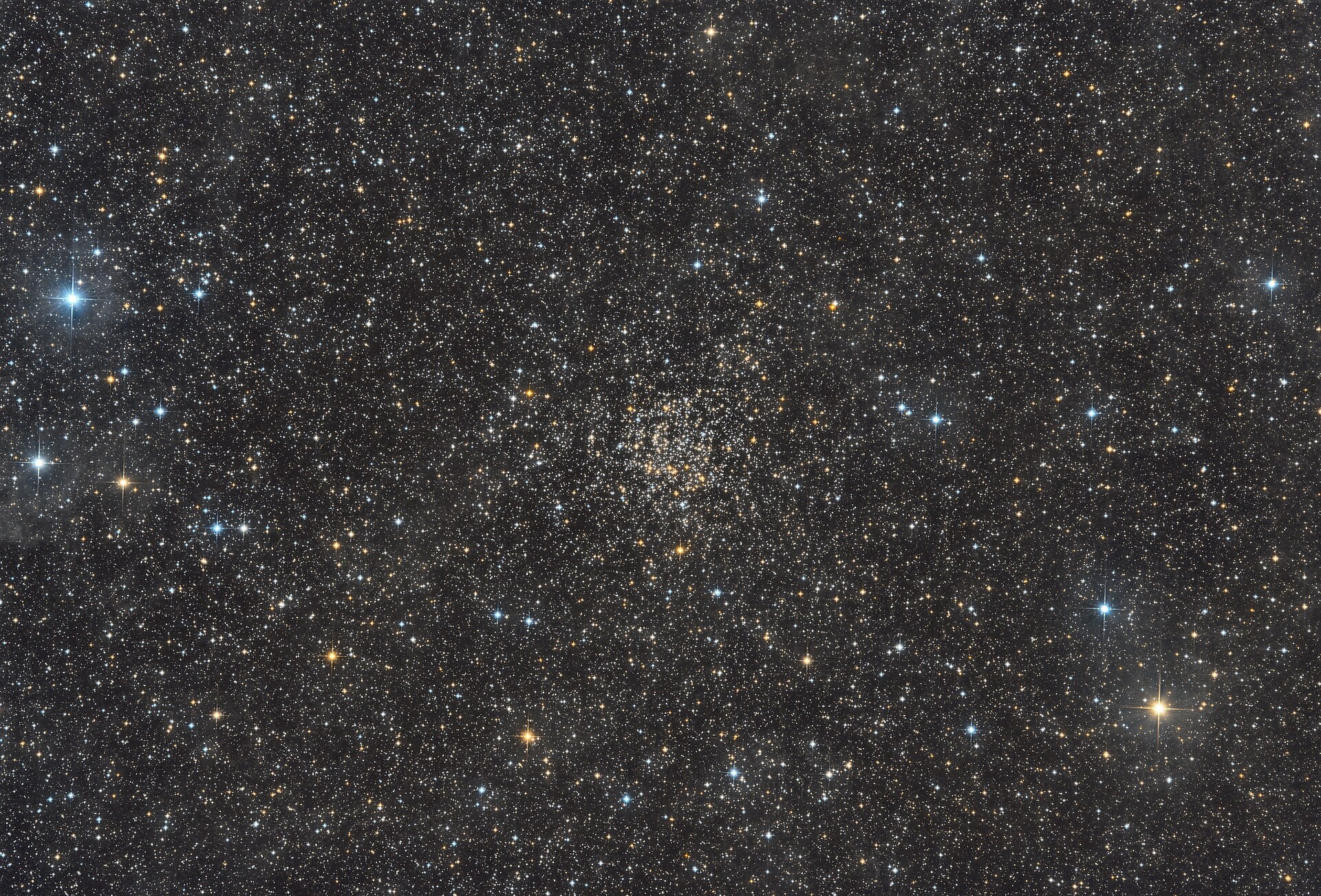
A Celestial Rose
RA: 23h 57m 24s | DEC: +56° 42′ 30″
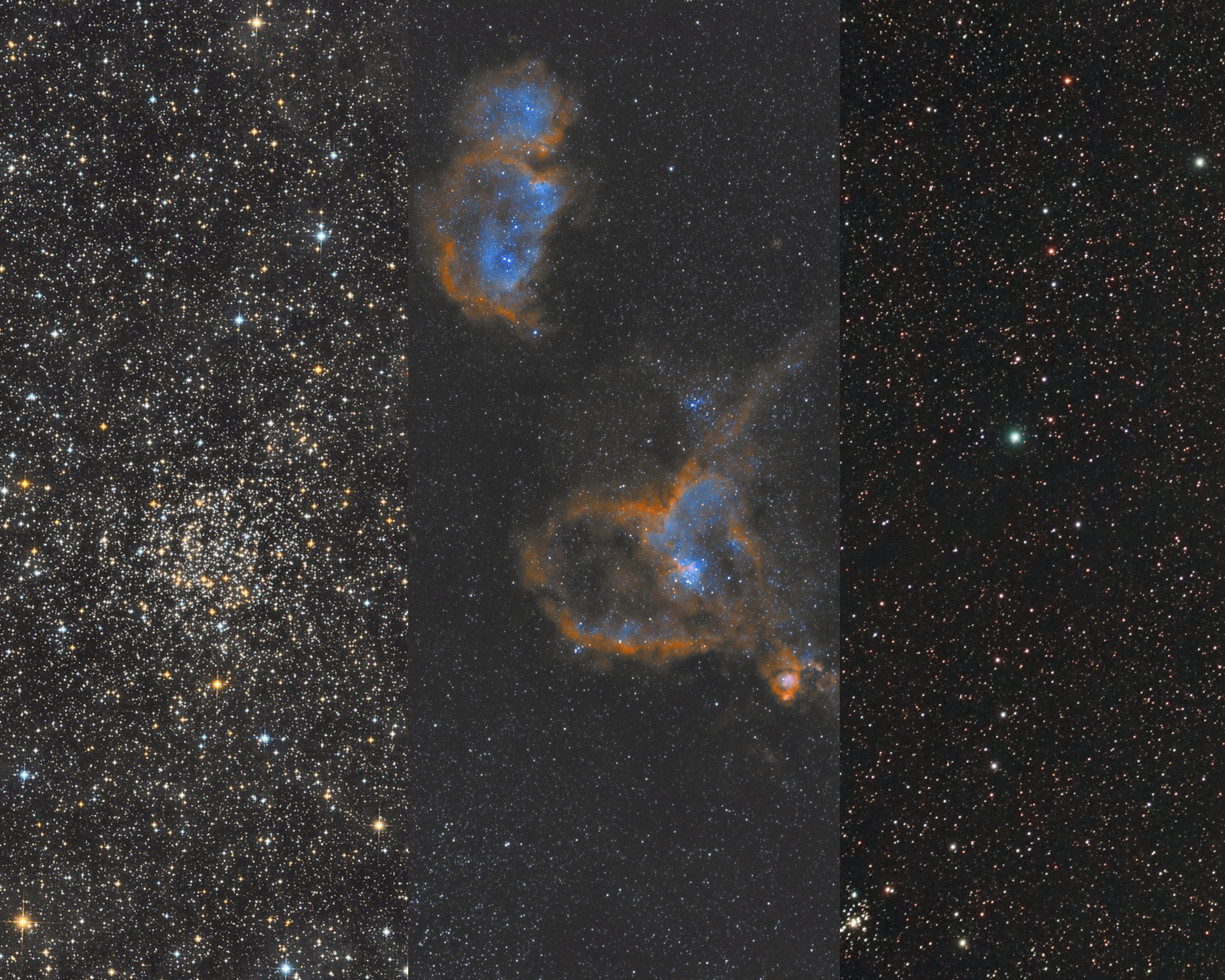
This telescope target lies 7,600 light-years away and it situated in the constellation of Cassiopeia. Called Caroline’s Rose (NGC 7789), it was discovered in 1783 by Caroline Herschel, sister of William Herschel, through an eight-inch telescope.
It appears as a densely-packed cluster of faint stars with dust lanes that meander within the cluster, resembling the petals of a rose. The cluster contains 3,000 bright stars, and up to 16,000 fainter ones, which are gravitationally bound. The stars in this cluster are around three times younger than our own sun.
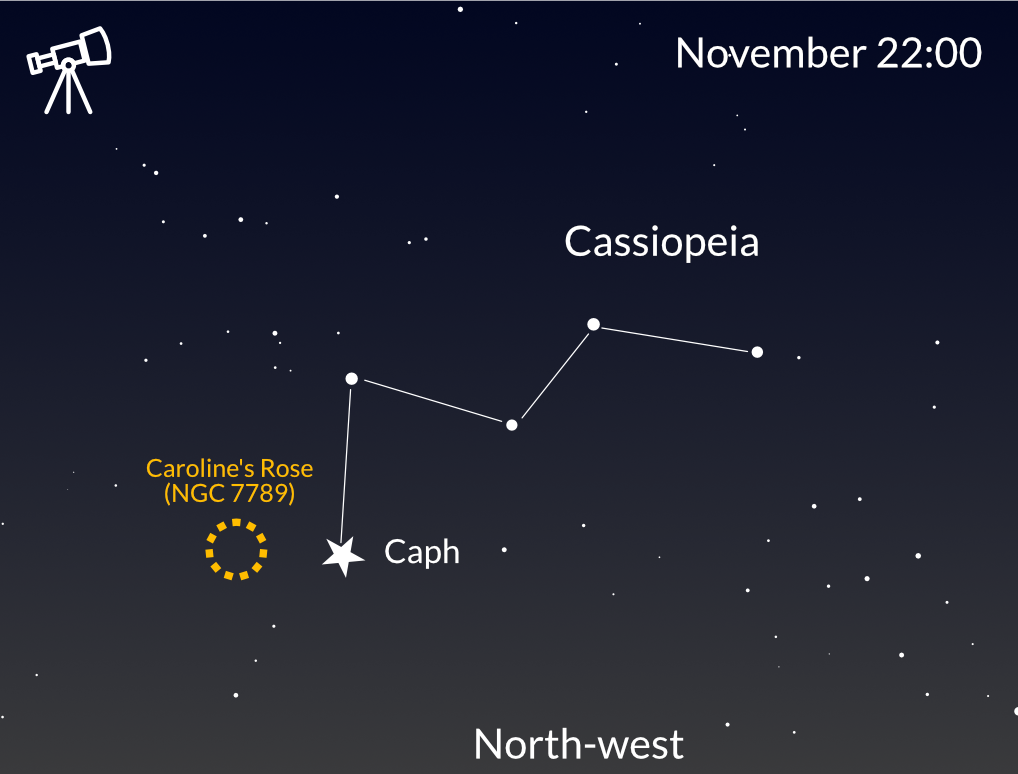
For star hoppers, with telescopes of six inches of aperture and larger, face the North-western horizon and look for the constellation of Cassiopeia, which is near the zenith. Spot the star Caph on the left hand side of the ‘m’ asterism of Cassiopeia. You will see Caroline’s Rose pop into view through your finder scope as a small, misty patch of light. Look through your eyepiece and you will see a circular scattering of closely-grouped stars. Use averted vision to tease out the dust lanes in the cluster which forms the petals of this celestial rose.
Heart and Soul
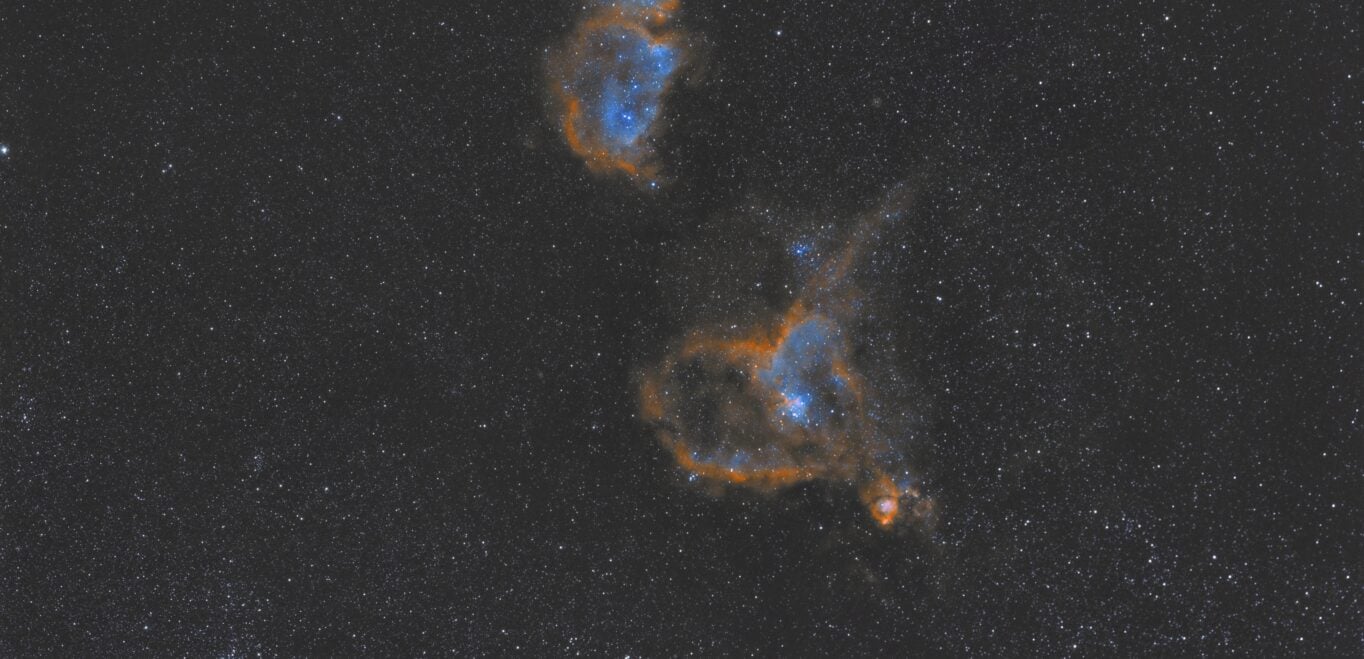
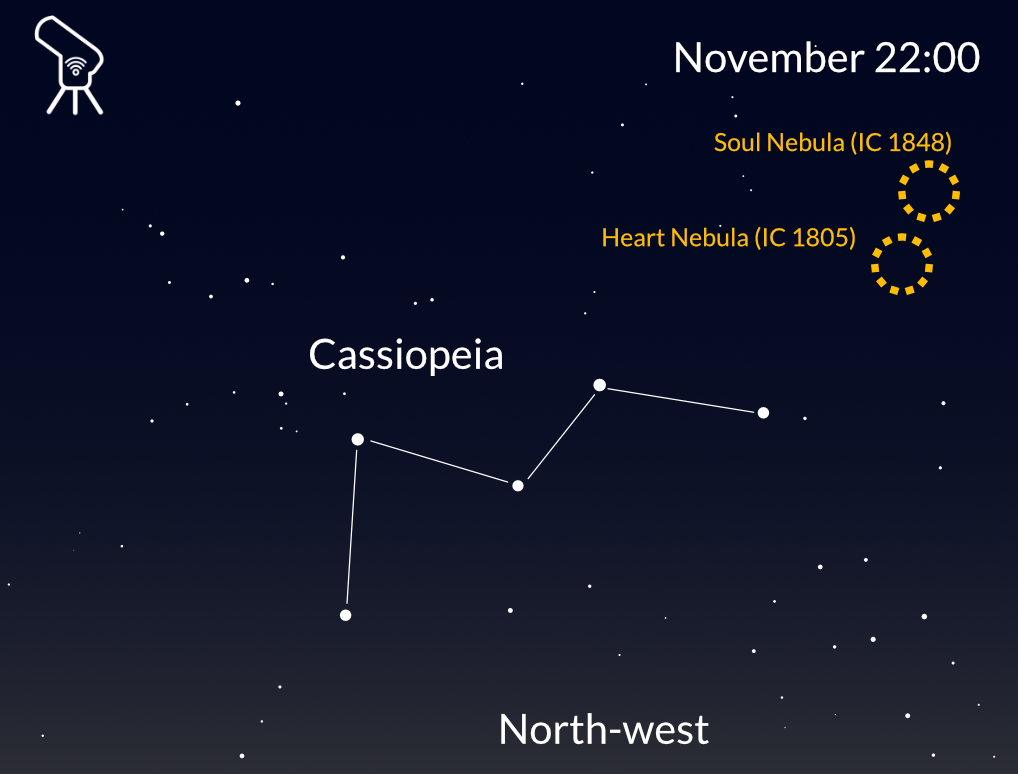
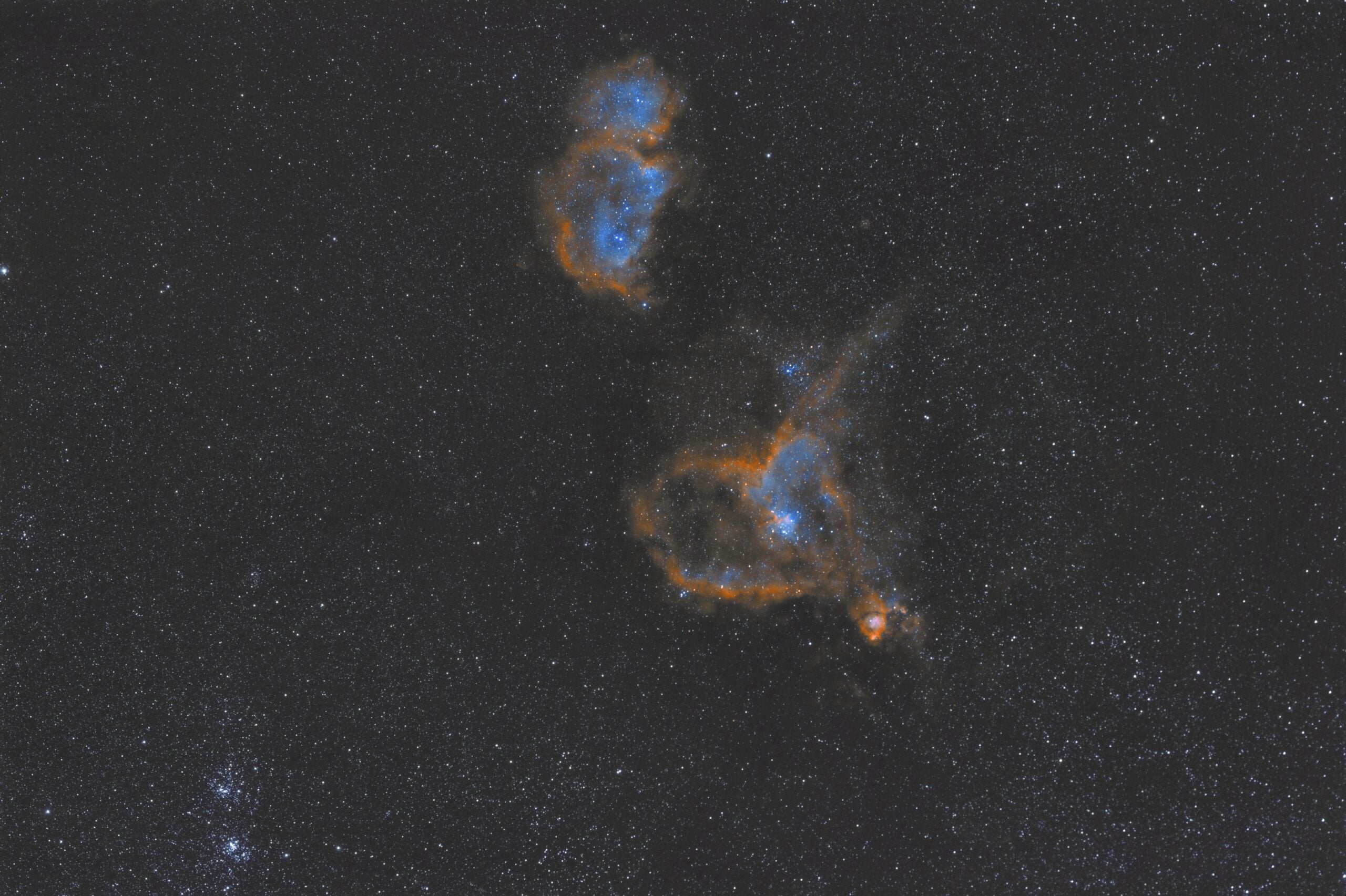
For those with a smart telescope, we can recommend two nebulae that are part of the same giant stellar nursery. The Heart and Soul Nebulae (IC 1805 and IC 1848) lie in the constellation of Cassiopeia and make a pleasing target to capture. You can either capture them separately or use your smart telescope’s mosaic mode to frame the nebulae side-by side. Simply search for the nebulae’s common names or their catalogue numbers , such as “IC 1805”.
Located around 7,500 light-years away, Heart Nebula (IC 1805) resembles a celestial heart shape, while IC 1848 looks like a human embryo. They shine in red light because of the intense ultraviolet radiation emitted by the newly-born stars. These young stars are many thousands of times younger than our own sun. Within the centre of the heart nebula lies the young and vibrant open star cluster Melotte 15, which blasts radiation that ionises and shapes the surrounding gasses.
Image credit: Oliver Gutiérrez Suárez (StarlightHunter.com)
Hints and Tips
The darker the sky, the better:
Find a dark sky area, away from light pollution and choose a moonless night.
Use equatorial (EQ) mode
Your unit has alt-azimuth mode, which is sufficient for brighter targets and also an equatorial mode option. Equatorial mode is better for longer exposures, as the tracking follows the arc-type movement of the stars due to the Earth’s rotation.
Mosaic Mode
Your telescope will not have a wide enough lens to capture both nebulae in one image, so many exposures have to be taken where your telescope moves across the target area, taking exposures and stitching together the images like tiles to form one wide-field photograph. You can use ‘Mosaic Mode’ to capture these cosmic neighbours together if desired.
Be patient:
Try to get several hours of exposure time – set your unit to take 20-30 second exposures.
Want to bring out more details in your image?
Your unit should be able to process and stack these images, but if you save your raw data (where the telescope saves all the individual exposures, instead of ‘stacking them into one image file), there are good, open-source software available such as GraXpert and Siril if you wish to process the final image further.