Welcome to this month’s update to find out what’s in the night sky for October.
In the Elan Valley International Dark Sky Park, astronomical darkness lasts for eight and a half hours from 8.45pm at the start of the month and ten and a half hours from 6.40pm at the end. This provides the best viewing conditions to see the Milky Way and distant galaxies, star clusters and nebulae.
The New Moon falls on 10th October and the Full Moon on 25th October.
The clocks go back one hour on Sunday, 25th October.
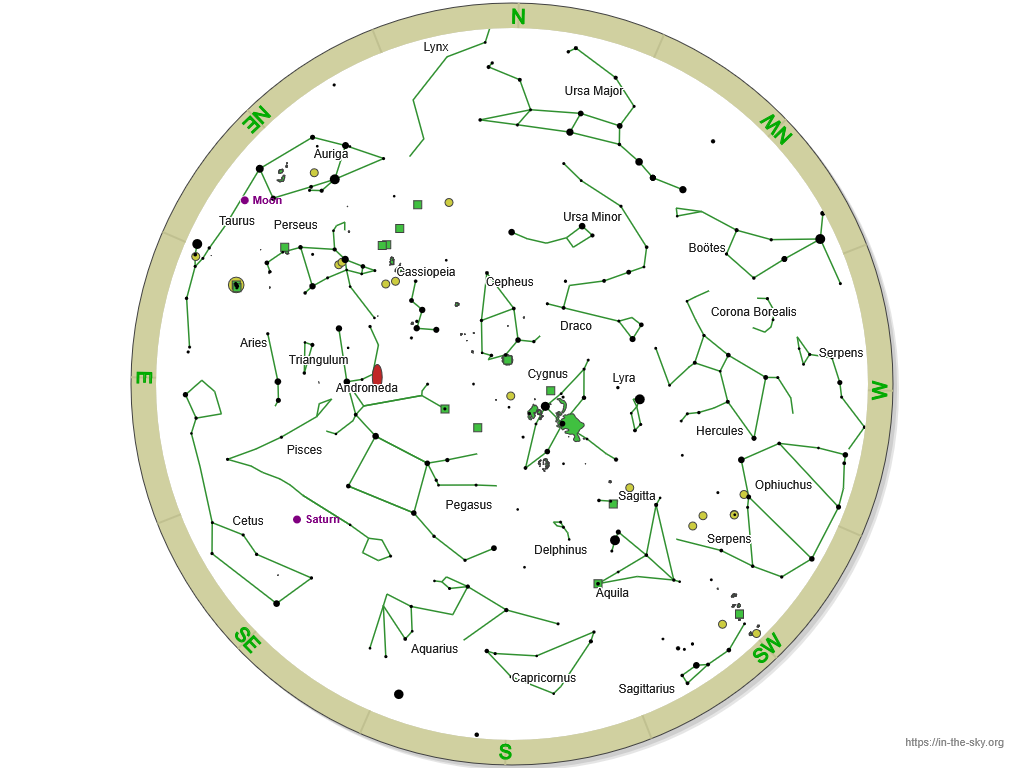
An all-sky view of the constellations from 10pm on 1st October from in-the-sky.org – this is a printable map – click tap the image to download the pdf
To learn about the constellations, you can tap the image above which will download as a printable PDF.
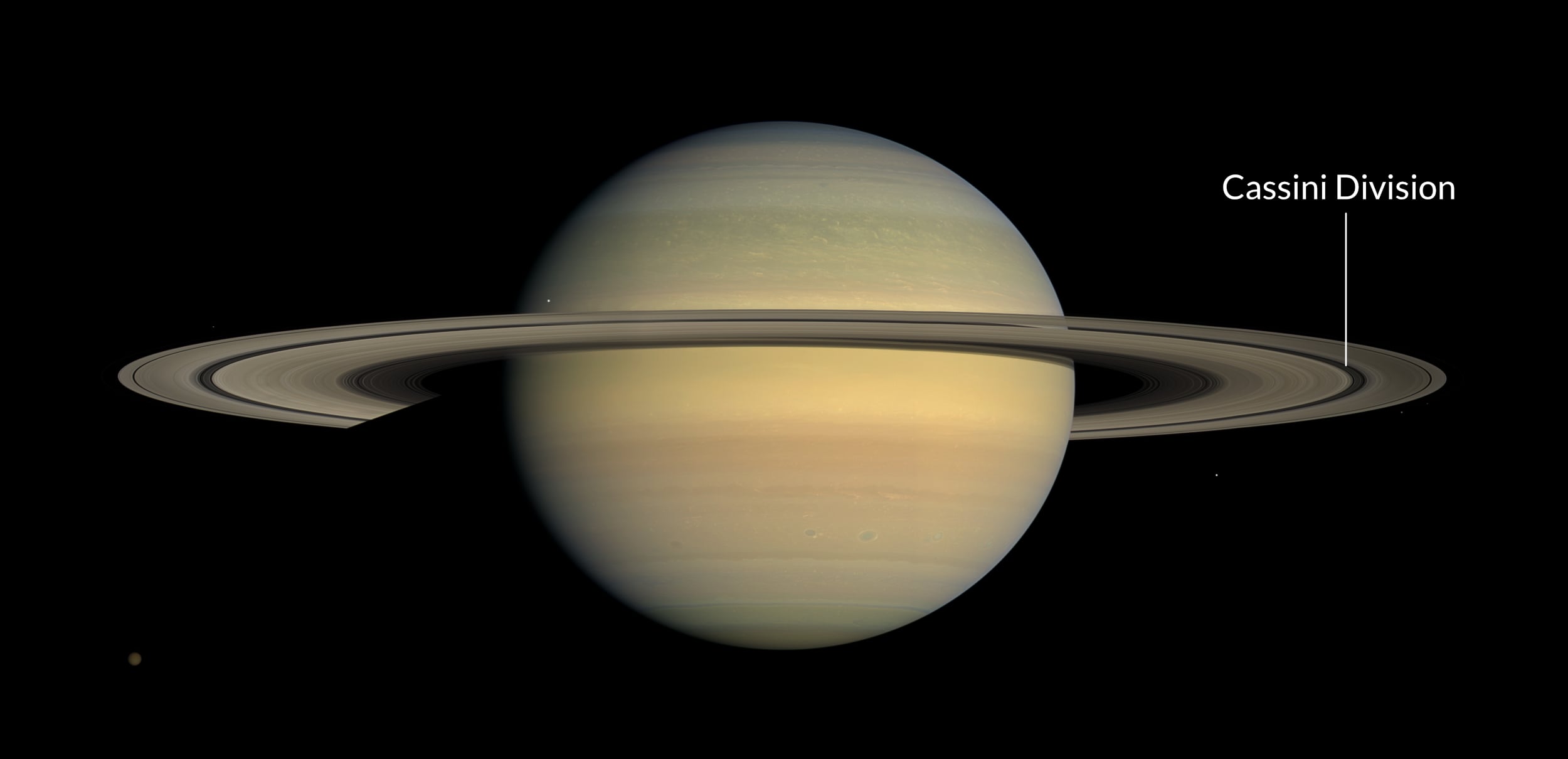
NASA/JPL-Caltech/Space Science InstituteOctober is the best time to view Saturn
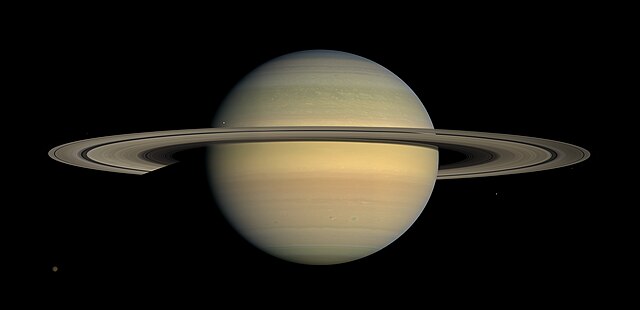
On 4th October, Saturn reaches opposition, being directly opposite the Sun and therefore at its largest and brightest. Already present in the sky as it gets dark, you can spot this planet as a steady golden point of light moving across the southern horizon as the month progresses.
You can see the planet with the unaided eye – but if you have some binoculars, you may be able to see a few of its 293 moons. If you have a small telescope, you will be able to spot the Saturn’s rings.
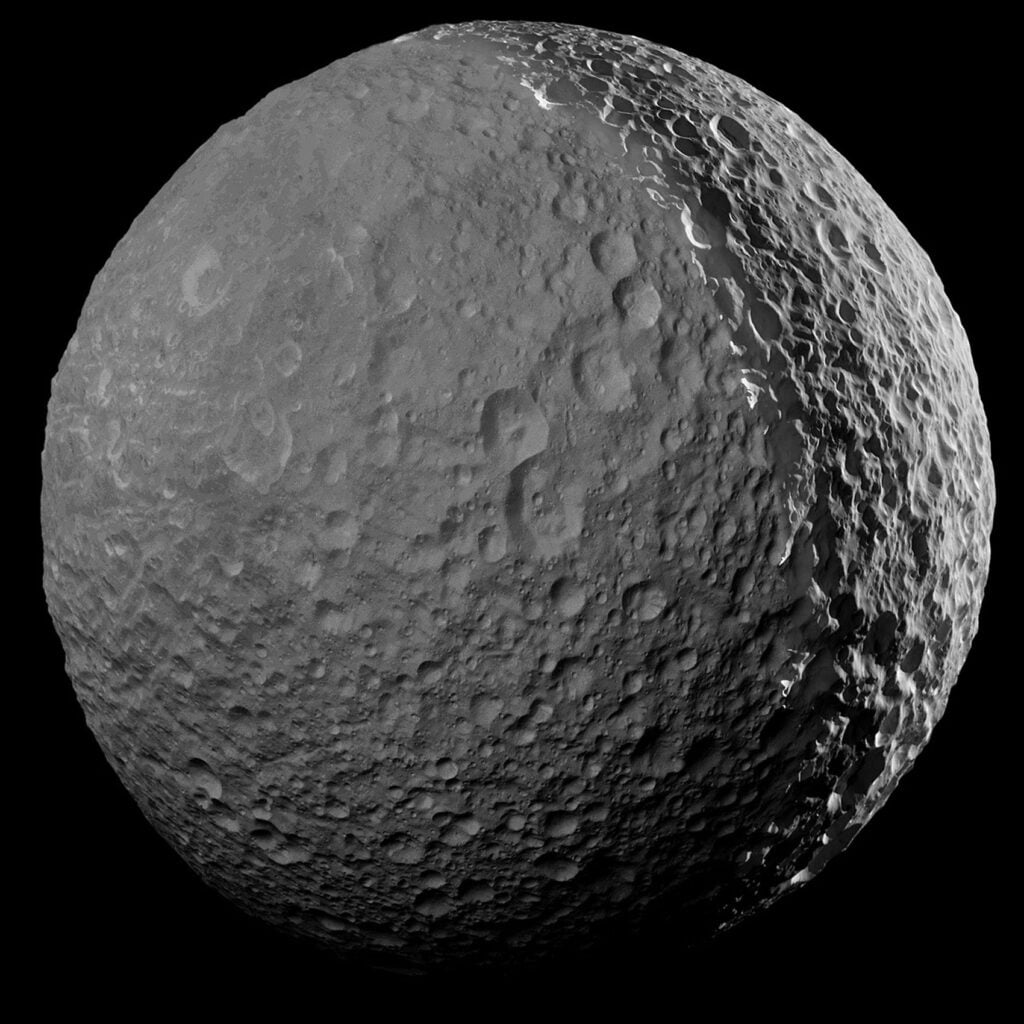
If the skies are steady, you may able be able to spot the Cassini Division, a dark gap in Saturn’s rings, which is 3000 miles wide. This gap is caused by the gravitational influence of Saturn’s inner moon, Mimas.
NASA/JPL-Caltech/Space Science Institute
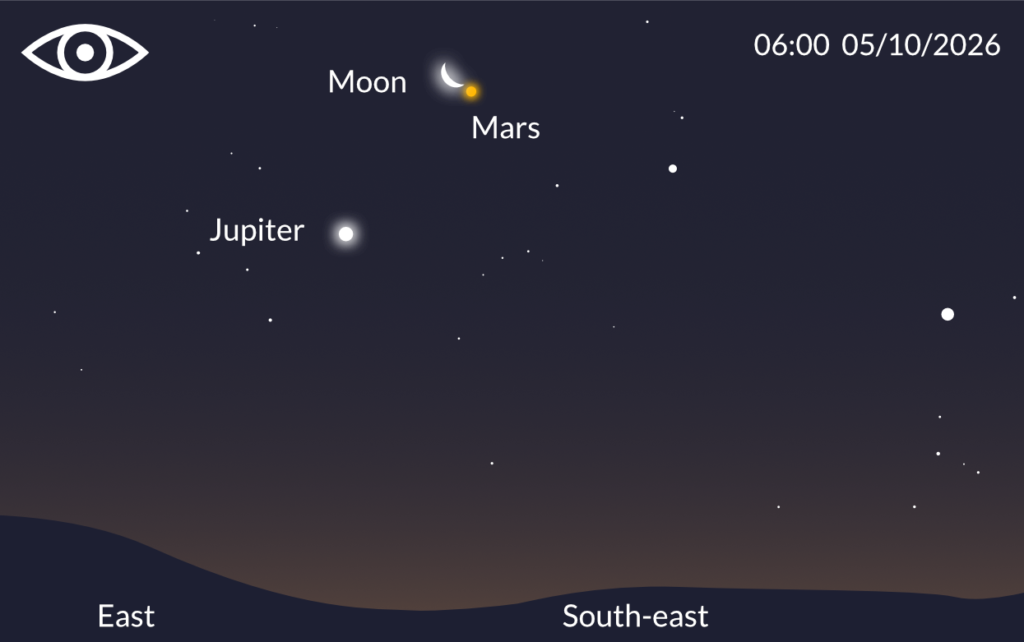
Moon and Mars Conjunction
Set your alarm clocks for an early rise as Mars passes close to the 24 day-old Moon at a distance of 1°08′ on 5th October.
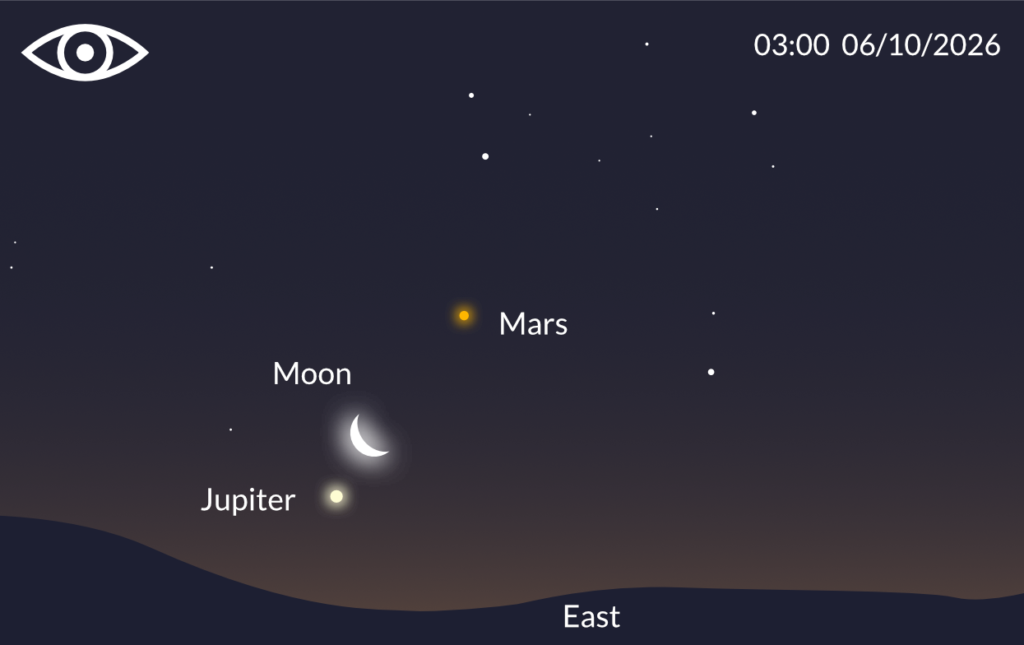
Jupiter passes close to the Moon
The following morning, at 3am, look to the eastern horizon as Jupiter will be passing close to the Moon, with Mars higher up in the night sky.
Meteor Showers
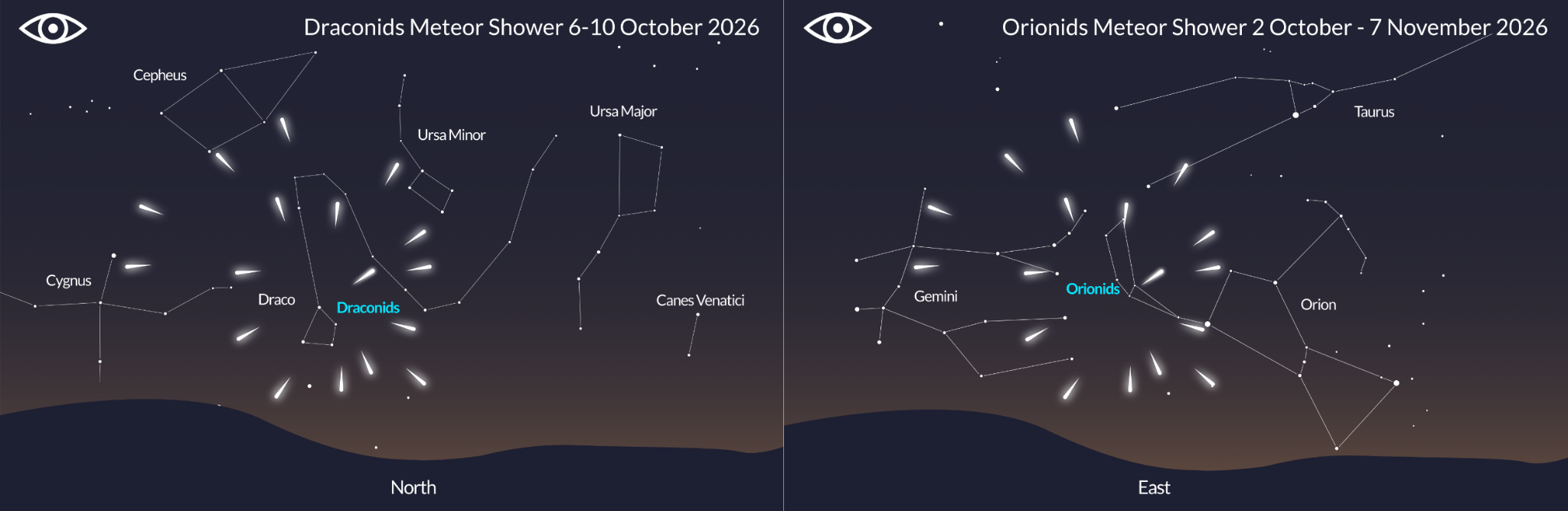
There will be two meteor showers this month: The short-duration Draconids that falls between 6th and 10th October and the Orionids which is between 2nd October and 7th November, peaking during the night of 21st October.
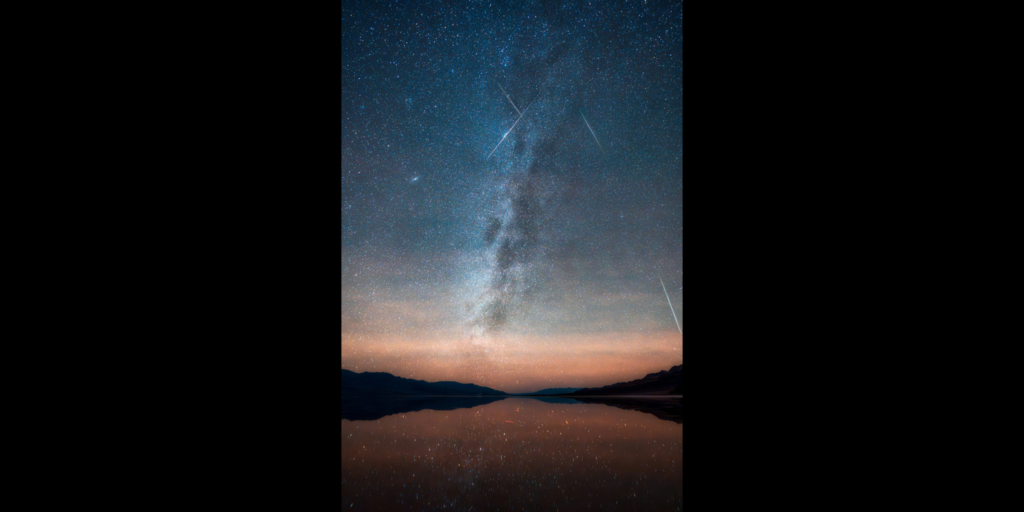
Although there are only 15 meteors per hour during the peak, it’s always worth looking up as the chances of seeing a fast, bright shooting star with a persistent train is high, especially during the moonless pre-dawn hours. The Orionids is associated with the famous Halley’s Comet (Comet 1P/Halley).
Image: Venti Views at Unsplash
Binoculars
Double Cluster
Look for the Double Cluster in the constellation of Perseus with your binoculars. Comprising open star clusters NGC 869 and NGC 884, they lie 7,500 light years away from us and are separated by only a couple of hundred light years. In a rural sky, you can see this with the unaided eye. Look for the left- hand star Segin in the W-shaped constellation of Cassiopeia and look directly below that star – you will see a faint patch of white. Raise your binoculars to your eyes and you will see two distinct clusters of stars which looks quite impressive.
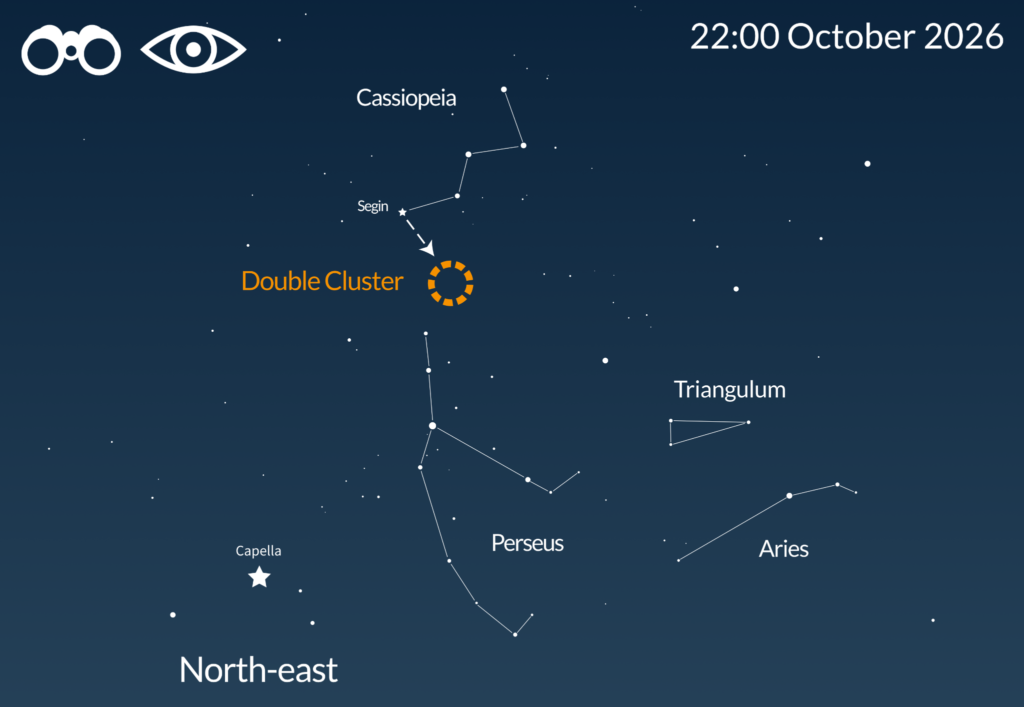
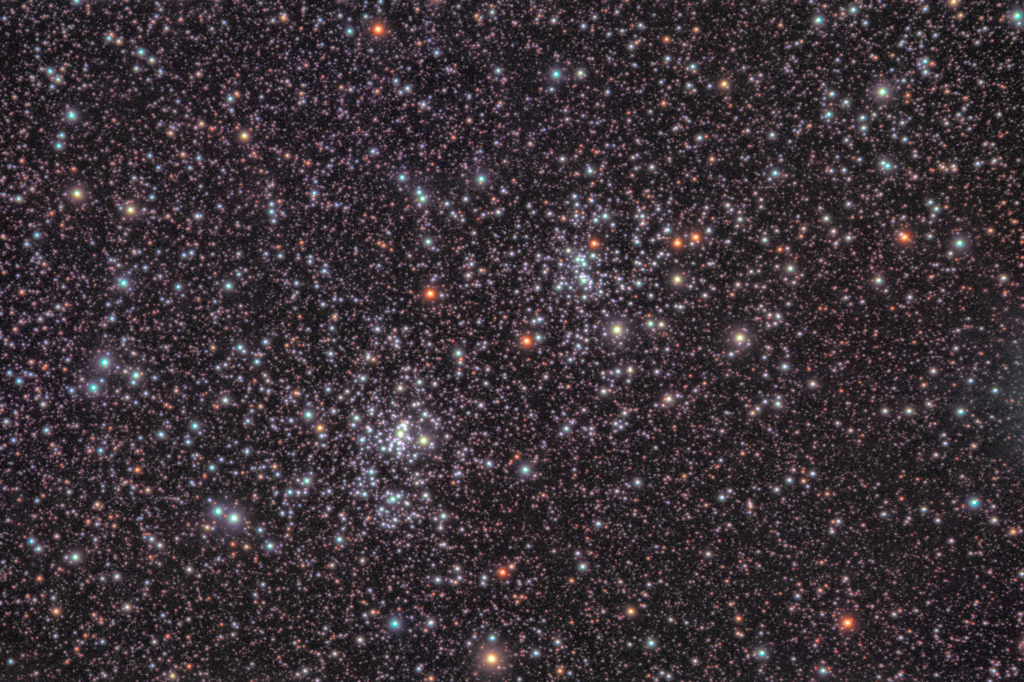
NGCs 869 and 884 share the same origin, born in a molecular cloud at around the same time. The stars are blue-white in colour, due to their relatively young age.
Telescopes
The Great Pegasus Cluster (Messier 15)
Coordinates: RA 21h 30m, Dec +12° 10′
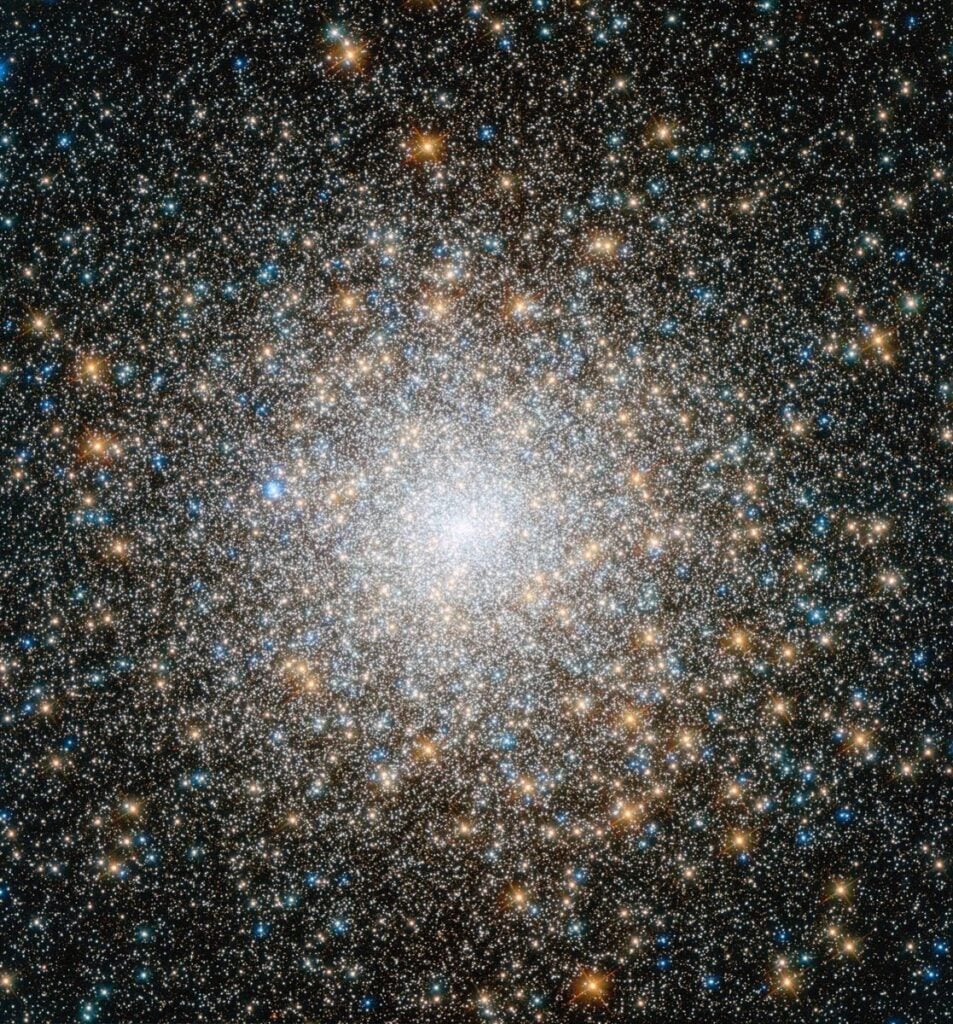
During October, the constellations of Pegasus and Andromeda are well placed in the east. This provides a great opportunity to spot a globular cluster called the Great Pegasus Cluster.
Containing a stellar population of 100,000 stars, it can be spotted with binoculars as a very faint patch of light but only through telescopes will the individual stars be resolved.
Image: NASA / ESO
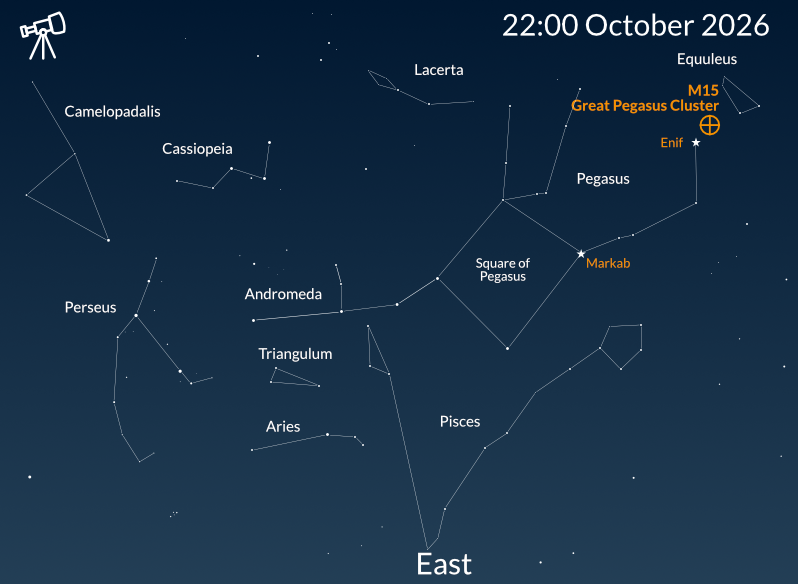
Look for the square asterism in Pegasus and the bottom right-hand star of the square called Markab – follow the line of stars until the end star called Enif.
If you train your finder scope on Enif, and scan to the right, the globular cluster will pop into view and you will be able to resolve the glittering ball of stars through your eyepiece.