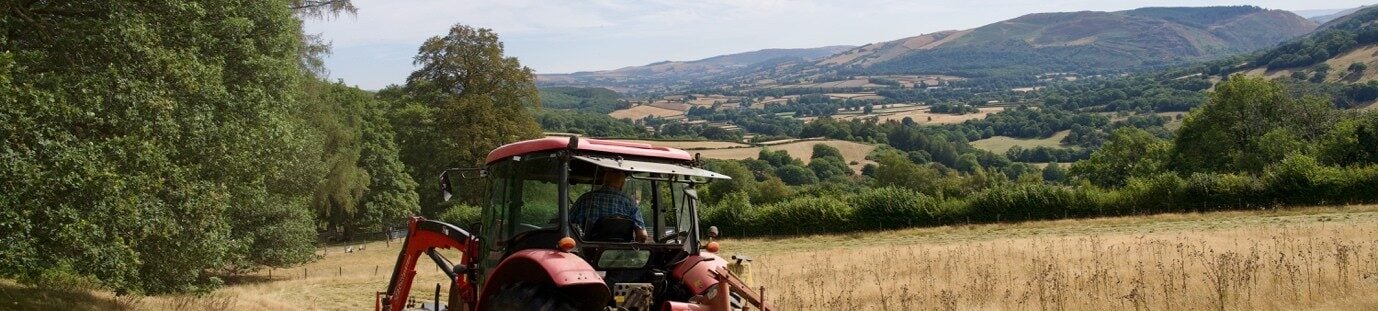
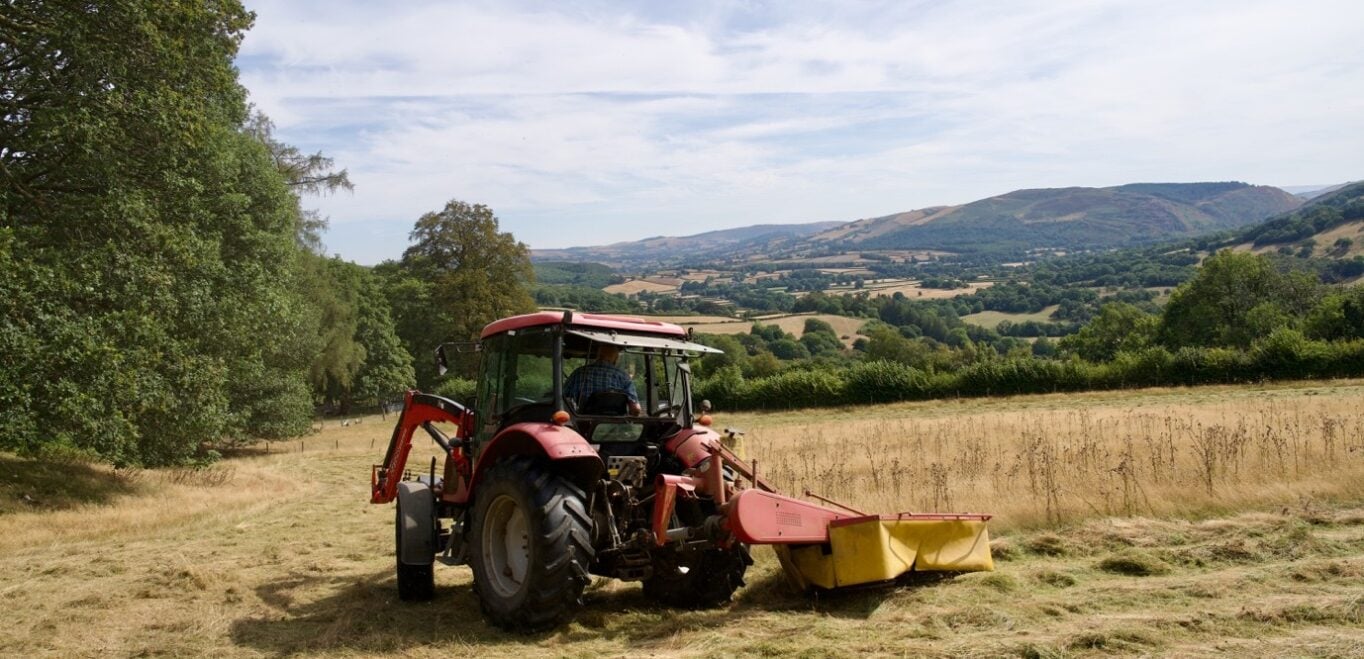
The sun’s out again, and Head Shepherd Glyndwr is already halfway across the field on the tractor, mowing hay before the day’s heat reaches its peak.
Haymaking comes late in the traditional upland-fringe meadows of the Elan Valley. The later cut is deliberate, giving the meadow’s flowers and grasses time to flower and set seed before the blades go through.
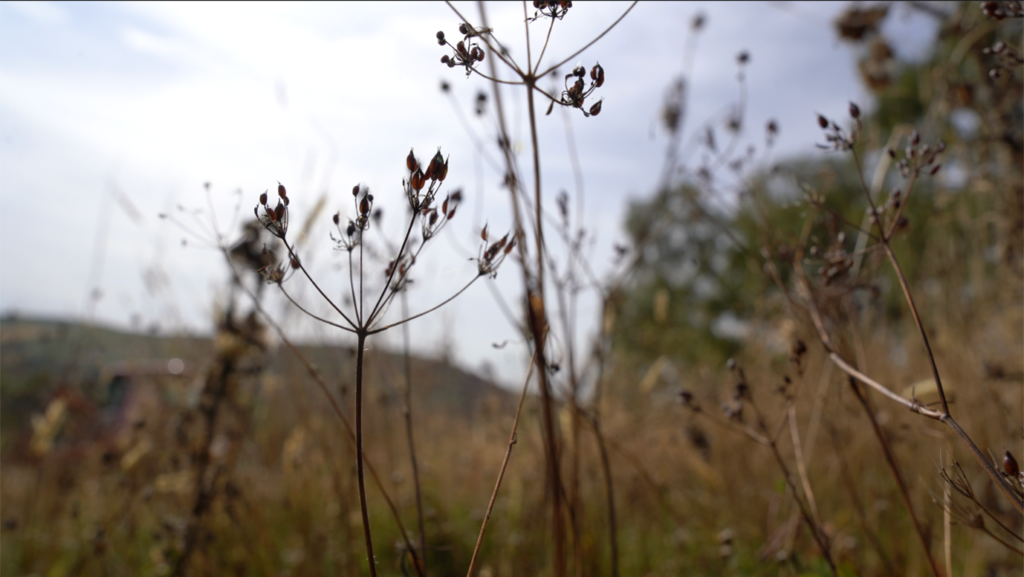
“Cutting later helps to regenerate the flowers, the seed,” Glyndwr explains. Once cut, the hay dries in the field for several days and is turned before baling, helping shake seed back onto the ground, seed that will help produce the flowers and grasses of future years. The hay will then be baled and fed to the native breed cattle through the winter.
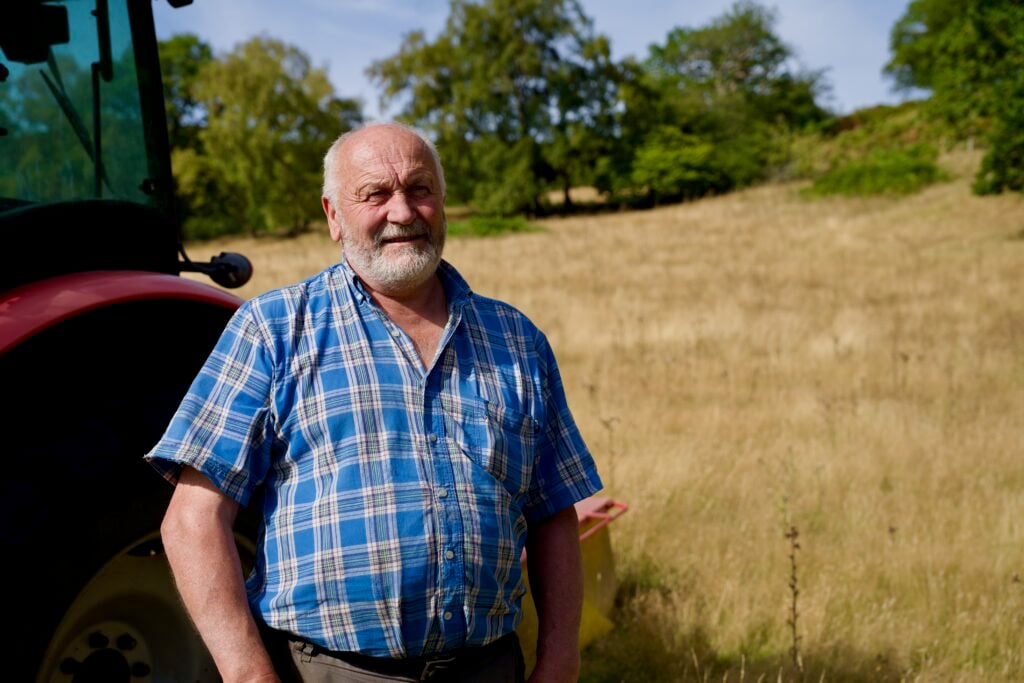
“The smell, the aroma of a real flower meadow that’s been harvested properly is better than any Gucci,” he jokes.
It has been an exceptionally dry summer. Wales received just 8% of its long-term average rainfall in July, putting the country on course for its driest July since records began 190 years ago, while analysis by the Energy and Climate Intelligence Unit, found grass growth across Britain running around 46% below average.
These aren’t ordinary fields. Neuaddfach farm sits within a cluster of traditional upland-fringe hay meadows spread across 20km of the Elan Valley. The ground has not been ploughed or reseeded for generations, nor heavily fertilised, allowing its native plant communities to persist.
The Elan Valley’s species-rich neutral and acidic grasslands are among the most important in Wales, containing rare wildflowers including great burnet, mountain pansy, wood bitter-vetch and greater butterfly-orchid. Their survival owes much to the continuation of the low-input farming practices that helped create them in the first place.
“We don’t want to lose these old flowers, these old traditional grasses that can grow with no fertiliser,” says Glyndwr. “They are native to this part of the world. If it’s farmed in this way, they have a chance to grow.”
This year’s drought also raises an increasingly important question about how diverse, species-rich grasslands cope as summers become hotter and drier.
“Some of these plants do grow, where modern varieties wouldn’t,” he says, “because some of them are deep-rooting, and they go down through the soil to get the water.”
Keeping the soil covered with a dense grass sward for longer may also help. “With a shortage of water everywhere, if you can keep water in the ground, it keeps these plants surviving,” he says.
Research suggests that plant diversity and rooting characteristics can influence how grasslands respond to drought, with deeper-rooting species able to access water from further down the soil profile. Permanent grassland soils can also build organic matter and support water infiltration, helping retain water in the landscape and slow the rate at which rainfall runs off it.
Some of the Elan Valley’s meadows now carry Site of Special Scientific Interest status, and the Elan Valley Trust has spent years working with Natural Resources Wales and local ecologists to understand how best to conserve and manage them.
Once the hay is taken, livestock return to graze the aftermath in autumn, an important part of maintaining the meadow’s diversity.
That relationship between livestock, grassland and the seasons is knowledge Glyndwr is increasingly thinking about passing on. With new farming tenants arriving on the Elan Valley estate this autumn, he wants the next generation to understand not simply how these fields are farmed, but why.
“I want to pass it on to the next generation that’s going to come and farm in these remote places,” he says. “I feel it’s my duty.”
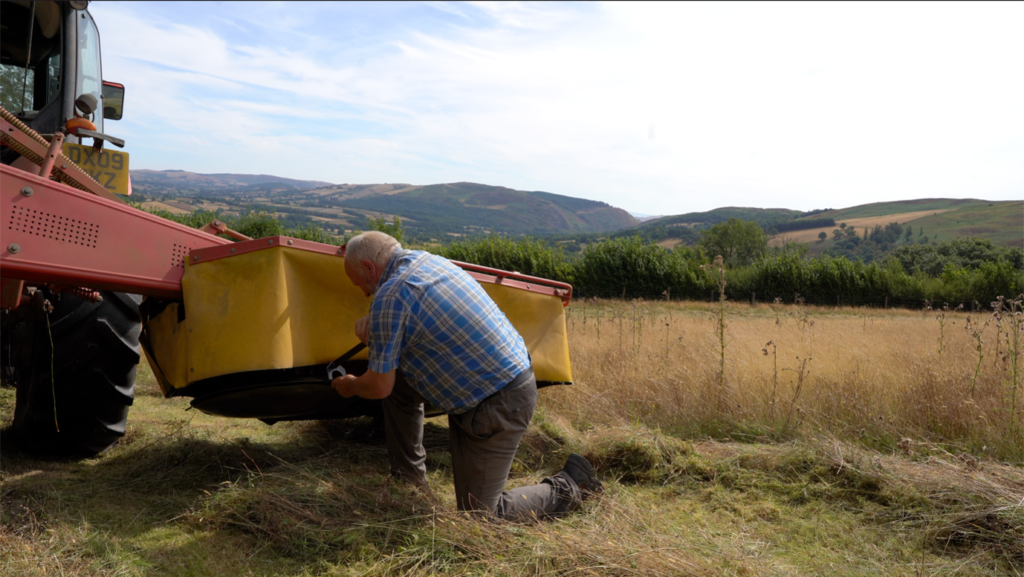
It’s not just farming technique he means. It’s the names of places, the timing of sheep gatherings and the traditional ecological knowledge of how to work with this particular landscape, passed between generations of Welsh farming families: ar gof a chadw, as he puts it, loosely, “to be remembered, and kept”.
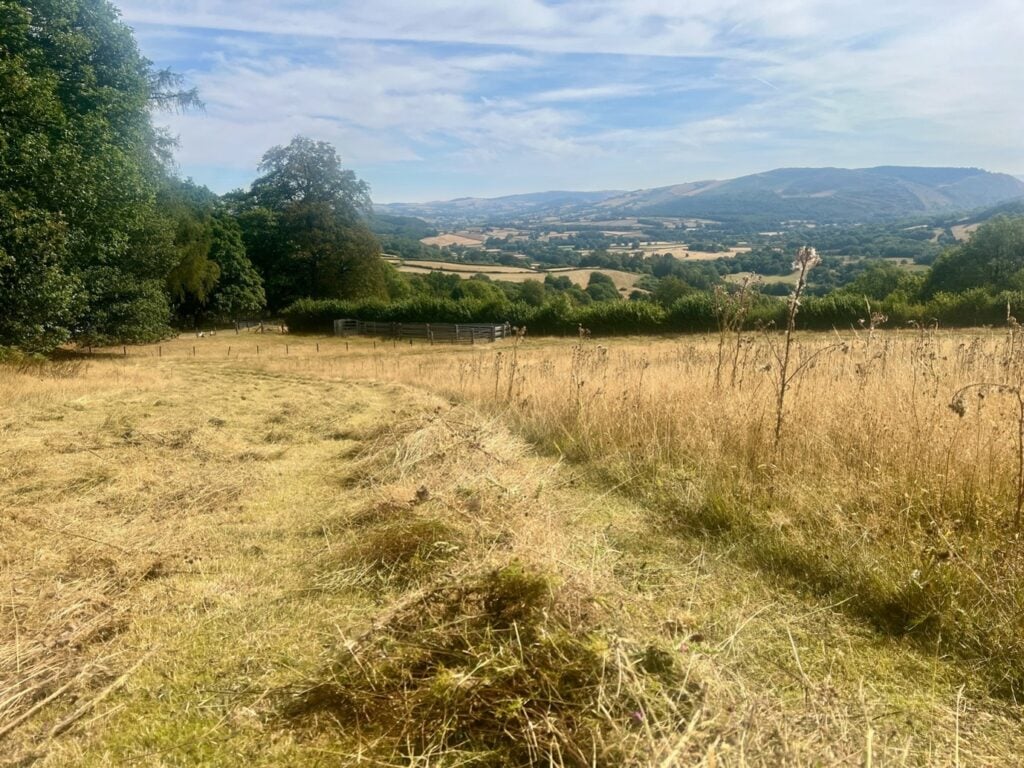
Across much of Britain, traditional species-rich meadows have disappeared. Here, they remain working parts of the farming landscape, producing winter feed, supporting rare plants and wildlife, and retaining knowledge about how to manage these particular fields.
As hotter, drier and less predictable weather creates new challenges for farming and the natural environment, understanding how these diverse grasslands respond, and how best to manage them, will become increasingly important.
Or, as Glyndwr puts it more simply: “I think we should try and look after them a bit better. I’m sure they will look after us if we look after them.”