Welcome to this month’s update to find out what’s in the night sky for March.
In the Elan Valley International Dark Sky Park, astronomical darkness lasts for 9 hours and 21 minutes at the beginning of the month from 19:46 and 7 hours and 3 minutes from 21:47 at the end.
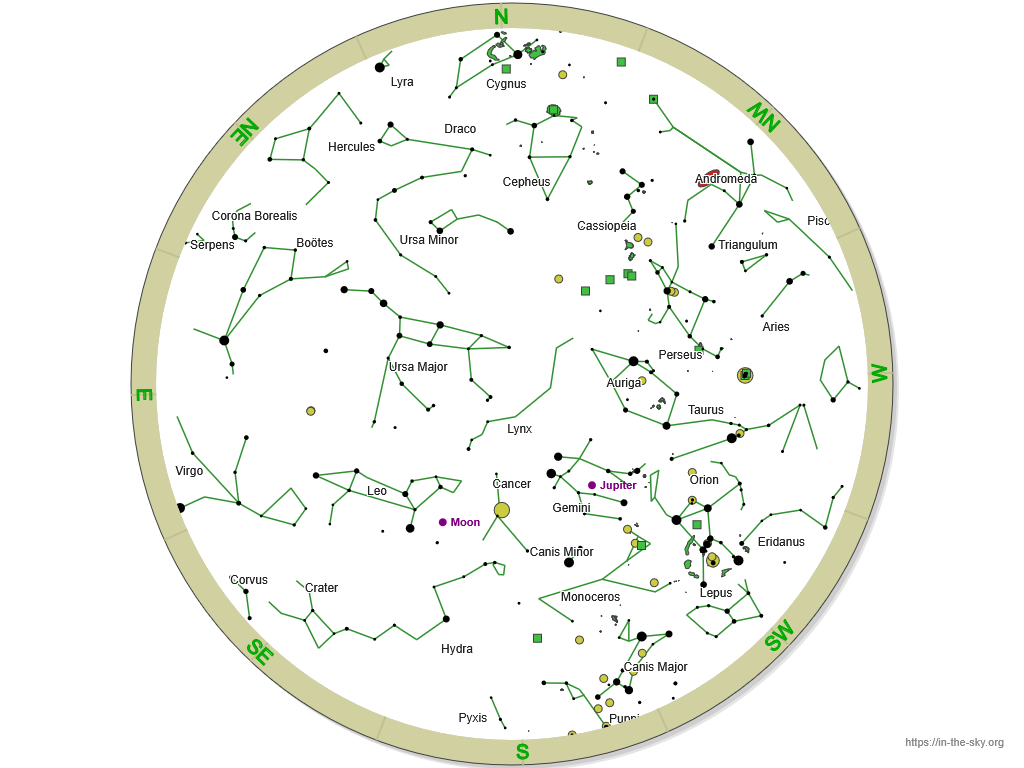
An all-sky view of the constellations from 10pm on 1st March from in-the-sky.org
Above the southern horizon, like the constellations of Monoceros, Cancer, Gemini and Leo. The glittering constellations of Orion, Taurus and Auriga moves westwards, whilst galaxy-spangled Virgo rises in the east. Ursa Major reaches the zenith this month. In the north, lie the constellations of Cassiopeia, Cepheus, Andromeda and Draco.
The Full Moon occurs on 3rd March and the New Moon on 19th March.
The Planets in March
There’s not much going on during March planet-wise but the king planet Jupiter continues to be well-positioned in the constellation of Gemini. It’s easy to find – it’s the brightest object right in the centre of the constellation. Use your binoculars to spot the moons; you should see around four of them. The cloud bands and Great Red Spot always look spectacular through small or medium telescopes under high magnification. Wait for those few seconds of clarity as the turbulence of the atmosphere settles.
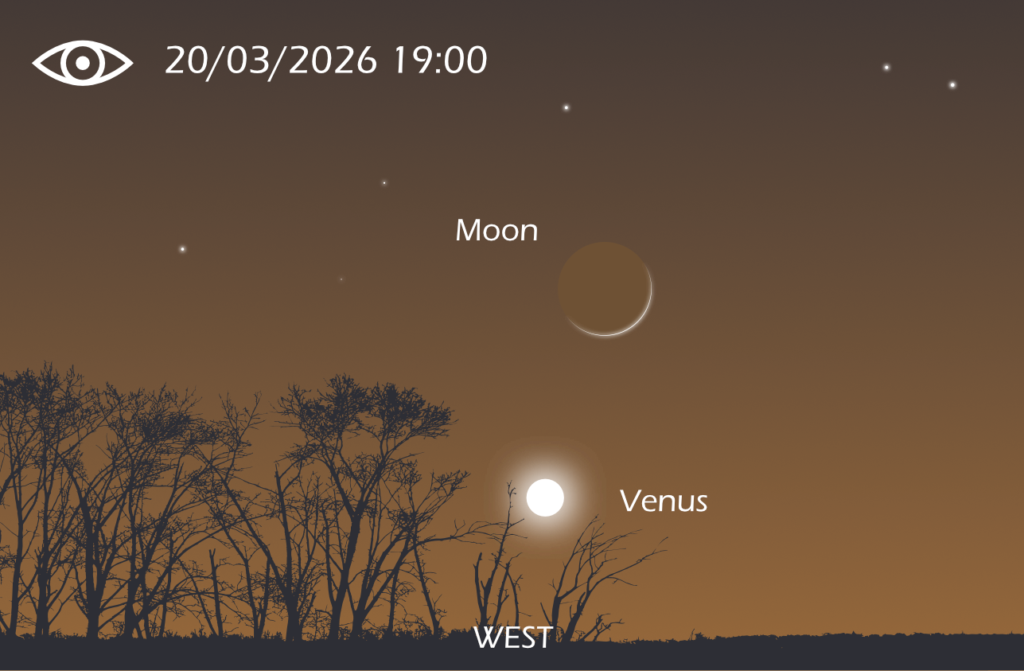
In the second week of March, Venus makes an appearance in the western sky after sunset; you will see a very bright starlike object. On 20th March , look out for a pretty conjunction of Venus and a tiny sliver of the 2-day-old Moon in its very early phase in the western sky after sunset.
Constellation of the Month
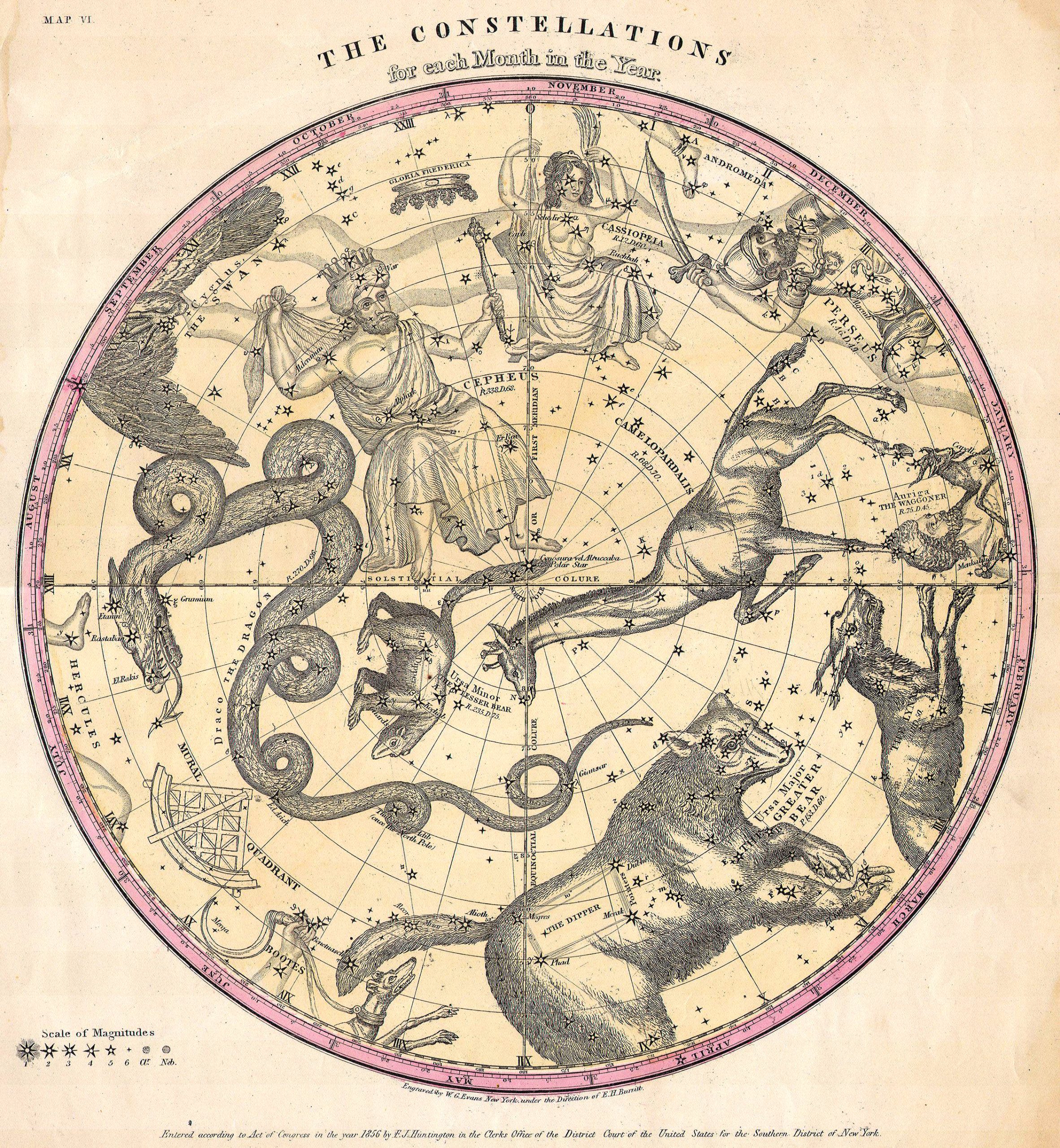
Each month, we will feature a constellation and the mythology behind it.
There are 88 IAU recognised constellations in the night sky and around 36 that are observable in the northern hemisphere. Some of the names of the 88 IAU recognised constellations are several thousands of years old.
With the advent of science and rational thinking, and more of a focus on the observable world, stars are no longer used for the farming calendar, for navigation or conveying social or religious values.
Get outside and see if you can spot these constellations. The best time to see each constellation we feature is around 90 minutes after sunset.
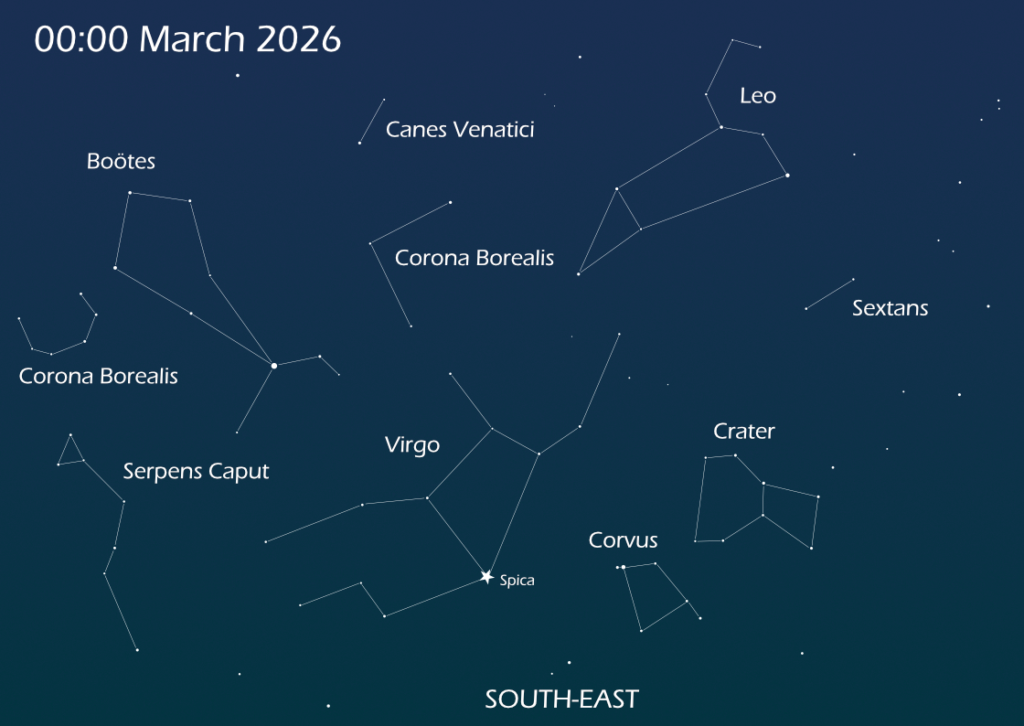
Constellation of the Month – Virgo
From 10pm, the constellation of Virgo rises from the south-east and becomes more prominent during the spring months. It is the second largest constellation in the Northern Hemisphere.
This constellation generally represents a virgin maiden who is associated with fertility, harvest or even virtue. Ancient farmers used to look out for the time of year when the sun would pass through the constellation as a sign for them to harvest their crops. Virgo is depicted holding a sheaf of wheat in her hand where the star Spica is positioned.
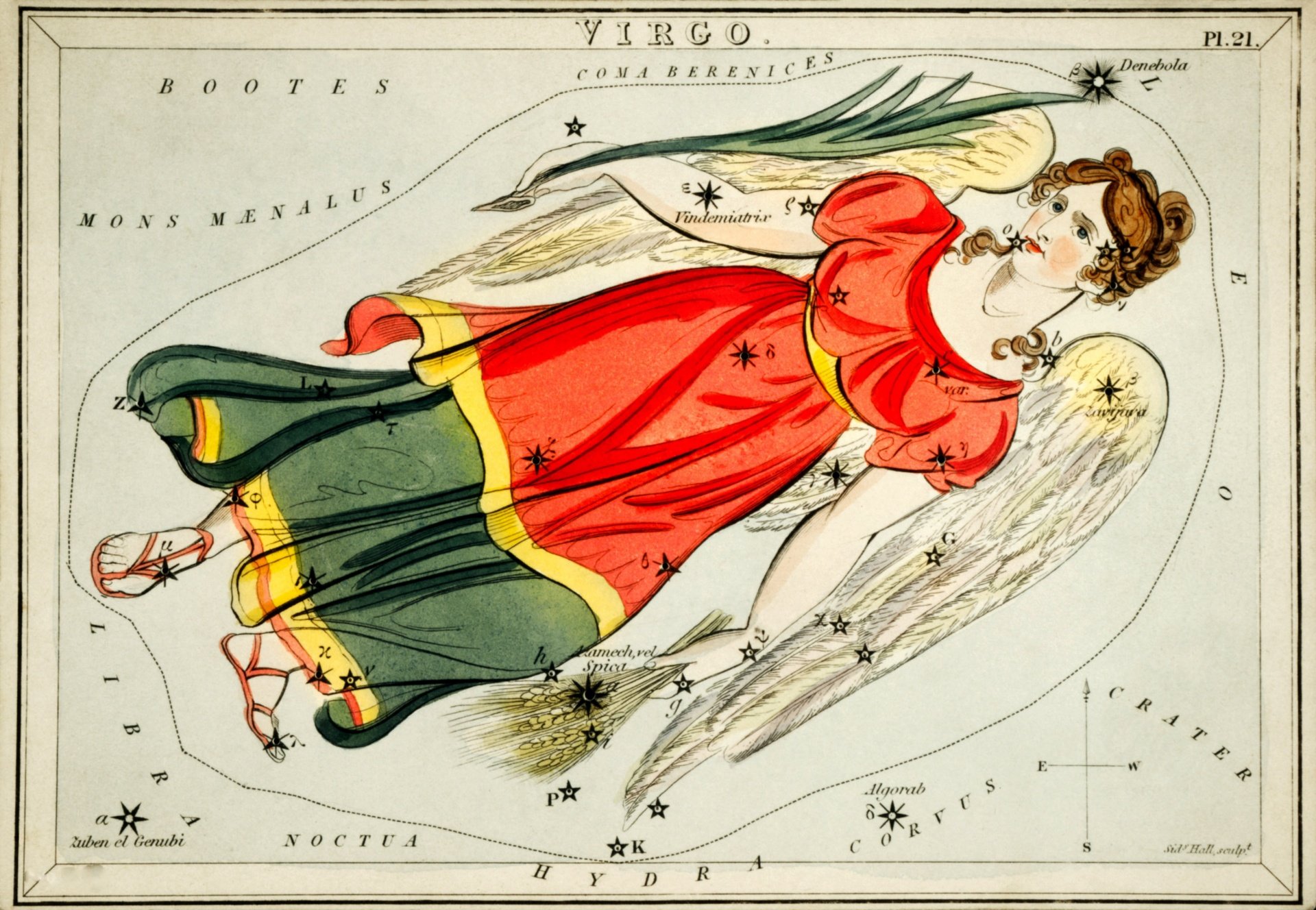

In Greek Mythology, Virgo represents Persephone, the daughter of goddess Demeter, who ruled over the harvest. Long ago, the Earth was in perpetual spring, until the evil god of the underworld, Hades, abducted Persephone. Demeter, in her grief, neglected her role as the bringer of fruitfulness and fertility. As a result, parts of the world suffered a long, cold winter and others, a long, hot and pestilence-ridden summer.
Zeus stepped in the attempt to save the whole of humanity by ordering Persephone not to eat any food from the underworld during his negotiations to obtain her freedom.
Unfortunately, Hades presented Persephone a pomegranate and in her great hunger and thirst, she consumed it. Consequently, her complete freedom was not granted and she had to return to Hades’ kingdom for four months a year.
Whenever Persephone returned to Demeter, spring would bloom upon the Earth, but when she had to fulfil her obligation to the underworld, the winter season would follow in her stead until she returned home the following year.
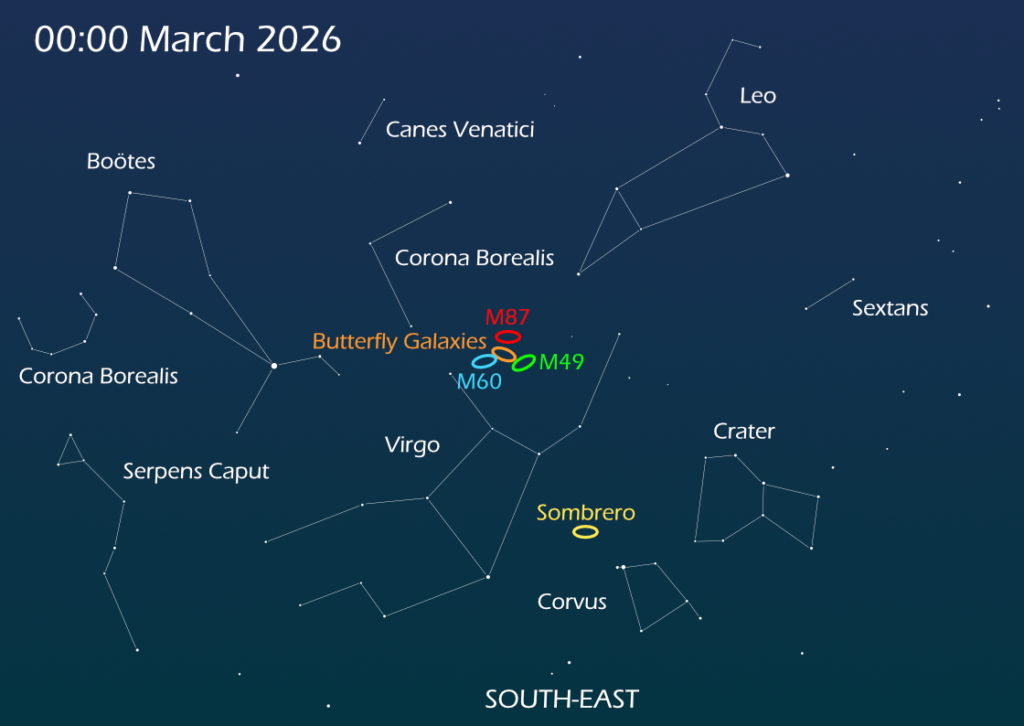
A Feast of Galaxies
Take the opportunity to feast on the wealth of galaxies that lie around the constellation of Virgo. In dark skies, some of them are even visible through 10×50 binoculars.
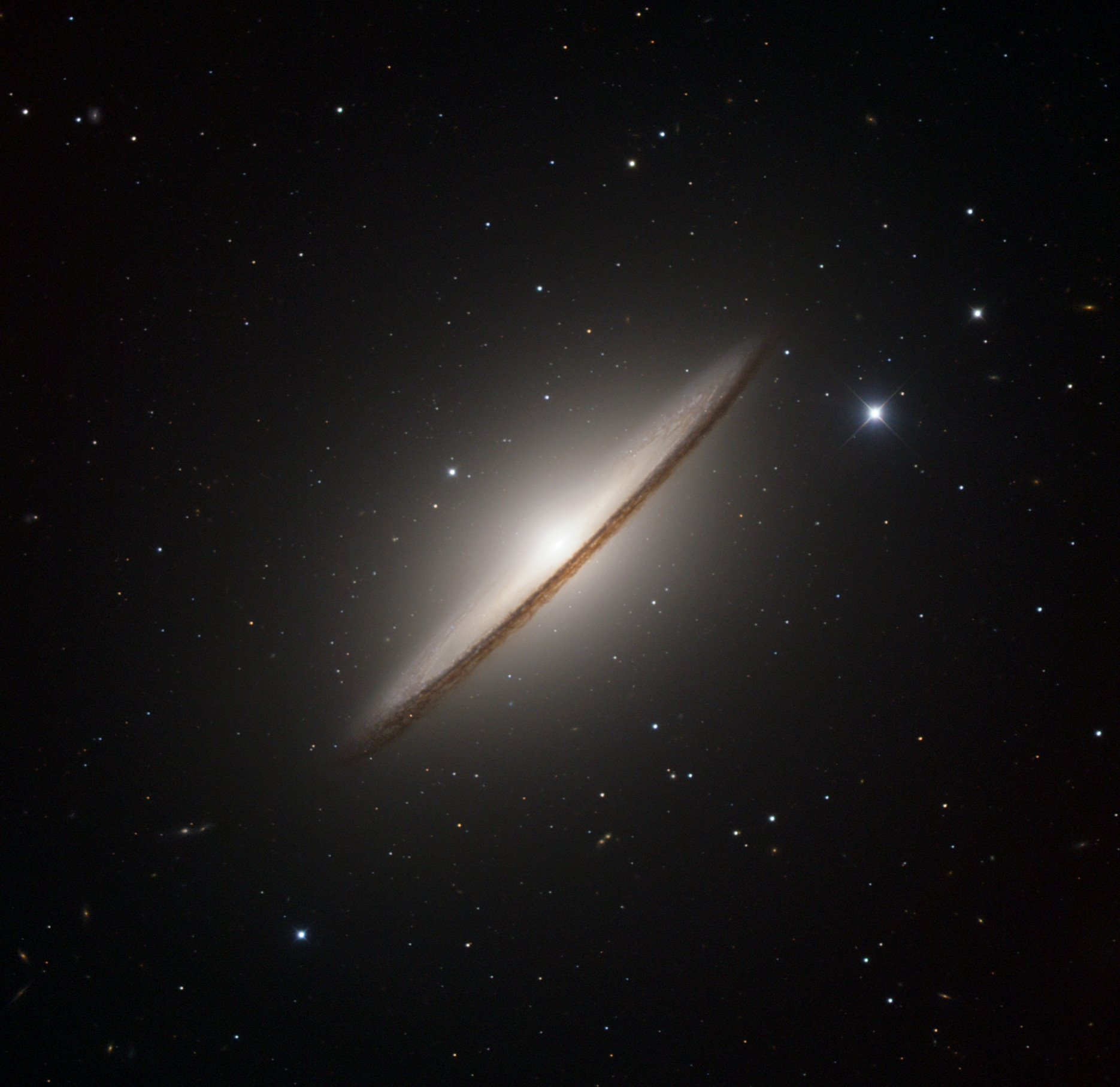
The Sombrero Galaxy (M104)
Coordinates: RA 12h 39m 59s | Dec -11° 37′ 23″
This galaxy may be visible through 10×50 binoculars in a dark sky. Through a 4-inch telescope, you may be able to discern the dark dust lane running through the galaxy, which becomes more prominent through larger telescopes. From Earth, it appears edge-on.
It consists of several hundred billion stars but is around half the size of the Milky Way Galaxy (400 billion stars). The stars in the Sombrero Galaxy are densely packed with around 2000 globular clusters – the Milky Way has only around 150!
Situated 30 million light years away, it would take around 47 billion years to get there in our fastest human-made object!
Credit: ESO/IDA/Danish 1.5 m/R. Gendler and J.-E. Ovaldsen
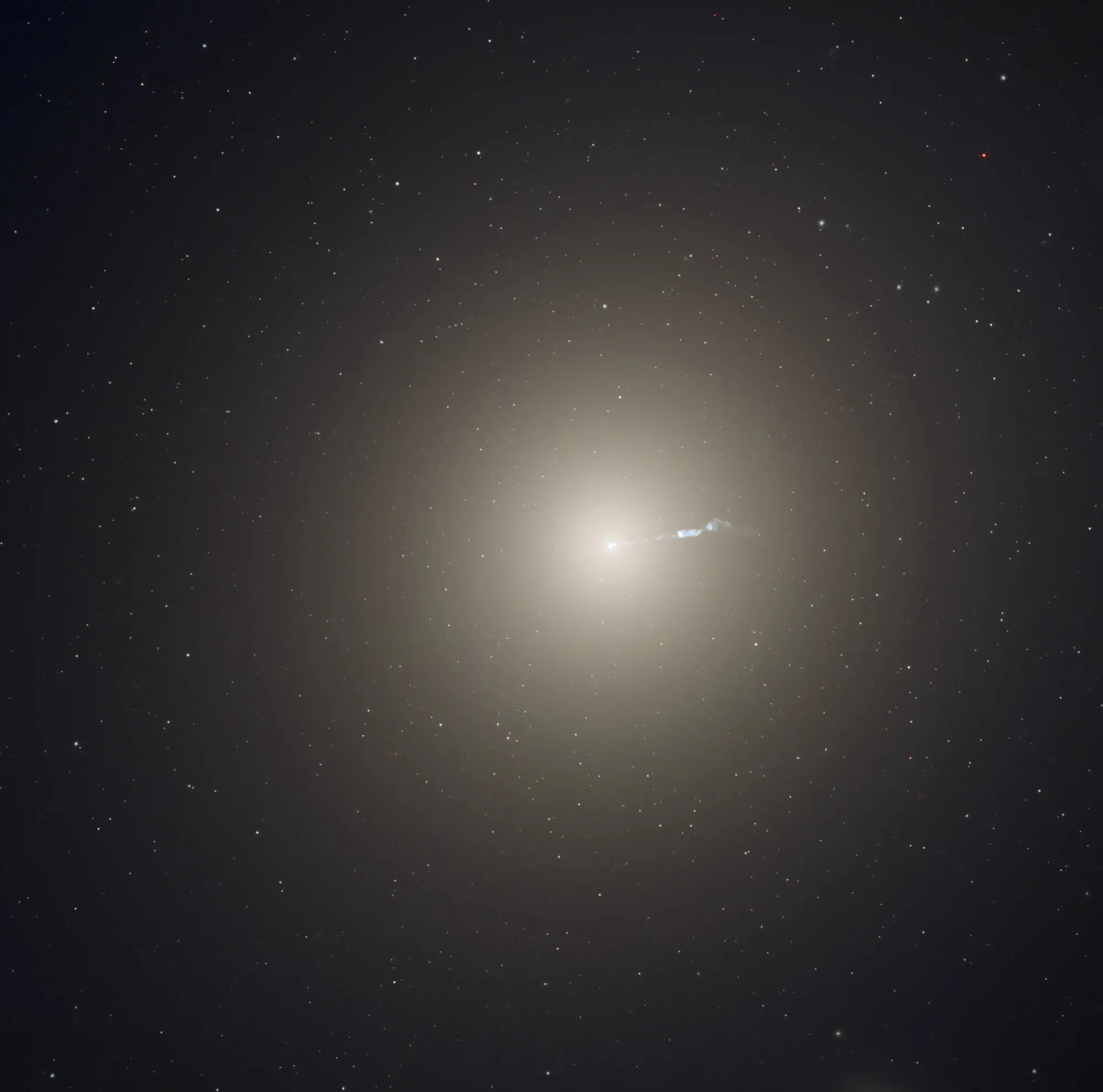
Messier 87
Coordinates: RA 12h 30m 49s | Dec +12° 23′ 28
Although this object appears to be a faint, fuzzy patch of light in small telescopes, this massive galaxy contains several trillion stars, a staggering 15,000 globular clusters and a supermassive black hole. At 54 million light years distant it would take 84.2 billion years for us to travel there in our fastest human-made object. It also has a jet of energetic plasma emanating from the core and blasting out into space for 4,900 light years, which can only be captured through photography – although astronomer Otto Struve claimed to have seen it through the 100-inch Hooker telescope.
NASA, ESA and the Hubble Heritage Team (STScI/AURA); Acknowledgment: P. Cote (Herzberg Institute of Astrophysics) and E. Baltz (Stanford University)
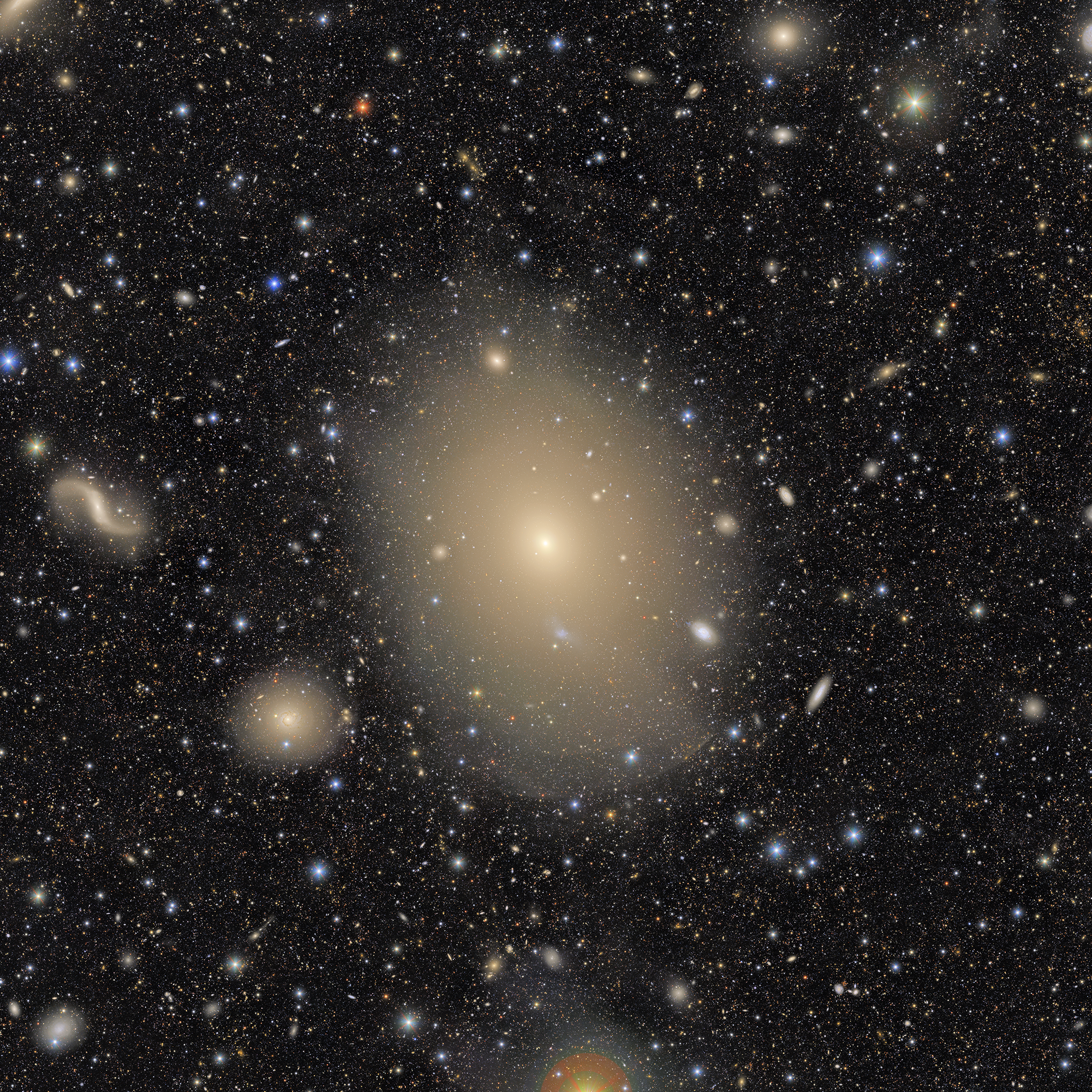
Messier 49
Coordinates: RA 12h 31m 06s | Dec +07° 51′ 22”
This galaxy contains half the stars of the Milky Way, but is around 30% larger, containing 200 billion stars and 6000 globular clusters. Being the brightest, it was the first galaxy in the Virgo Cluster of galaxies to be found by Charles Messier in 1771. At 59 million light years distant it would take 92 billion years for us to travel there in our fastest human-made object. You can spot this galaxy using large binoculars (15×70) in dark skies or through small telescopes and through an 8-inch telescope, you will start to resolve the bright core and misty halo.
RubinObs/NOIRLab/SLAC/NSF/DOE/AURA.
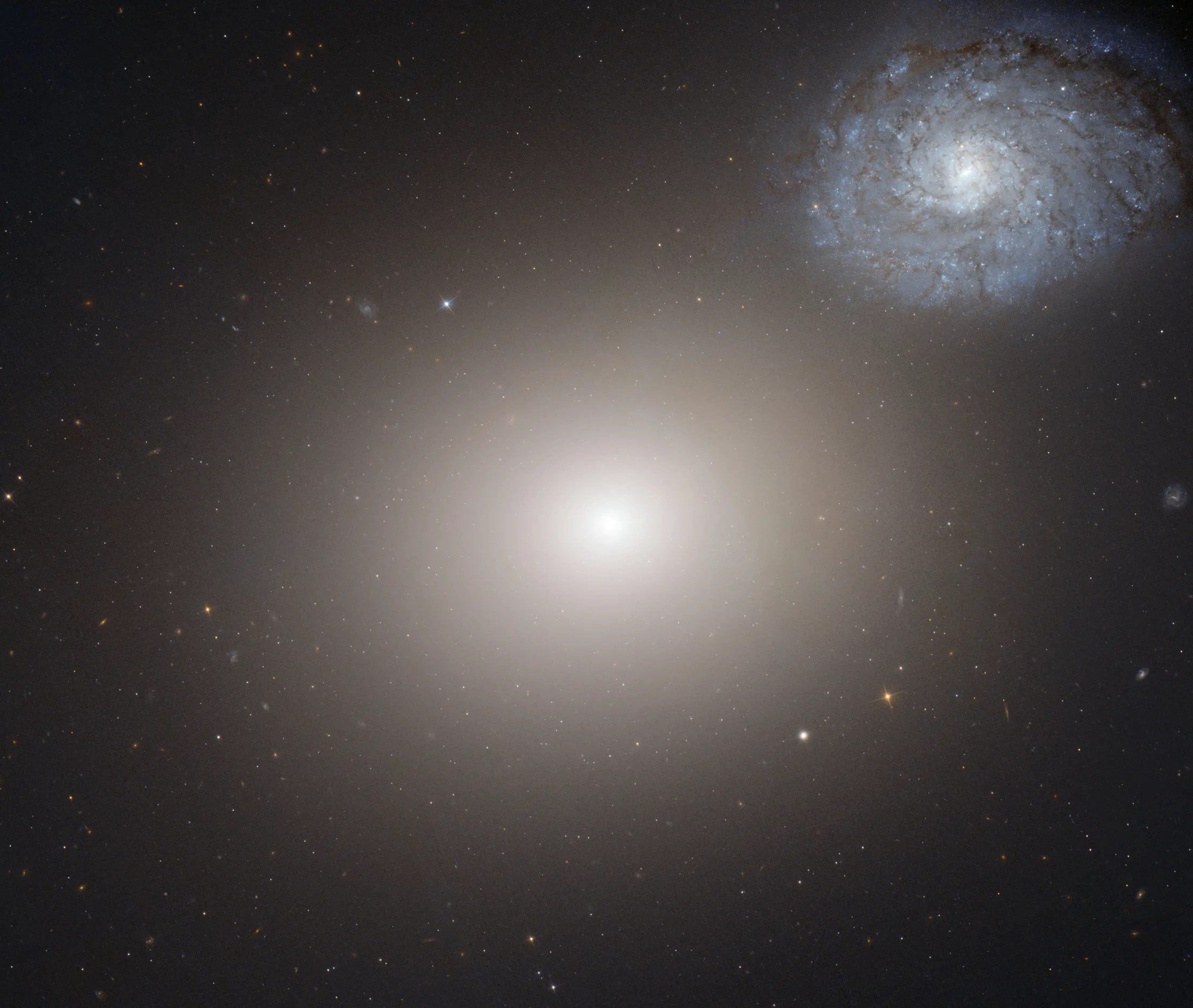
Messier 60
Coordinates: RA 12h 44m 58s | Dec +11° 24′ 36″
Messier 60 is half the size of the Milky Way but has the same amount of stars, at 400 billion. Its central black hole is 4.5 billion times as massive as our Sun and to date, is the largest black hole we have discovered. At 57 million light years distant it would take 89.5 billion years for us to travel there in our fastest human-made object. You can see this galaxy through small telescopes as a fuzzy, egg-shaped patch of light. In the top right of the image, the pretty NGC 4647 has been captured by NASA and ESA but is a challenge to be seen through large telescopes of ten inches and more.
Image: NASA, ESA and the Hubble Heritage (STScI/AURA)-ESA/Hubble Collaboration
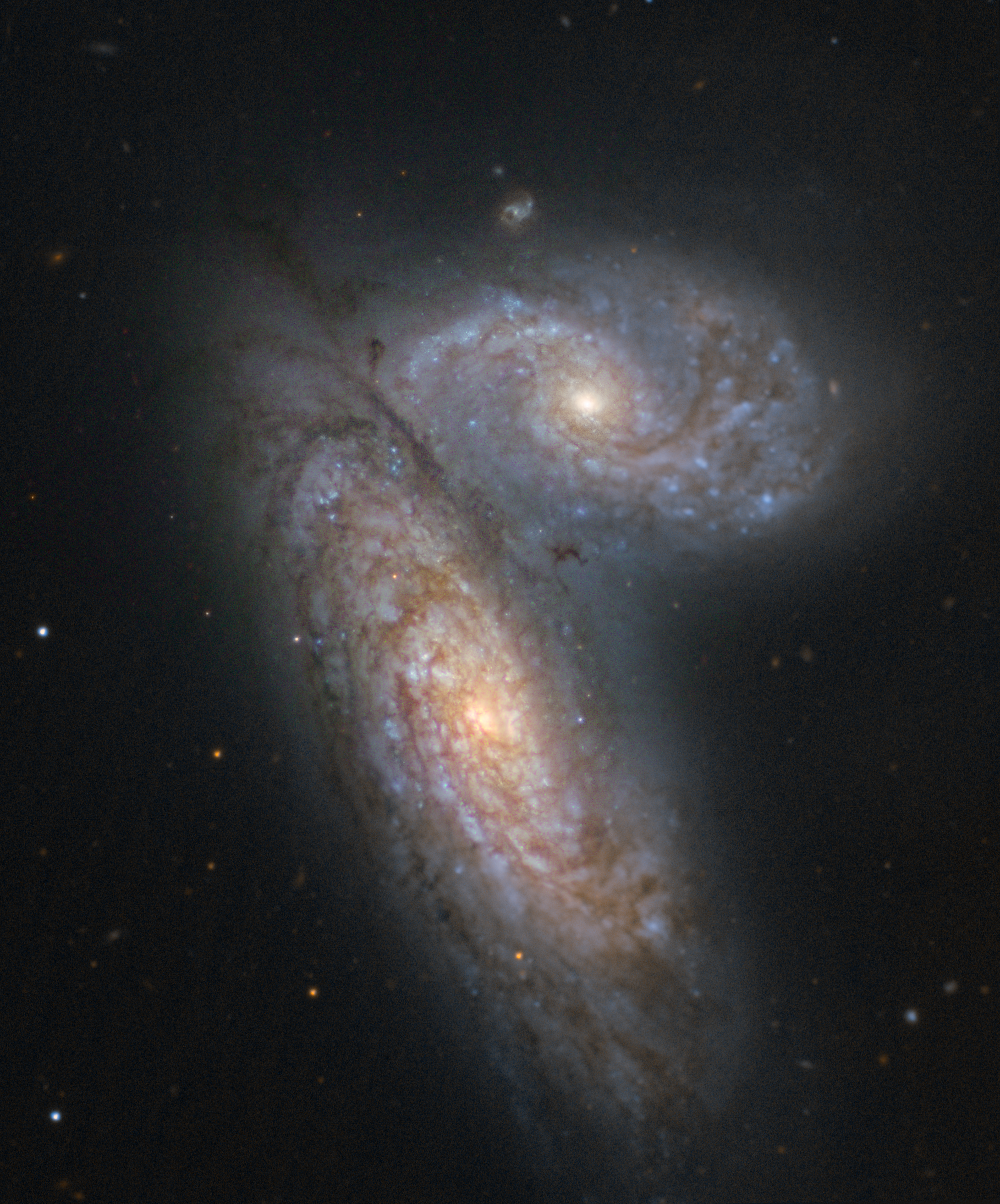
Butterfly Galaxies (NGC 4567/4568)
Coordinates: RA: 12h 36m 34.3s | Dec: +11° 14′ 17″
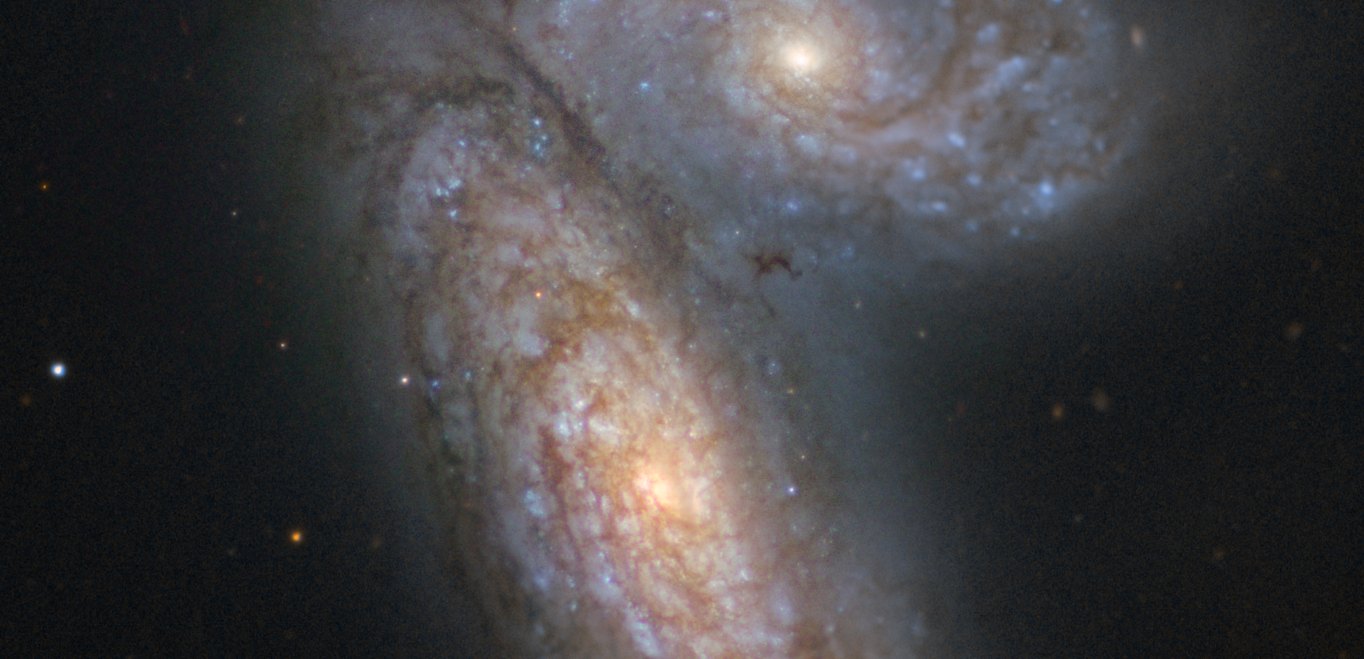
This pair of unbarred spiral galaxies lie around 62 million light years away – taking us 92 billion years to get there! – making it the most distant object we’ve highlighted this month. If you have an eight-inch telescope, you can discern an area of V-shaped nebulosity, but you will also be witnessing an amazing phenomenon; two galaxies that are in the early phase of a collision. Also known as The Siamese Twins, it will eventually form one, single elliptical galaxy – thought to be in 500 million years’ time. The intense gravity of the interacting galaxies causes compression of gas and dust, causing star formation.
By Judy Schmidt from USA – NGC 4567 & 4568 CC BY 2.0