Carnivorous Plants of the Peatlands
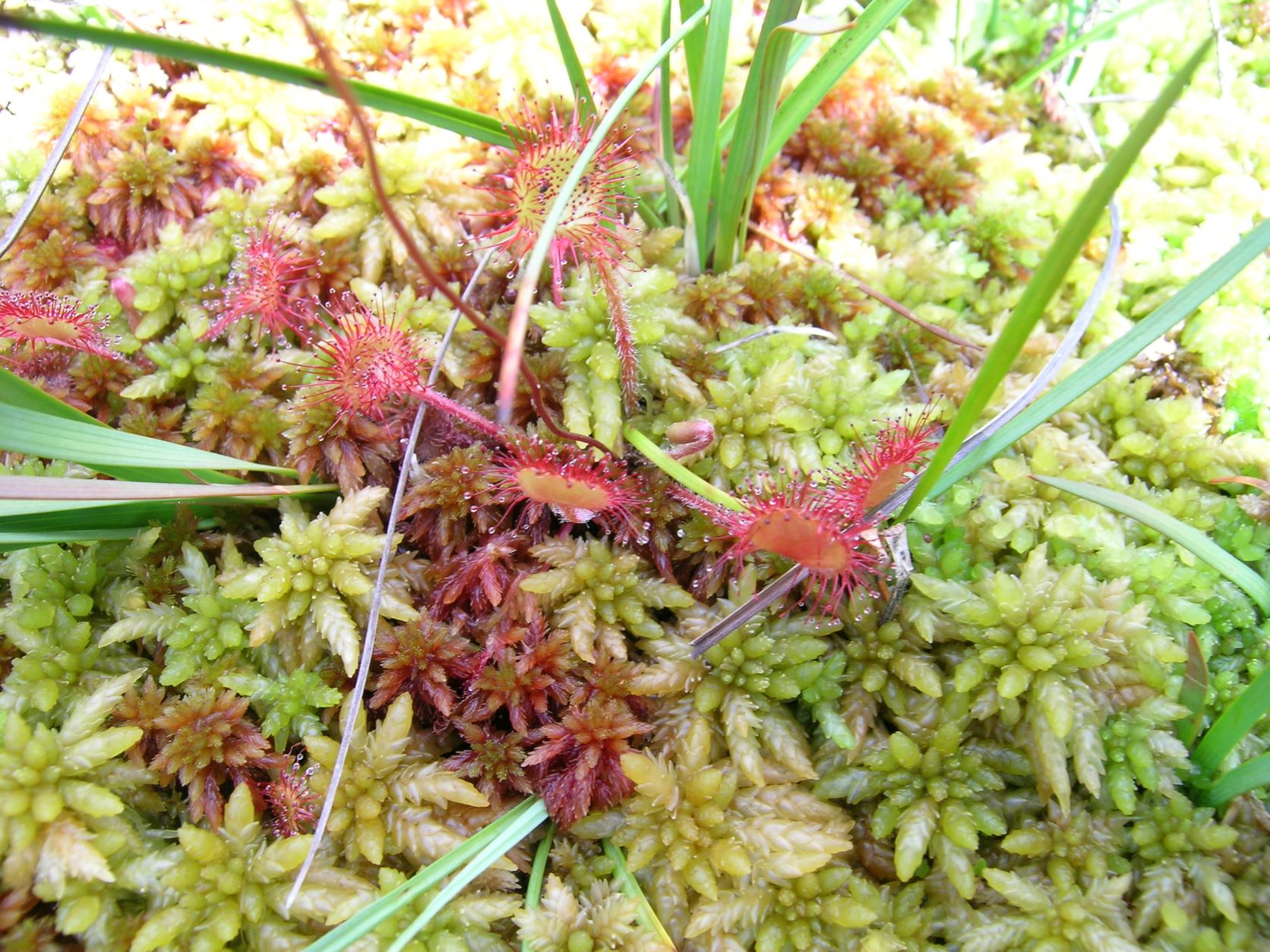
Peat bogs are very nutrient poor and therefore challenging for plants needing to obtain nutrients for growth and survival. Species have evolved ingenious ways to obtain proteins and minerals in extreme environments and over millions of years have adapted in novel ways. Round-leaved sundew Drosera rotundifolia is the most common of the carnivorous plants in the bogs of Cwm Elan. Its soup-spoon-shaped leaves are covered with red, glandular hairs which secrete a sticky sugary mucilage attractive to insects. The insect becomes trapped, it dies and its body is digested by enzymes secreted by the plant, thus providing nitrogen for protein manufacture.
All carnivorous plants operate along these lines: luring their prey with attractive secretions, trapping it and then breaking it down into absorbable nutrients.
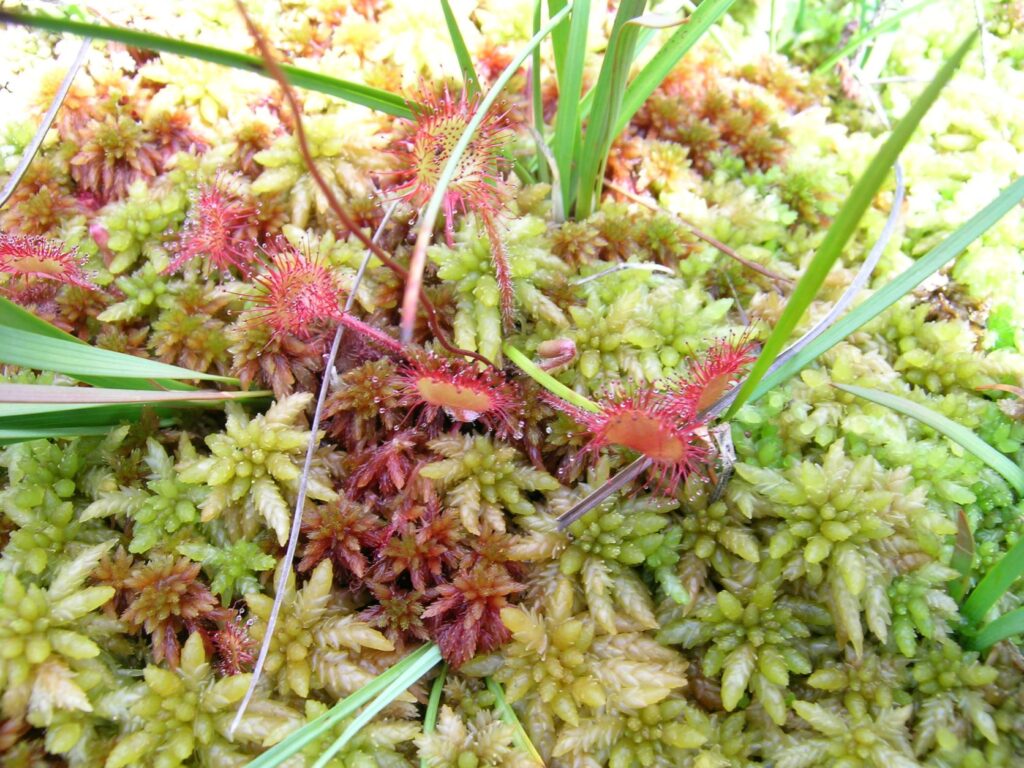
Great Sundew Drosera longifolia has elongated spoon-shaped leaves and old records exist for Gors Lwyd. It has not been recorded for some time and its thought that past records could be erroneous.
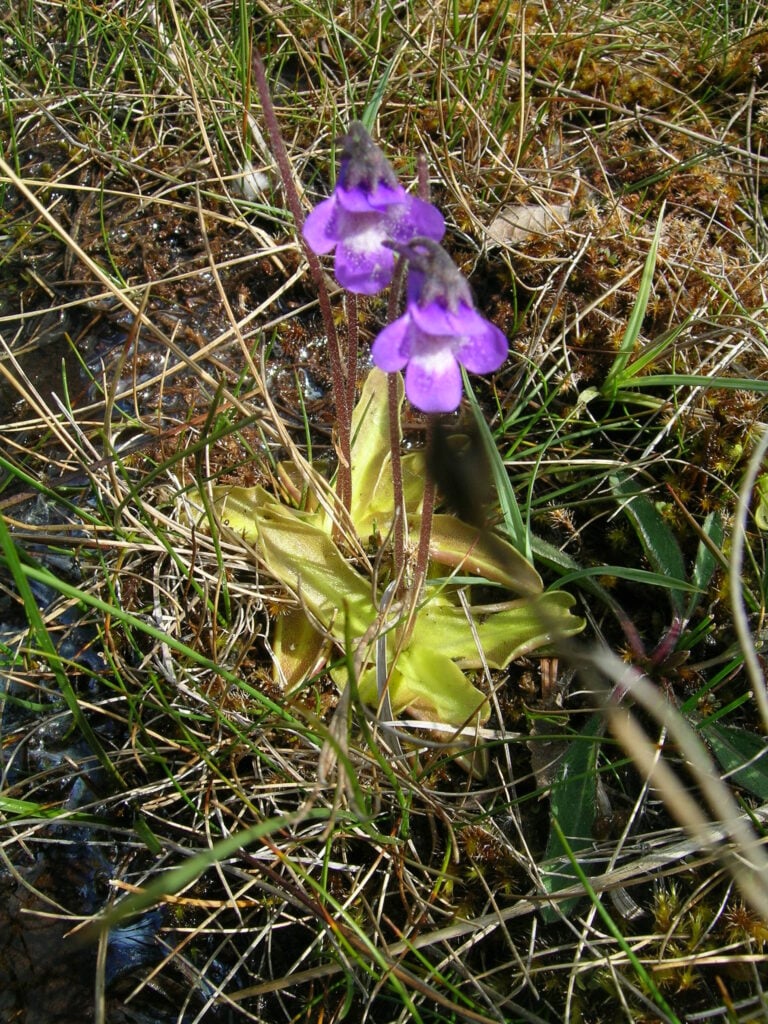
Common Butterwort Pinguicula vulgaris can easily be seen on rocks around the Claerwen dam but is not common in Cwm Elan. Its yellow leaves also secrete a sticky, sugary fluid which attracts small invertebrates like flies and ants. The leaves then curl up to trap the prey which is subsequently digested. Like the sundews (and bladderworts), the inflorescence is held on a long stalk above the leaf rosette – an essential arrangement if the plant is to avoid trapping its pollinators!
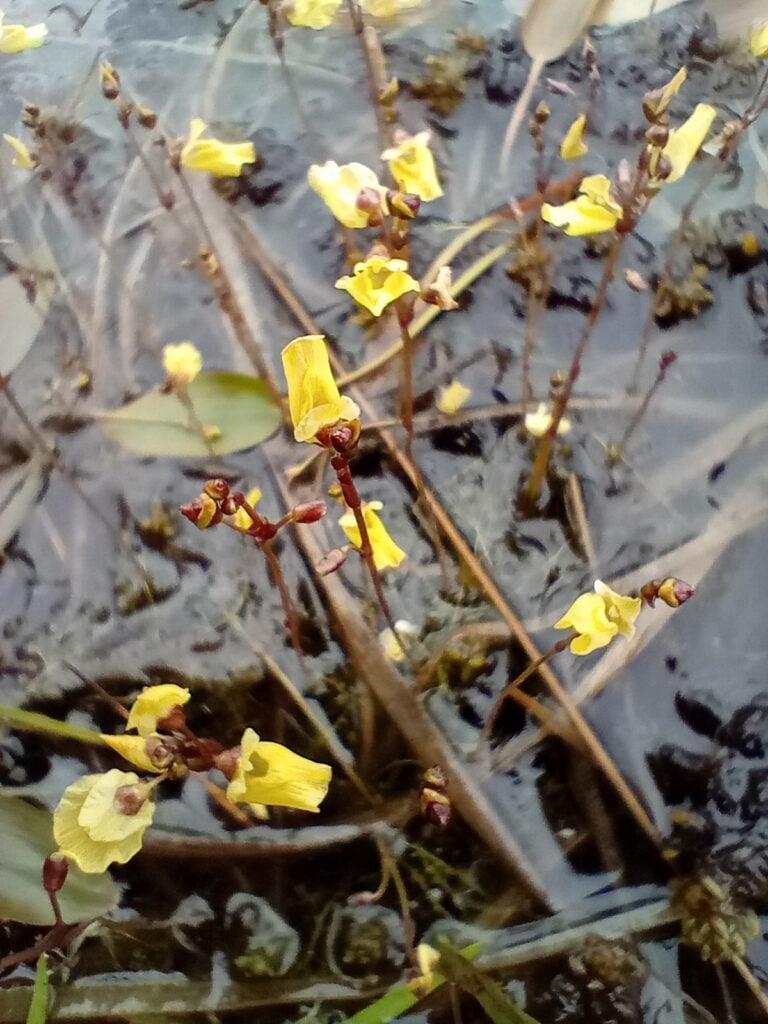
Two bladderworts have been recorded here, Bladderwort Utricularia australis and Lesser Bladderwort Utricularia minor. The former can be found in the pond near the old education building at Dolymynech and the latter was recorded on Gors Goch last year.
Bladderworts are rootless and float on the surfaces of bog pools. They form a network of threadlike stems with tiny vacuum-like bladders with ‘trap doors’. Hairs around the trap trigger the door to open if an aquatic invertebrate swims close by and an inward surge of water pulls the prey into the bladder where is suffocates, dies and is ultimately digested and absorbed.
Please look out for bladderworts and take records for us!
Fiona Gomersall, Ecologist