Notes from an Ecologist – Rush Lights
For many thousands of years, the main source of lighting in Wales came from Soft Rush, Juncus effusus, peeled to the pith and dipped into animal fat. These simple rush-lights (cannhwyllau brwyn) were still being used into the mid-20th century – which in a subsistence economy, costing practically nothing and made with every day, common ingredients were very beneficial.
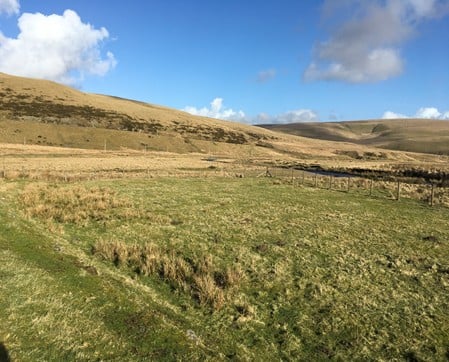
Soft Rush is extremely common throughout Wales and most plants for rush-lights would simply have been foraged from the wild. There is evidence though that rush was sometimes cultivated for the purpose. At Abergwngu, the Elan Valley Trust farm on the mountain road, there is a patch of unusually stout Soft Rush which differs visibly from the surrounding ‘wild type’. This was first noticed by local historian Erwyd Howells and communicated to the renowned Aberystwyth botanist, Arthur Chater. Arthur then suggested that Andrew Jones might care to investigate the Abergwngu rush.
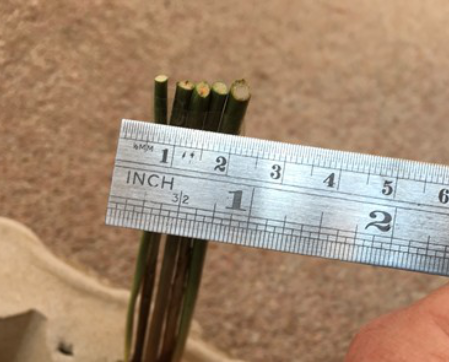
The rush forms a broad strip about 30 metres long by 3 metres wide below a low bank near the farmhouse, which was probably once a stone wall. The stems of the rush here are about 4.0mm in diameter compared to the scattered surrounding rush which is on average only 2.5mm wide.
Interestingly when the larger rush is dried, it both maintains its thickness and is noticeably easier to peel than the ‘wild’ rush.
These characters – the difference from surrounding plants, the proximity to a dwelling and distinct thickness and texture – indicate, as Erwyd Howells first suggested, a useful variety, deliberately selected and planted to make rush-lights. The present Abergwngu replaced an earlier mediaeval farmhouse and it is possible, from the extent and alignment with an old wall, that this patch of distinctive Soft Rush has a very early origin. It is also probable that cultivated plants here had an economic significance, since elsewhere (e.g. at Fferm y Fannog, now under Llyn Brianne) family sources say that rush-lights were manufactured for sale to miners and maybe other customers. Abergwngu is near the great minescape of Cwm Ystwyth and may have supplied rush-lights for the mine.
It would certainly be worth looking for other similar patches near old houses in Wales and those that are perhaps especially near to mines.
Acknowledgements
With great appreciation to Erwyd Howells for the initial insight, Arthur Chater for his knowledge and helpful discussion and Claire and Robin Bidgood, Abergwngu, for access to their land.
Andy Jones (summarised by Fiona Gomersall)