Welcome to this month’s update to find out what’s in the night sky for July.
In the Elan Valley International Dark Sky Park, astronomical darkness theoretically returns on 25th July – and only for 13 minutes at that. However, this is complicated by the Moon being present in the sky – stargazers will be able to enjoy the Milky Way in all it’s glory for around 20 minutes on 8th August between 23:37 and midnight.
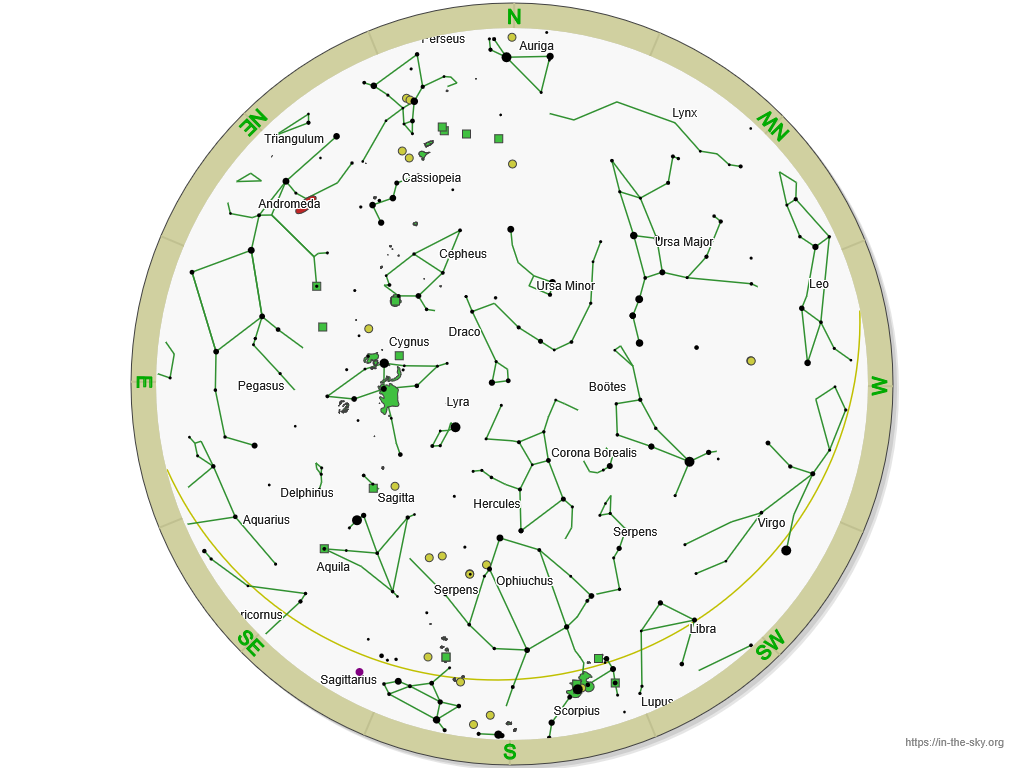
An all-sky view of the constellations from midnight on 1st July from in-the-sky.org – this is a printable map – click tap the image to download the pdf
To learn about the constellations, you can tap the image above which will download as a printable PDF.
The New Moon occurs on 14th July and the Full Moon on 29th July.
Constellation of the Month – Ophiuchus
Ophiuchus appears as a large rectangular-shaped object with a triangular roof. It is situated directly above the southern horizon at midnight. It is one of the 13 zodiacal constellations that lies along the ecliptic (the yellow line in the all-sky chart above). In astronomy, the Zodiac is the band of constellations that the Sun crosses throughout the year. The other 12 zodiacal constellations are: Aries, Taurus, Gemini, Cancer, Leo, Virgo, Libra, Scorpio, Sagittarius, Capricorn, Aquarius, and Pisces.
Image: John Flamsteed
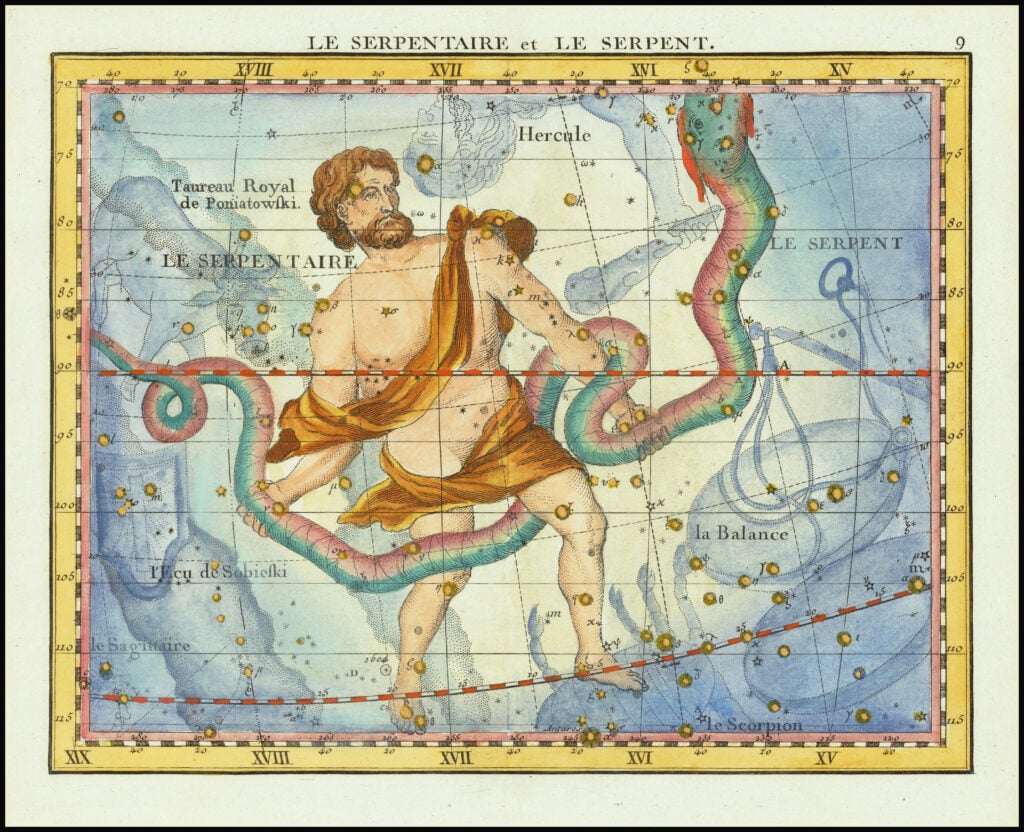
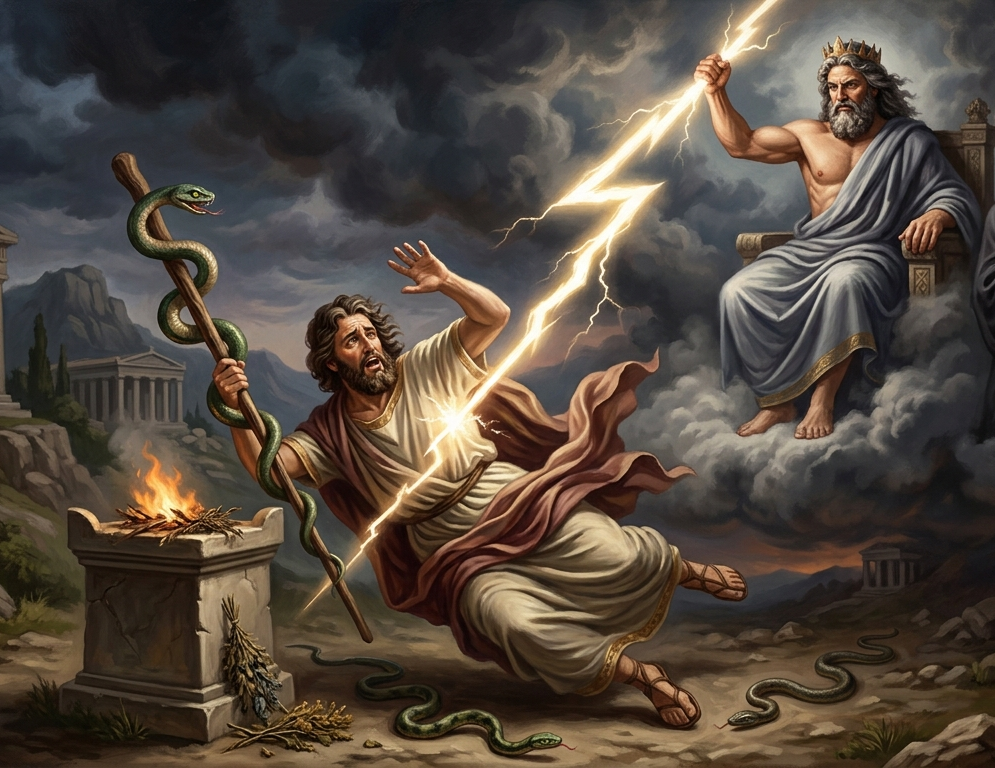
In Greek Mythology, Ophiuchus represents Asclepius, the Greek god of medicine. He was taught his craft by the Centaur, Chiron, and even exceeded his master’s skills by being able to resurrect the dead, through observing how a snake brought certain medicinal herbs to another snake to bring it back to life. Unfortunately, his efforts were noticed by Hades, who was concerned that humankind would become immortal and causing the gods to lose their power. Complaining to his brother Zeus, Hades was able to persuade him to destroy Asclepius with a thunderbolt. Zeus then honoured the deceased Asclepius by placing his image in the sky. In fact, the rod of Asclepius is today’s symbol for modern medicine; representing a staff entwined with a snake.
Three Meteor Showers
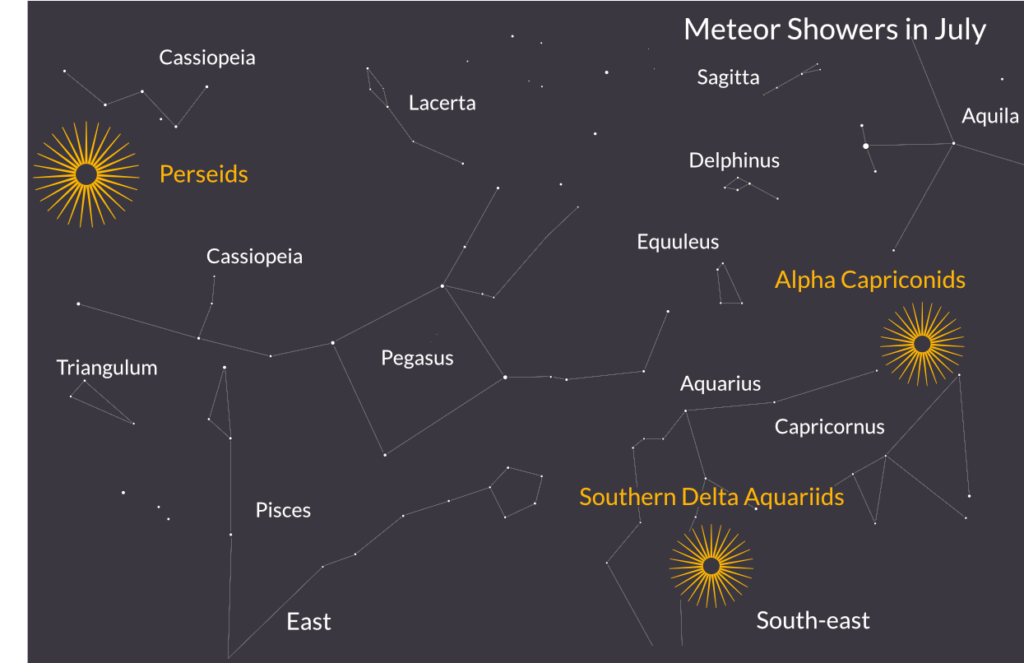
There are three meteor showers this month:
Alpha Capricornids – 3rd July to 15th August
Peaks on 30th July. There are around 5 meteors per hour at the peak – if you are lucky to spot them, they will appear as slow, yellow fireballs.
Southern Delta Aquariids – 12th July-23rd August
Peaks on 30th July. There are around 25 meteors per hour at the peak and will appear as a steady stream of meteors.
Perseids – 17th July-24th August
Peaks on 12th August. There are around 150 meteors per hour at the peak and will appear as bright and fast meteors with even smoking trails.
Noctilucent Cloud Season Peaks in July
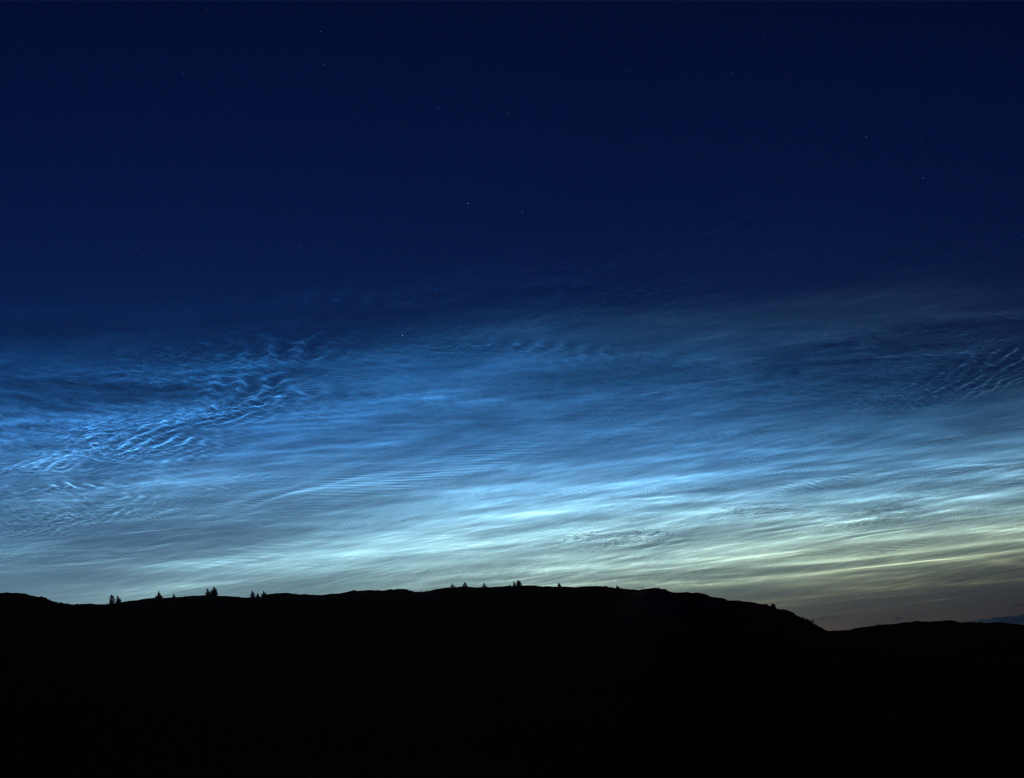
Noctilucent cloud season peaks this month. Also known as night shining clouds, these ethereal, electric-blue ribbons form 50 miles above us, in the mesosphere. They look incredible through binoculars and if you have a modern smart phone and tripod, set the phone to automatic mode or night mode and set a 5 second delay, to mitigate camera shake and capture these beautiful clouds as sharply as possible.
Noctilucent clouds are caused by water vapour freezing into ice crystals, seeded from meteor dust. Rocket exhaust can also trigger this formation.
The best time to see Noctilucent Clouds is around 90-120 minutes after sunset or 90-120 minutes before sunrise.
A Chance to see the Elusive Planet Uranus
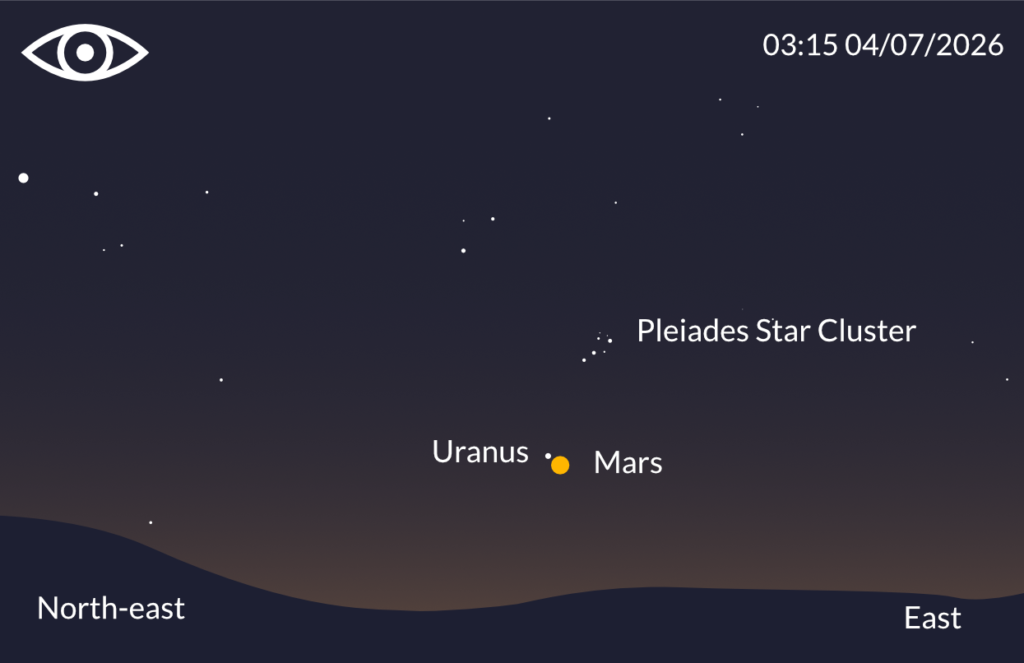
July is a great month to see the planet Uranus as when it likes near another more recognisable object, it is easier to spot. On 4th July, Uranus will be a very near 9.6-arcminutes to Mars, making this planet easy to spot. You can see it through binoculars and through a small telescope, it may appear teal-green in colour and be positioned at the 10 o’ clock position to Mars.
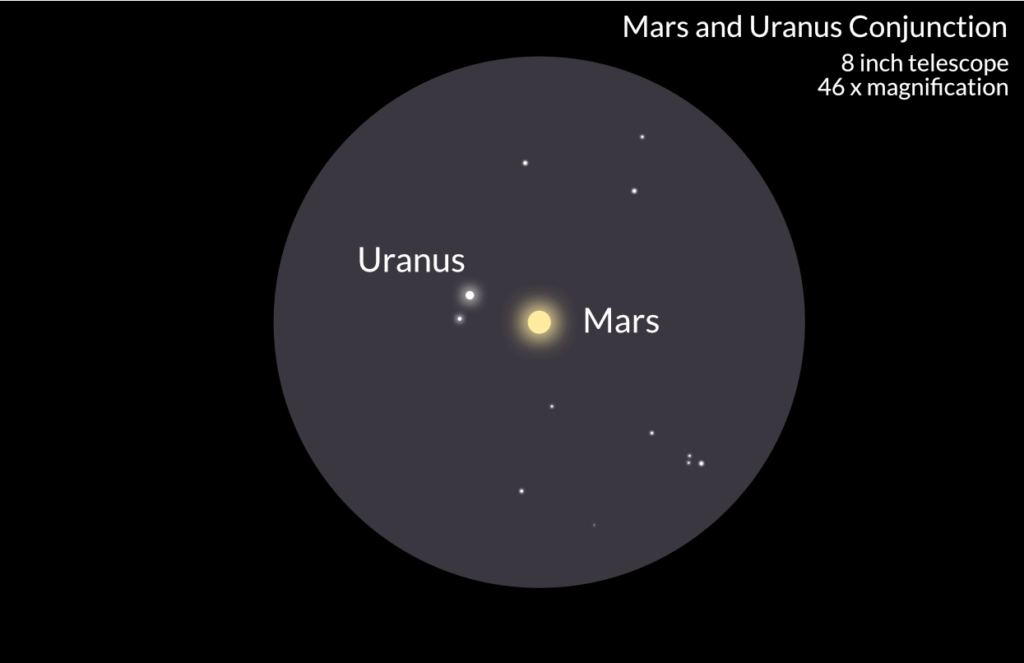
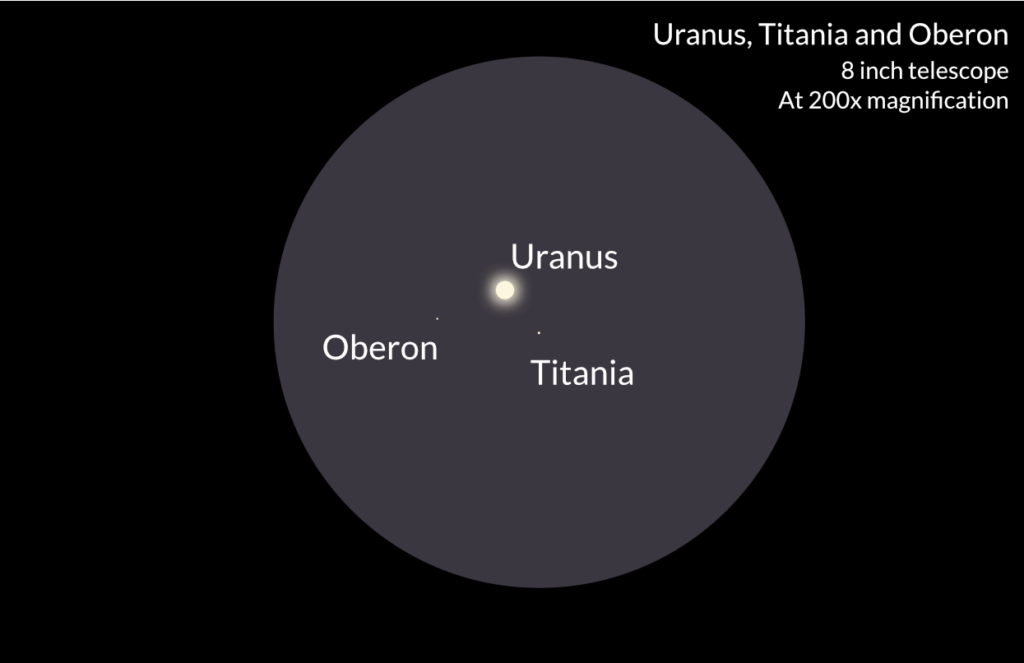
Through an 8 inch telescope at 46 times magnification, you will see an orange Mars and the teal-green disk of Uranus.
Increase the magnification to 200 times and you will spot two of Uranus’ largest moons, Oberon and Titania, named after from Shakespeare’s A Midsummer Night’s Dream
The Moon and the Stars Join In
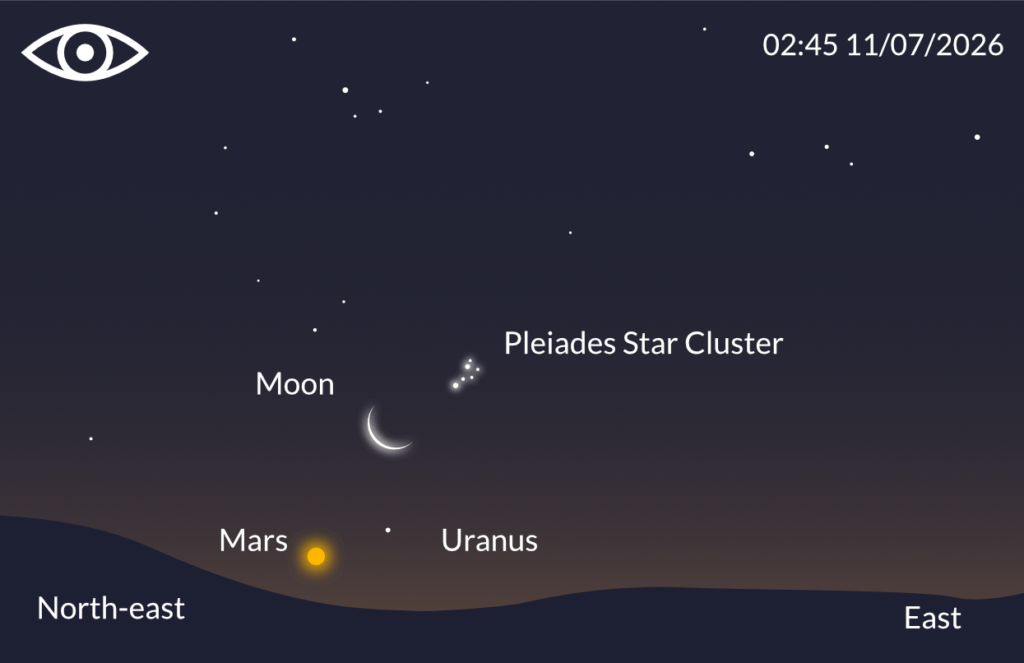
A second, pleasing conjunction will occur in the early hours of 11th July. Spanning a distance of 5 degrees, (the width of three fingers held out at arm’s length), you will see a grouping of the Pleiades Star Cluster, the 15% illuminated Moon and Mars, low on the horizon. Use your binoculars to spot Uranus lying between the Moon and Mars.
Flying Ducks? What’s next?
During the lighter summer nights, take the opportunity to spot a spectacular open star cluster in the constellation of Scutum.
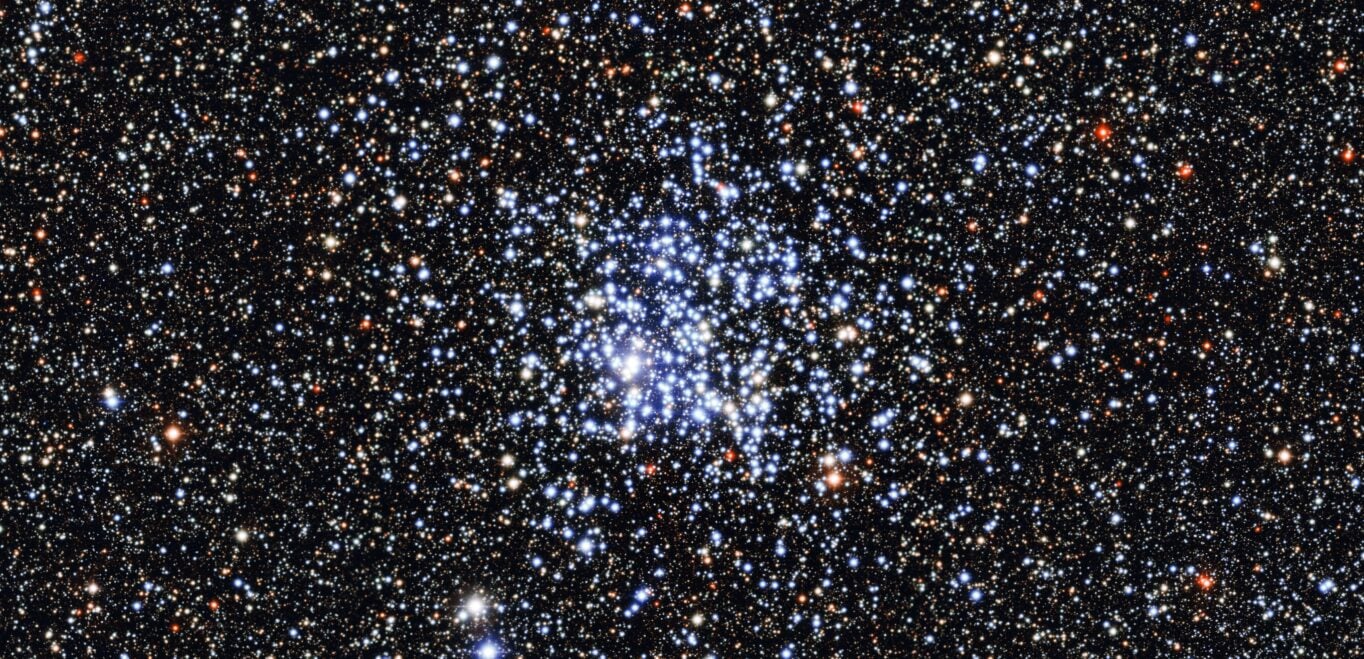
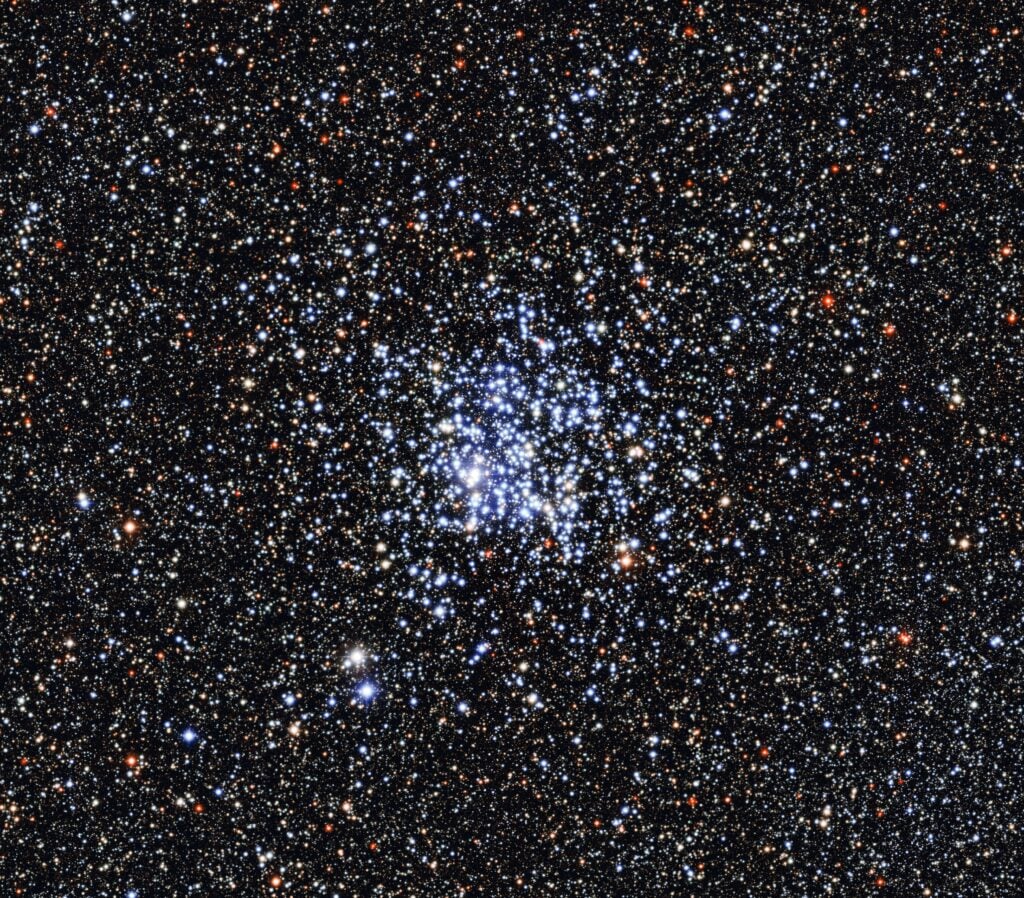
Named Messier 11, or the Wild Duck Cluster, it contains nearly 3000 stars, comprising a core of young , hot and blue stars and some older, more red, cooler stars. However, observers may not see these colours through the telescope due to its distance of 6,200 light years. You can see this with the unaided eye as a tiny, fuzzy cloud in a dark sky, but resolves well in binoculars; but in telescopes, you will see the individual stars.
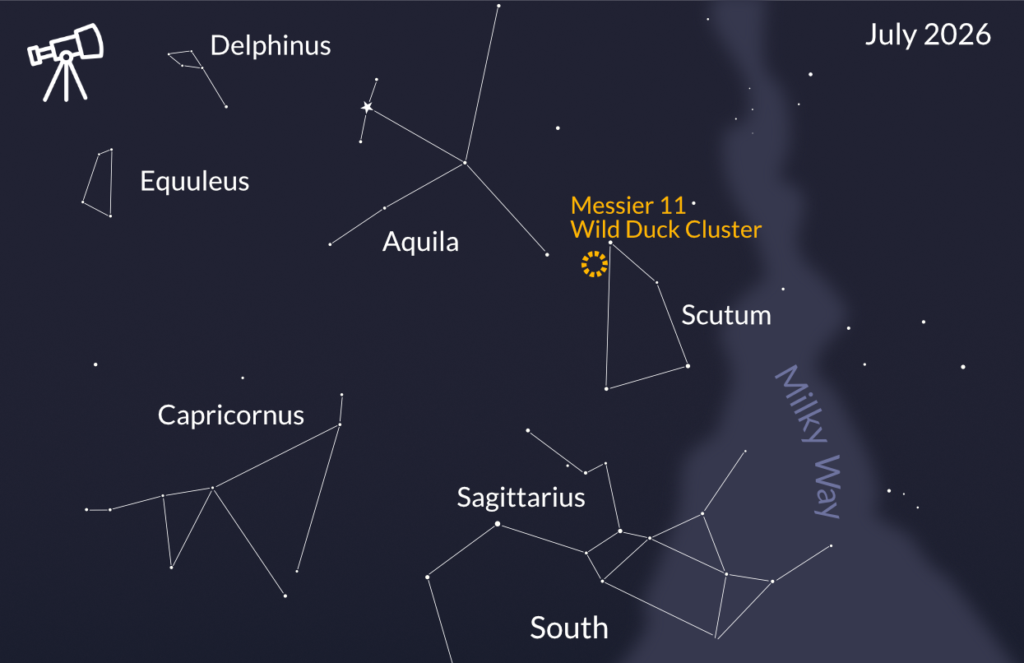
Look towards the southern horizon where you will see the teapot-shaped asterism of the constellation of Sagittarius. Look for the ‘scalene trapezoid’ constellation that sits above; this is Scutum (Roman for shield). The constellation of Aquila the Eagle lies just above.
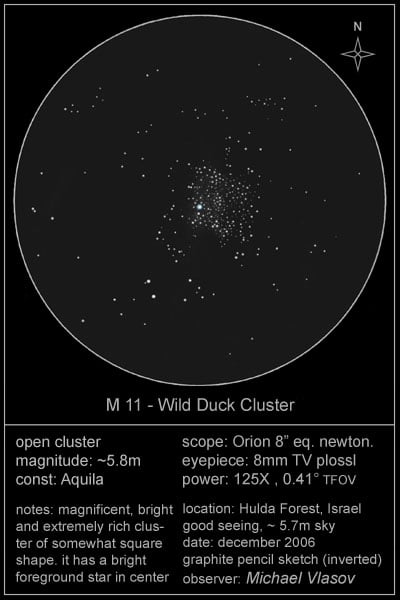
You can see this lovely open cluster through binoculars and small telescopes but the illustration shows what the Wild Duck Cluster looks like through and 8 inch telescope at 125 times magnification. It will appear to some like a flock of birds flying upwards in a v-formation, or you may even see the cluster appear as star shape.