Welcome to this month’s update to find out what’s in the night sky for June.
In the Elan Valley International Dark Sky Park, astronomical darkness does not occur in June. The longest day of the year, the Summer Solstice, falls on 21st June, with 16 hours and 48 minutes of daylight. This marks the beginning of the astronomical summer, with the Sun reaching its highest point in the Northern Hemisphere. For deep sky fans, astronomical darkness officially returns on 25th July. However, this is complicated by the Moon being present in the night sky. We won’t see true darkness until 8th August, for about half an hour before the Moon rises at 00.15.
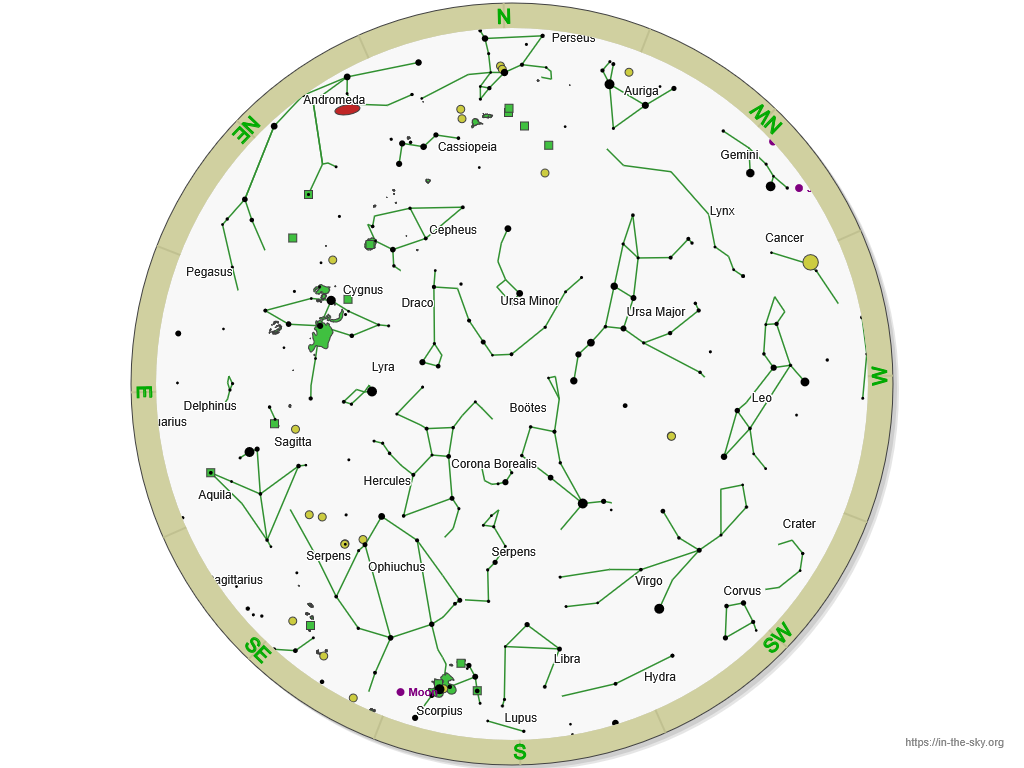
An all-sky view of the constellations from midnight on 1st June from in-the-sky.org
Above the southern horizon, lie the constellations of Libra, Boötes and Serpens. At the zenith, the highest point in the sky, lies Draco the Dragon. The spring constellations of Virgo, Leo and Cancer set in the western sky and the summer constellations of Hercules, Boötes, Corona Borealis and Lyra are well placed in the east.
The New Moon occurs on 15th June and the Full Moon on 30th June.
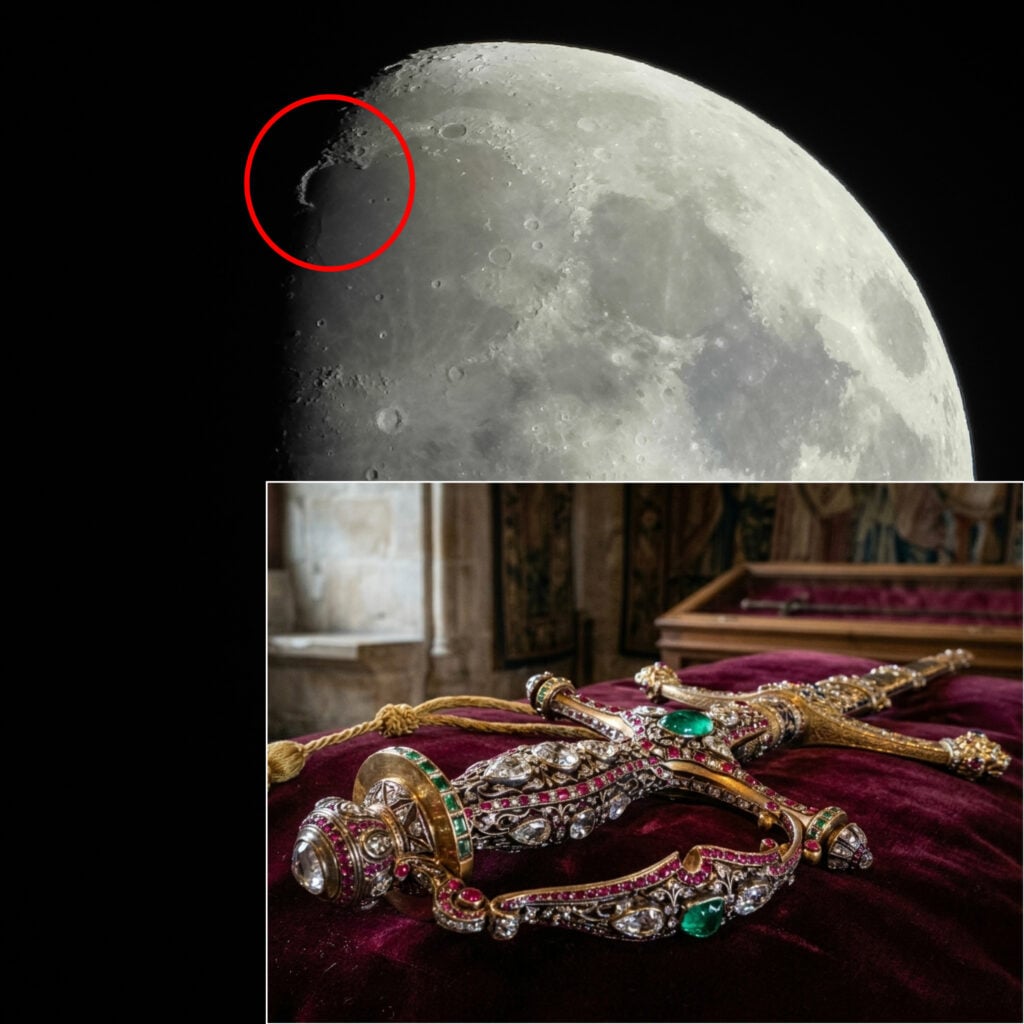
On 25th June, you will be able to catch a sight of the ‘Jewelled Handle’ or ‘Golden Handle’. Situated in the Montes Jura mountain range, this clair-obscur effect can be seen through small telescopes when the Moon is in its waxing gibbous phase. The sunlight hits the peaks of this mountain range, with Sinus Iridium remaining in shadow, causing this beautiful effect.
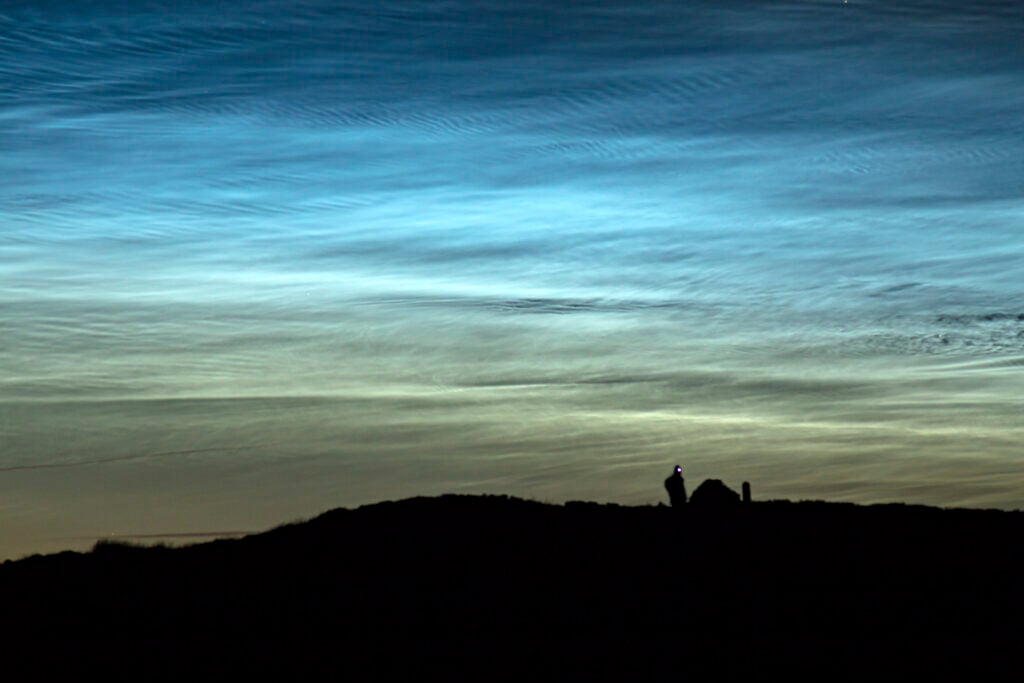
Night-shining Clouds
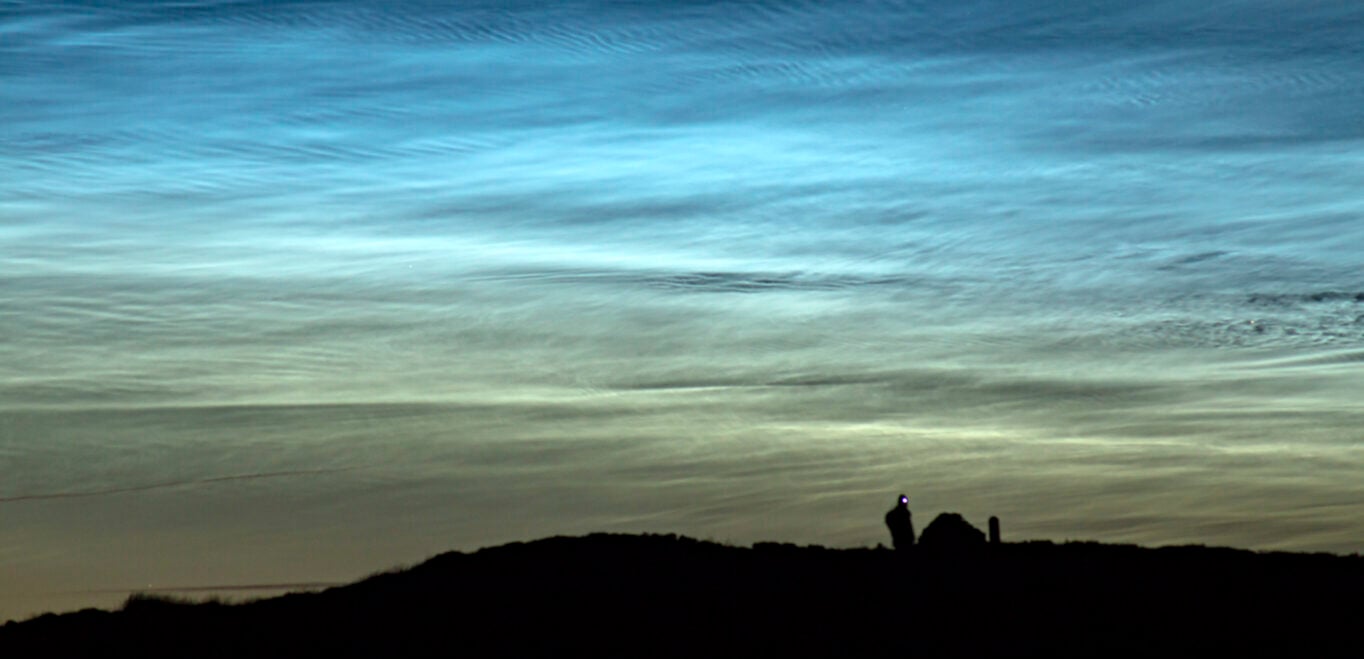
Noctilucent cloud season has officially begun! Also known as night shining clouds, these ethereal, electric-blue ribbons form 50 miles above us, in the mesosphere. The season typically begins at the end of May, peaking during mid-June to late July. Noctilucent clouds are caused by water vapour freezing into ice crystals, seeded from meteor dust. Rocket exhaust can also trigger this formation.
The best time to see Noctilucent Clouds is around 90-120 minutes after sunset or 90-120 minutes before sunrise.
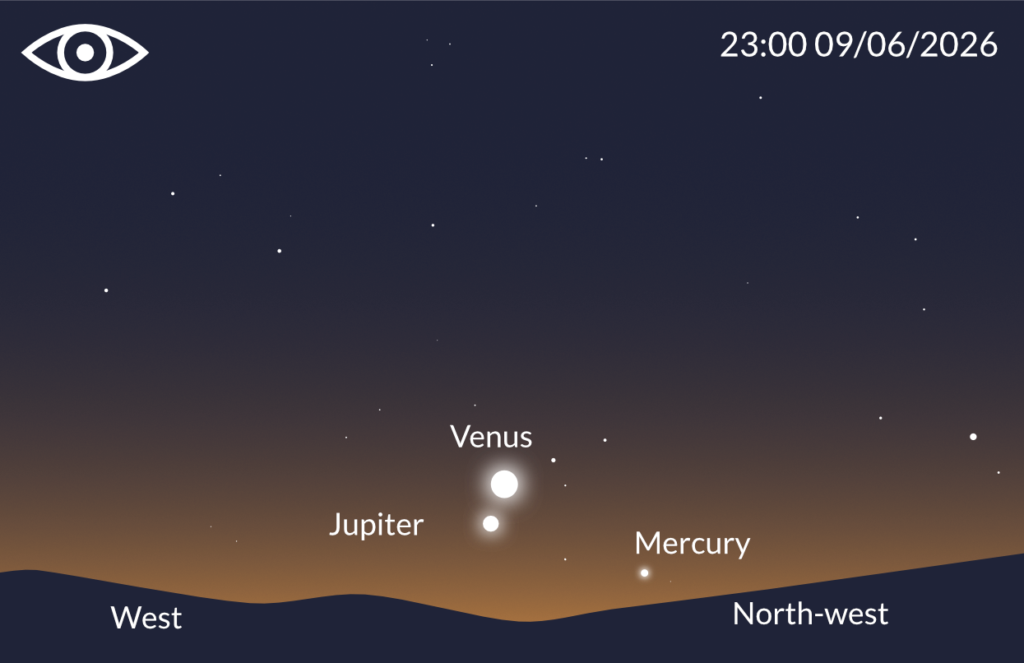
The Planets Line Up!
On 9th June you will be able to see a planetary conjunction. After the sun sets, Jupiter and Venus emerge into the dusk sky and can be seen 1.6° apart, with Mercury lying low on the north-western horizon.
Mercury reaches Greatest Eastern Elongation on 15th June, meaning that it will be at its highest point in the sky and the greatest angular distance from the Sun, providing the best opportunities to spot this tiny, but mighty planet.
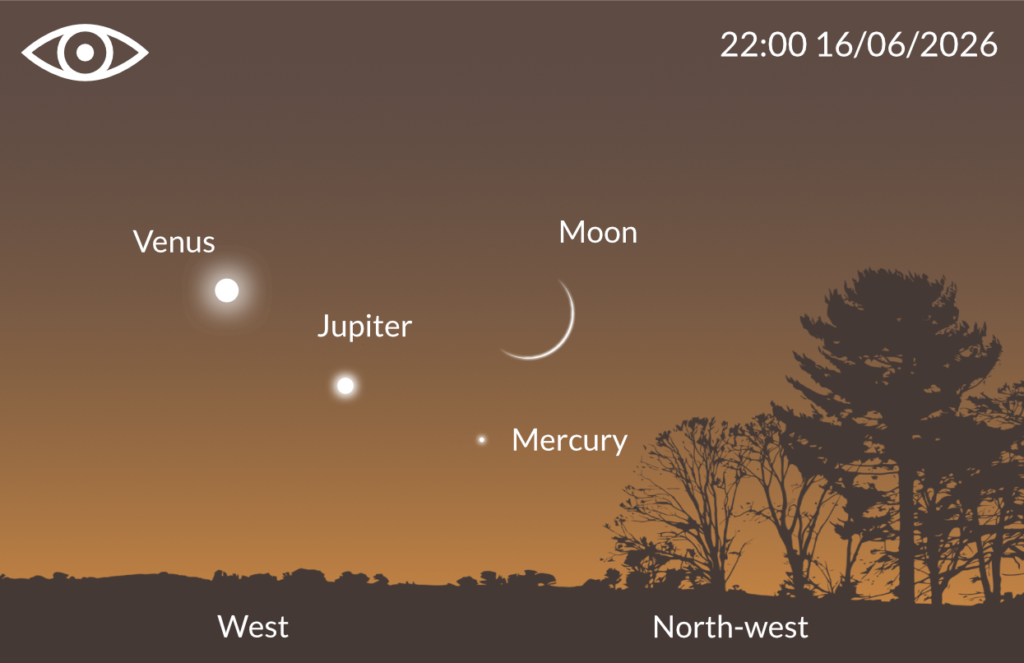
On 16th June, the 3% Waxing Crescent Moon joins in on the action and is situated a little above Mercury, with Jupiter and Venus situated westwards.
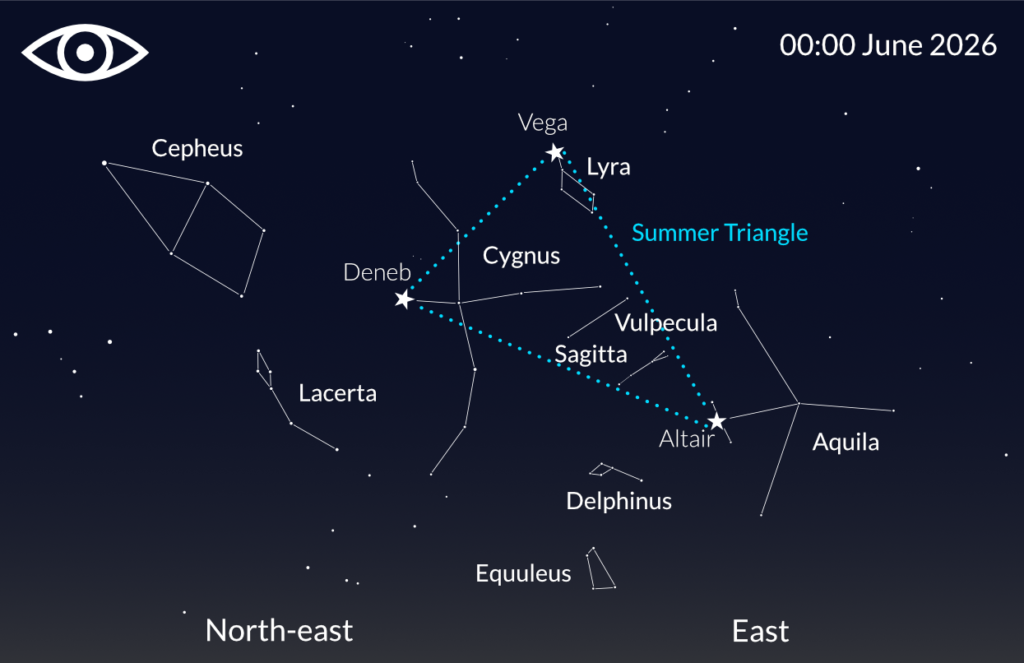
The Summer Triangle is Back
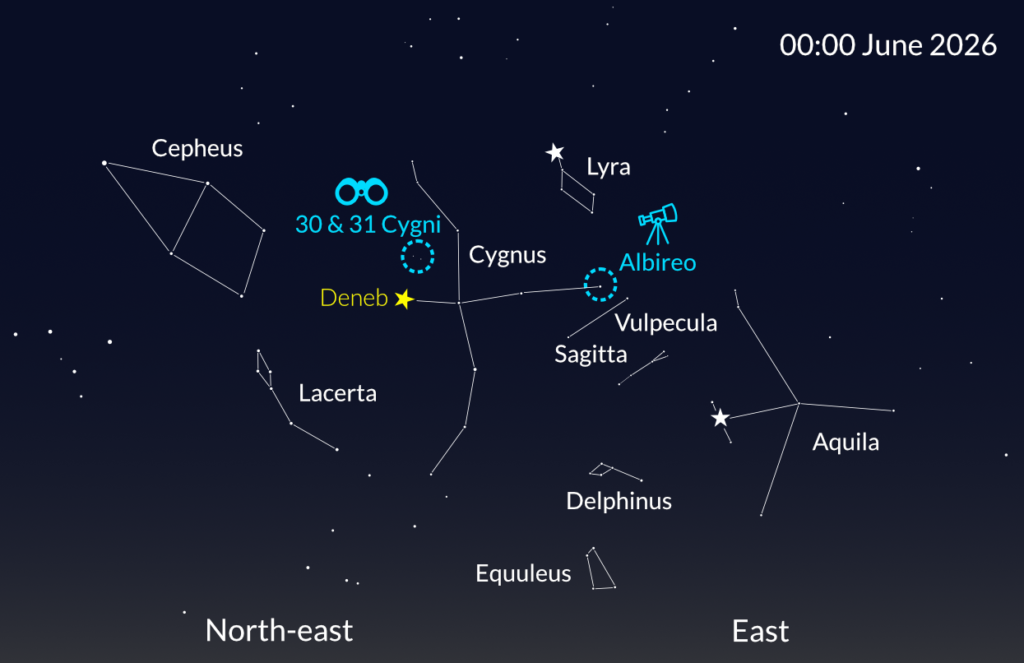
This time of year, the first three stars to appear in the night sky after sunset are the bright stars Deneb in the constellation of Cygnus, Altair in the constellation of Aquila and Vega in the Constellation of Lyra. Vega is the fifth brightest star in the Northern hemisphere, Altair is the 12th brightest and Deneb is the 19th. These three stars form a large asterism called the Summer Triangle.
Spot some Colourful Stars this Month
The constellation of Cygnus hosts some very colourful stars which can be seen with a small telescope or binoculars.
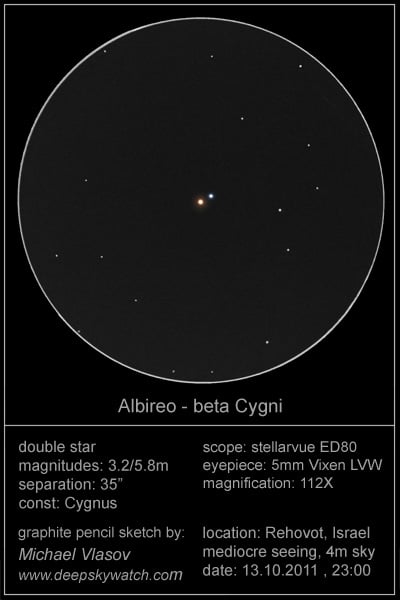
Albireo
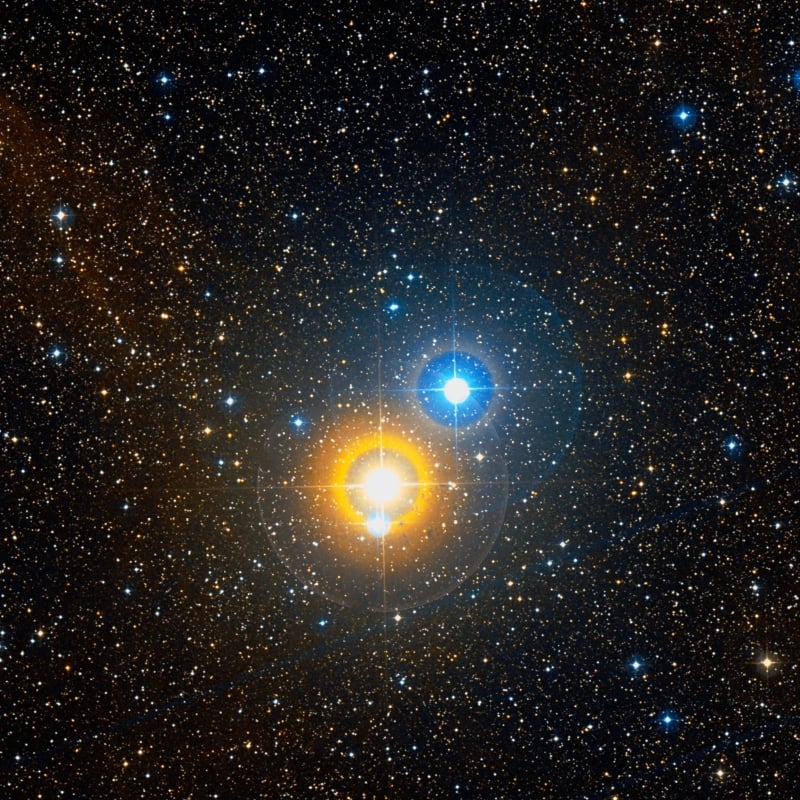
Look for the star at the end of the constellation of Cygnus. Called Albireo, it looks like a single, white star to the unaided eye. Through a telescope, this star splits into two, vibrantly coloured stars, one yellow/orange and the other blue. It was once thought they formed part of a binary star system but measurements from the Gaia Space Observatory indicated that they may be an optical double, moving in different directions in our galaxy, but from our perspective, look like a binary star system.
30 and 31 Cygni
The second pair of stars require a wide field of view such as binoculars. 30 and 31 Cygni lie close to Deneb and can be found by looking at Deneb, raising the binoculars to your eyes and slowly scanning upwards until a vibrant yellow and blue star pops into the field of view. These stars can be seen with the unaided eye; this time of year, you can see the stars positioned at the 1 o clock position relative to Deneb. Although they are not binaries, 31 Cygni is a binary star system, and you can spot this pair through a small telescope.
The colours of the stars reveal valuable information about their age and mass. If you see a blue star, it means it is very young, hot and short-lived, burning through fuel very quickly. You will find blue stars huddled around stellar nurseries because they don’t live long enough to travel from their birthplace. Stars that are more orange to red in colour are cooler in temperature and older. Next time you scan the night skies with your eyes, binoculars or telescopes, take time to observe the colours of the stars.