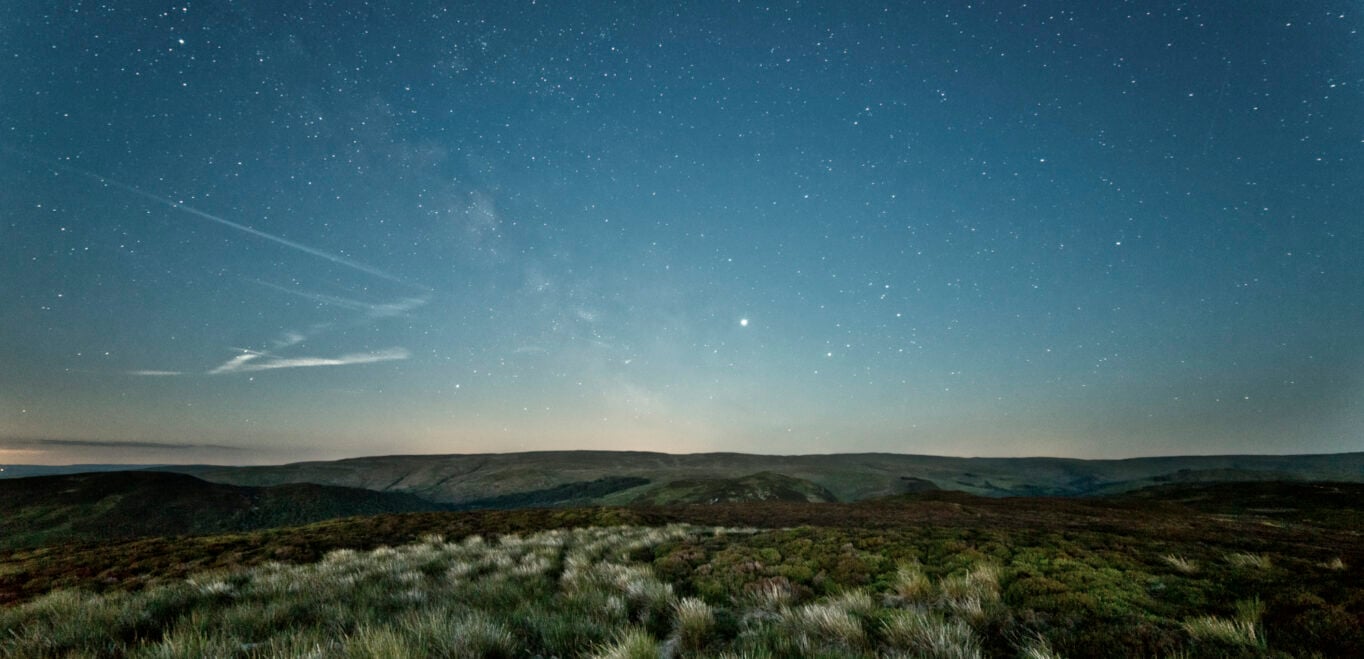
Welcome to this month’s update to find out what’s in the night sky for May.
In the Elan Valley International Dark Sky Park, astronomical darkness lasts for 3 hours and 52 minutes at the beginning of the month from 23:16 and 1 hours and 43 minutes from 00:18 at on 15th May. After that, astronomical darkness ends and astronomical twilight commences.
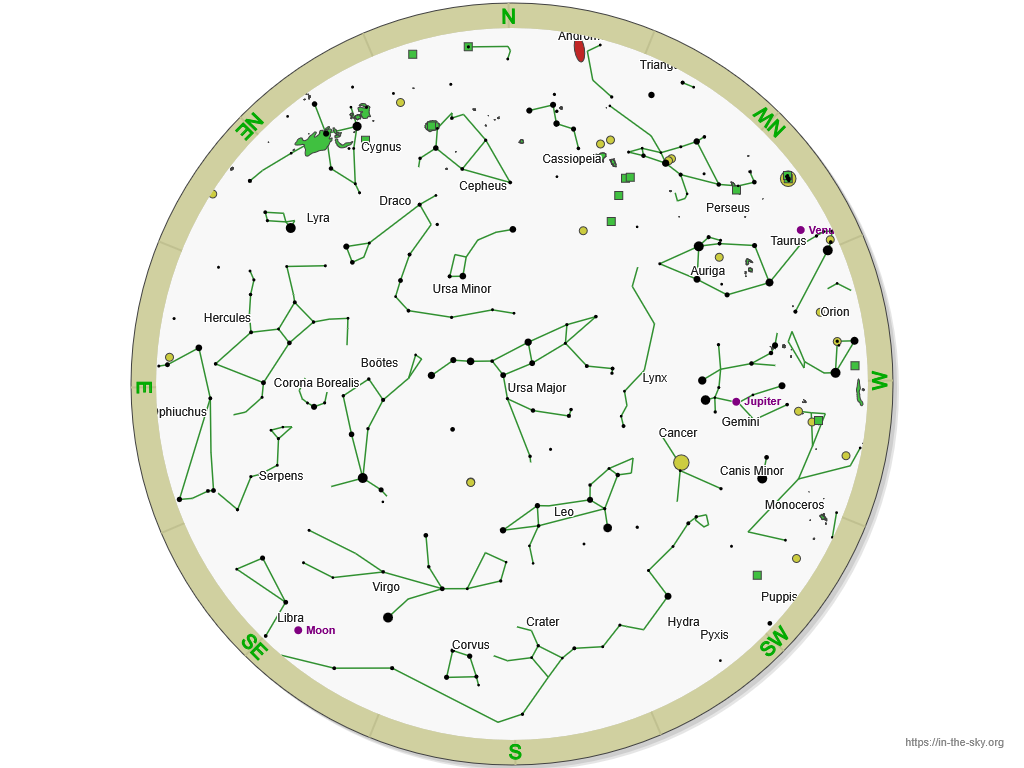
An all-sky view of the constellations from 10pm on 1st May from in-the-sky.org
Above the southern horizon, lie the constellations of Crater and Leo. At the zenith, the highest point in the sky, lies Ursa Major. The constellations of Gemini, Auriga and Cancer set in the western sky and the summer constellations of Hercules, Bootes, Corona Borealis and Lyra rise in the east.
May kicks off with first of two full Moons with the full ‘Flower Moon’, occurring on 1st May. The second, otherwise known as a Blue Moon, occurs on 31st May. It’s also the ‘smallest’ Moon of the year, meaning that it is near apogee, its farthest point from Earth.
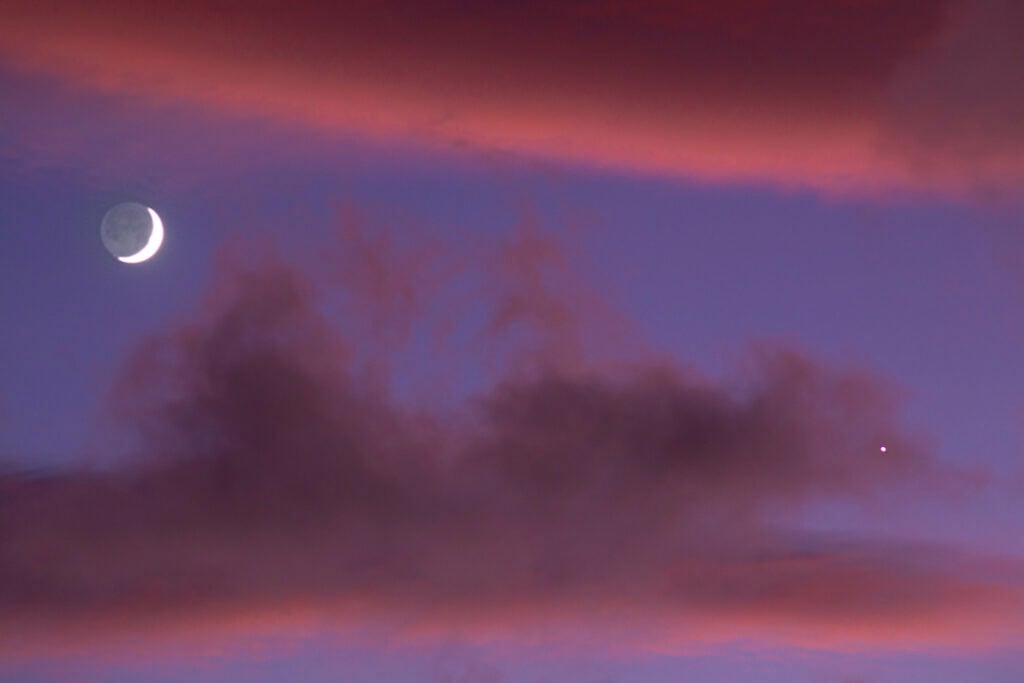
On 16th May, the new Moon is also a Supermoon, when it is at its closest point to Earth (perigee) Whilst we are talking about the Moon, look out for a beautiful phenomenon known as ‘Earthshine’. It can be seen for a few days either side of a new Moon, 30-60 minutes after sunset, where the dark portion of the Moon is lit with an ethereal light. This is where the light from the Sun bounces off the Earth and illuminates the normally dark portion of the Moon. It is also known as the ‘old Moon in the new Moon’s arms’ or the ‘Ashen Light’.
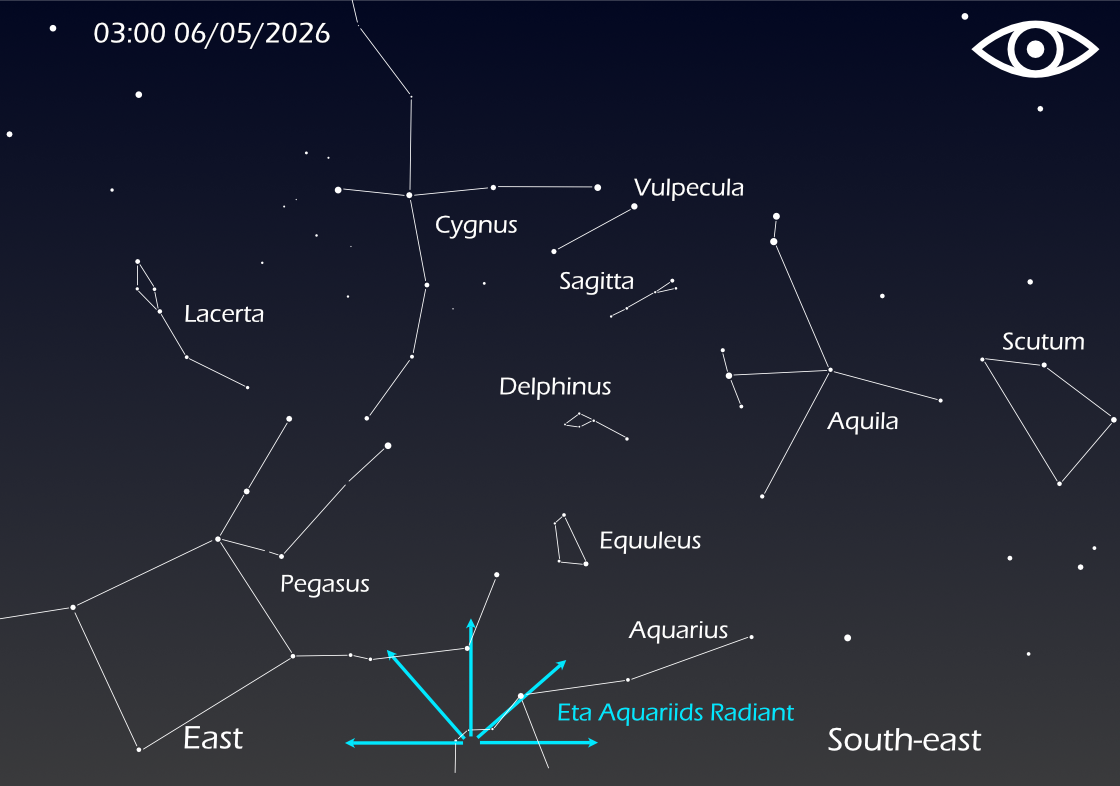
Eta Aquariids Meteor Shower
During the early hours on May 6th, the Eta Aquariids meteor shower peaks, this year, producing up to 50 meteors per hour. This is caused by debris left by the famous Comet Halley. This meteor shower, or radiant, appears to emerge from the constellation of Aquarius.
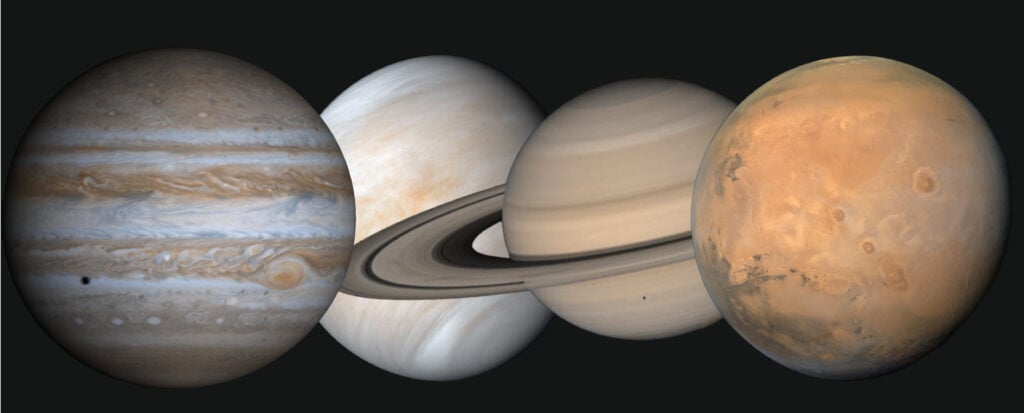
The Planets in May
Venus and Jupiter are visible throughout the evening and night, with Venus emerging as darkness falls and gaining height as the month progresses.
Within the last two weeks of May, Mars appears on the low eastern horizon briefly before the sun rises.
Fans of Saturn will see their favourite planet rising in the dawning eastern sky in the early hours of the morning. Saturn gains height towards the end of the month, where it will rise in the night sky by 3am and therefore be easier to spot, as it won’t be lost in the morning glare.
Use your small telescope to see the cloud bands of Jupiter and its moons and the rings of Saturn. Venus has phases similar to the Moon but it will be 80% illuminated this month, so you won’t be able to see its crescent phase. Even though Mars is visible, you will be able to see its red hue but see no detail, as the atmopshere is at its thickest low to the horizon, which causes atmospheric turbulence. All these planets can be seen with the unaided eye and also binoculars: The moons of both Saturn and Jupiter can be seen, looking like beads on a necklace!
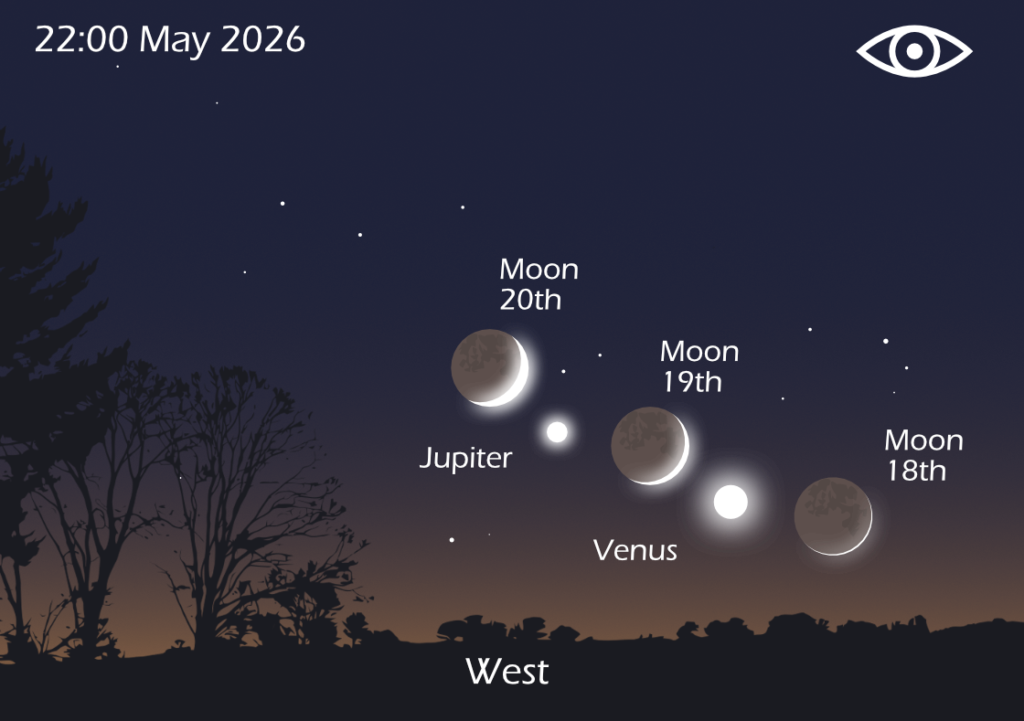
Planetary Conjunctions
May will also host a three-day planetary conjunction, between 18th – 20th May. On the 18th, the Moon will pass by Venus, which is the brightest star, lying low on the western horizon – there will only be a very thin slip of the Moon’s waxing crescent at 5% full. Earthshine should look lovely at this stage. The 19th sees the 12% Moon in between Jupiter and Venus. On the 20th, Look to the west as it gets dark and look for the 21% Moon close to Jupiter and the bright planet Venus to the right, low on the horizon.
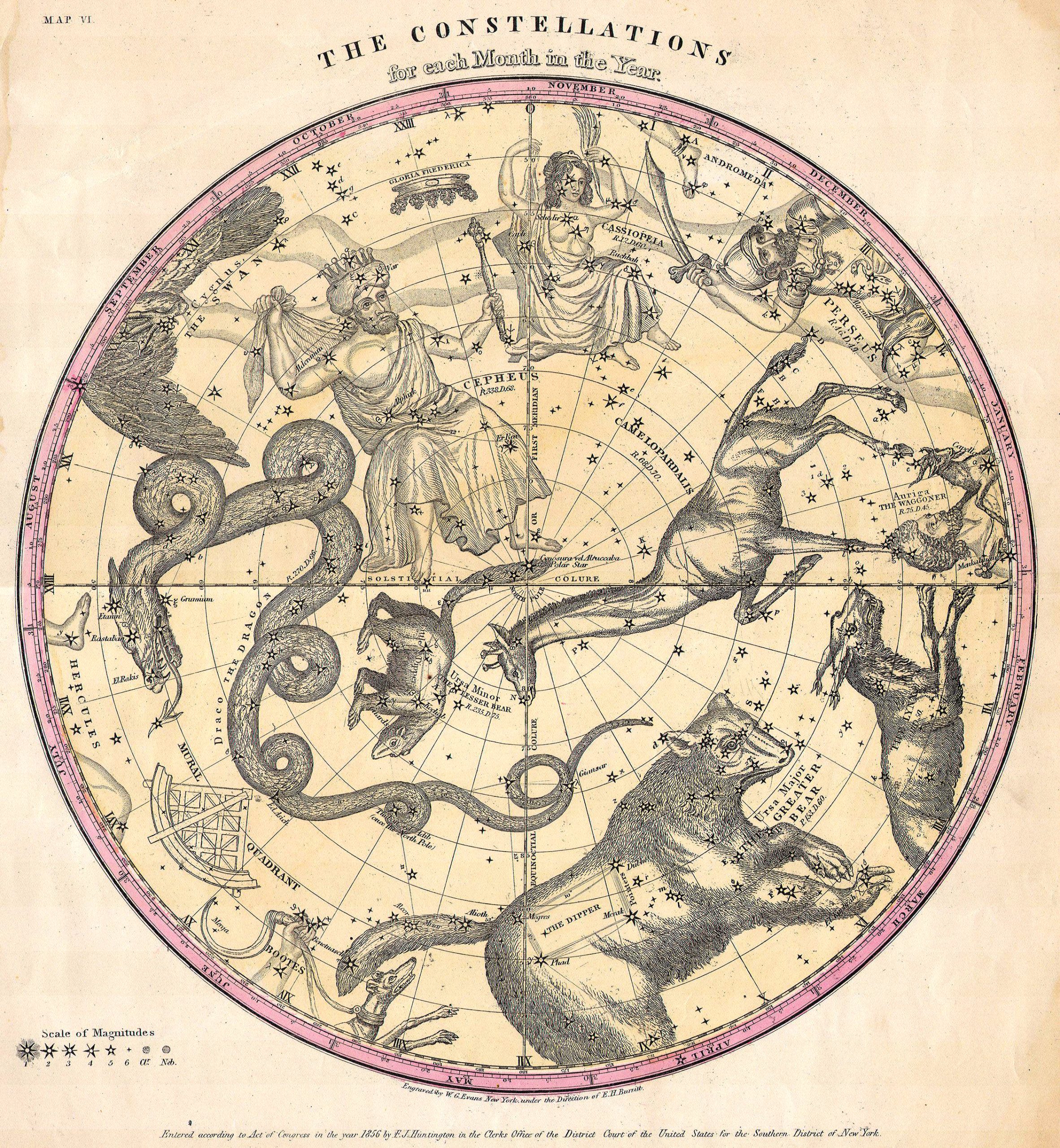
Constellation of the Month
Each month, we will feature a constellation and the mythology behind it.
There are 88 IAU recognised constellations in the night sky and around 36 that are observable in the northern hemisphere. Some of the names of the 88 IAU recognised constellations are several thousands of years old.
With the advent of science and rational thinking, and more of a focus on the observable world, stars are no longer used for the farming calendar, for navigation or conveying social or religious values.
Get outside and see if you can spot these constellations. The best time to see each constellation we feature is around 90 minutes after sunset.
Crater
The constellation of Crater represents an ornate golden cup of that belonged to Apollo, according to Greek mythology. One day, a crow or raven was sent to fetch water but they were distracted by a cluster of figs that has yet to ripen. Eventually, the crow returns with the water and was asked by an angry Apollo for the reason for the delay. The crow lied and told him that a water snake had impeded the journey, but Apollo saw through the lie and threw the water snake, the cup and the crow into the night sky, forming the constellations of Crater, Hydra and Corvus.
Image: By Sidney Hall / Adam Cuerden

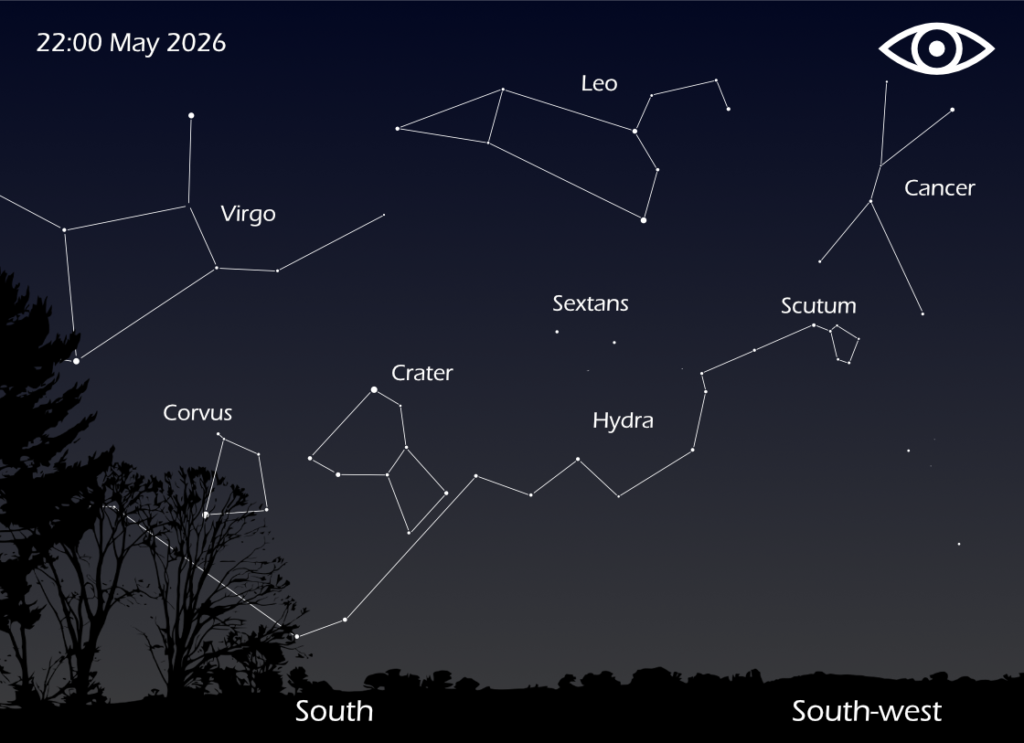
The Constellation of Crater lies low on the southern horizon from 10pm during May. The Constellation of Corvus (the crow) lies to the eastern side of Crater (the Cup) and the Constellation of Hydra (the Water Snake) lies very low on the southern horizon. Hydra comprises a large asterism of stars, taking up 3% of the entire night sky! These relatively dim constellations are best seen in a rural area, away form urban light pollution.